Showing posts with label 70s guitars. Show all posts

Thursday, 26 February 2015

Rare Condor Corperation Guitar with on board effects. Made in Japan

guitarz.blogspot.com:


I've never tried a guitar with built in effects. I have seen a few for sale over the years, and have seen them profiled on this blog. This is the first time I've seen or heard of Condor Corperation guitars.

All in all this specimen is a pretty typical 1970s era Japanese Strat copy, only it comes with on-board effects including a phaser, distortion, booster, and what appears to be a treble booster.

At $135 Canadian this would be a cost effective way to try this kind of setup.

R. W. Haller


© 2015, Guitarz - The Original Guitar Blog - the blog that goes all the way to 11!
Please read our photo and content policy.

Friday, 6 February 2015

Takamine F365s Guild Jumbo Copy.

guitarz.blogspot.com:


I've long been a fan of the earlier Takamines and have played and done repair work on a few of them over the years. All of them have been Martin copies.

One of the great things about looking for guitars for this site is that I am already finding a lot of guitars that I never knew existed. Takamine copied Guild as well?  I swear i had no idea.

This well loved Takamine F365s is from 1976, sports a spruce top, rosewood back and sides, and may very well be calling my name. At $600 it's tempting.

I love Takamines, Guilds, and Jumbo guitars. It's a trifecta of guitar nirvana.

R.W. Haller


© 2015, Guitarz - The Original Guitar Blog - the blog that goes all the way to 11!
Please read our photo and content policy.

Thursday, 10 April 2014

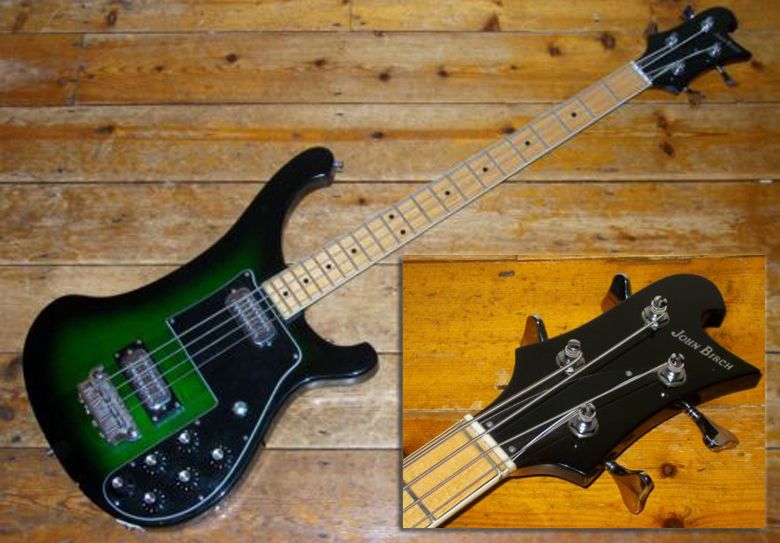
Original 1970s John Birch bass

guitarz.blogspot.com:
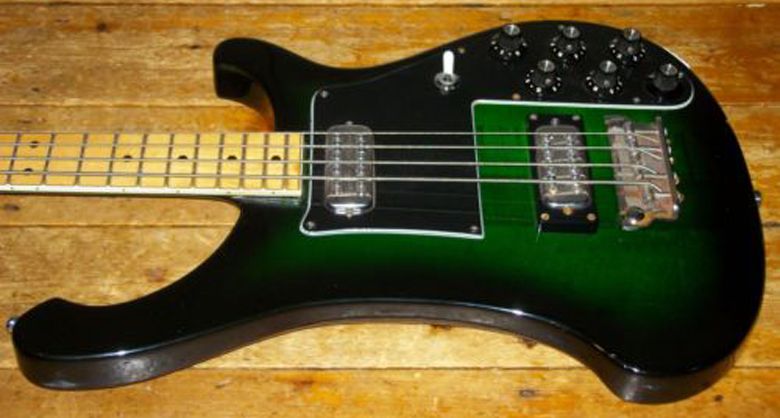
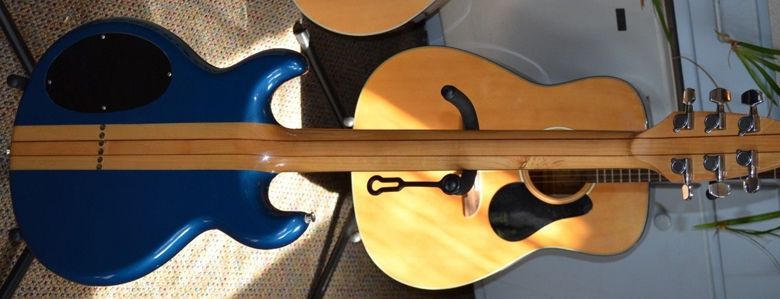
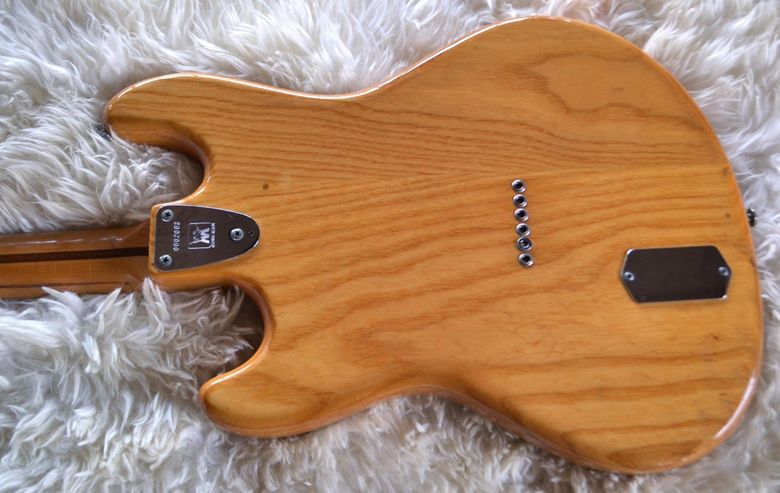
At one time back in the mid 1970s barely a week could go by without seeing an example or two of British guitar maker John Birch's work on BBC TV's Top Of The Pops. They were fairly ubiquitous on the UK music scene, being used to artists such as Slade, The Glitter Band, Wizzard, Mud, Black Sabbath, Brian May, Ritchie Blackmore and others. Here we see an original 70s John Birch bass, which has obviously been very closely modelled on a certain famous American bass guitar design. It deviates from that design however in use of hardware such as John Birch's own Hyperflux pickups, the maple fingerboard, and the green burst finish. It also seems to have a baffling number of control knobs - this is something that John Birch instruments are particularly known for.

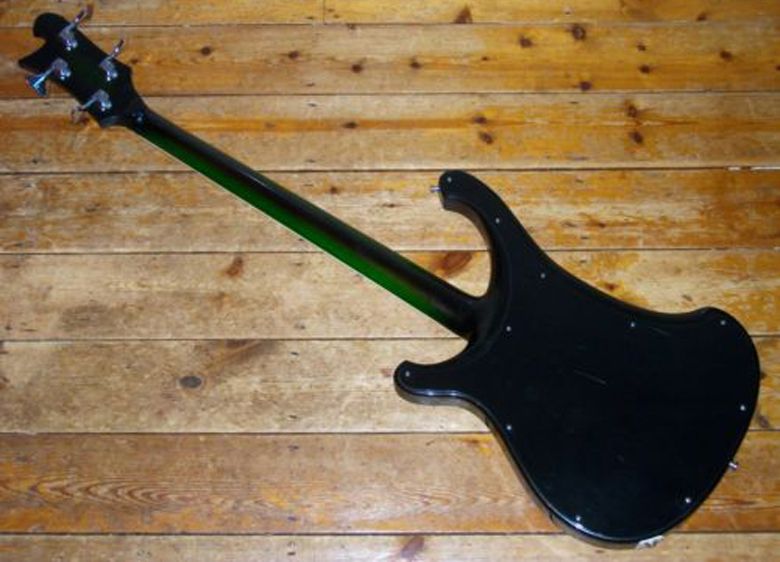
The image of the rear of the bass shows a heel-less neck-through design, and also - quite bizarrely - a huge backplate that covers the entire rear of the body. I'm thinking that maybe this conceals a larger than usual control cavity - maybe there's some specialised tone circuitry in there and controlled by the two extra pots on the front of the body.

Currently listed on eBay UK with a Buy It Now price of £1,500.

G L Wilson

© 2014, Guitarz - The Original Guitar Blog - the blog that goes all the way to 11!
Please read our photo and content policy.

Friday, 4 April 2014

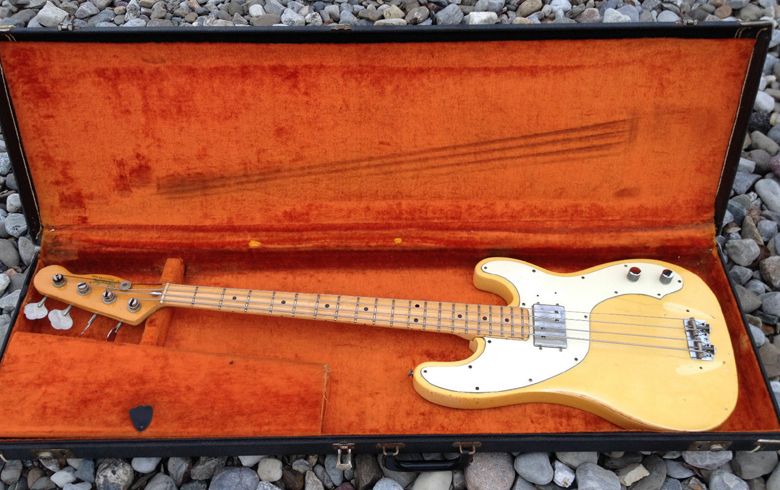
Fender Telecaster Bass from the CBS era, circa 1972/73

guitarz.blogspot.com:
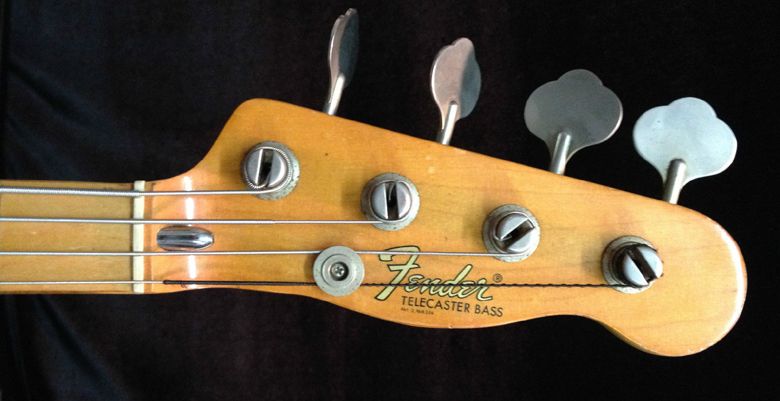
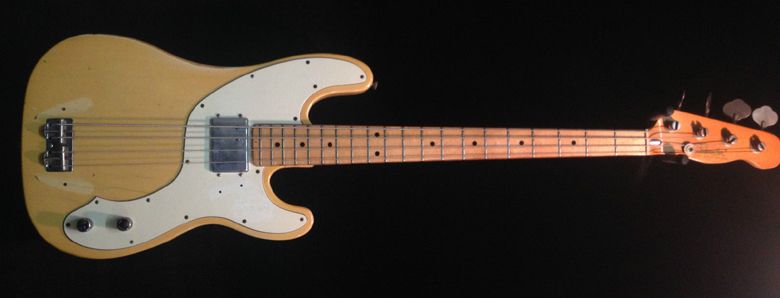
The Fender Telecaster Bass was a product of the CBS-owned Fender company of the 1970s. It was a quick and easy way of dreaming up a "new" model without having to try too hard. But it's a bit of a curiousity being based loosely on the original design for the Precision Bass (before it was given a Strat-inspired make-over). Unlike the original P-bass which was equipped with a single centrally-mounted singlecoil pickup, the Telecaster Bass has a huge Fender humbucker placed right up at the top of the neck, so tonally it must have been a departure for Fender having a more Gibson-like EB-0/EB-3 sound.

It's hard to imagine these days who it would appeal to other than those actively seeking dub reggae bass stylings. The slab-body is remarkably Tele-like (hence its name) and, yes, of course it an upper horn so that it balances nicely on a strap (unlike the recent Squier Vintage Modified Telecaster Bass which copy the Tele guitar shape far too literally).

I'm actually undecided whether I like it or not. I admit I'm not the greatest fan of Fender basses in the first place, but in a way have an almost grudging respect for an oddity like this that most bassists wouldn't look twice at. Bidding on this eBay item is currently at US $1,016 with the reserve still not met. Which seems very high for an instrument produced during the period within which quality control at Fender was known to be at an all time low. Even the seller admits that this particular Tele Bass has issues:
Bass output but its uneven. "G" is hotter than other strings [...]
I would rate this item between a 70-60% (VG-G)
Make of that what you will, but to me it doesn't sound deserving of whatever the auction reserve is.

G L Wilson

© 2014, Guitarz - The Original Guitar Blog - the blog that goes all the way to 11!
Please read our photo and content policy.

Monday, 24 March 2014

Greco BR600 Brawler 1970s vintage Japanese-made electric guitar

guitarz.blogspot.com:
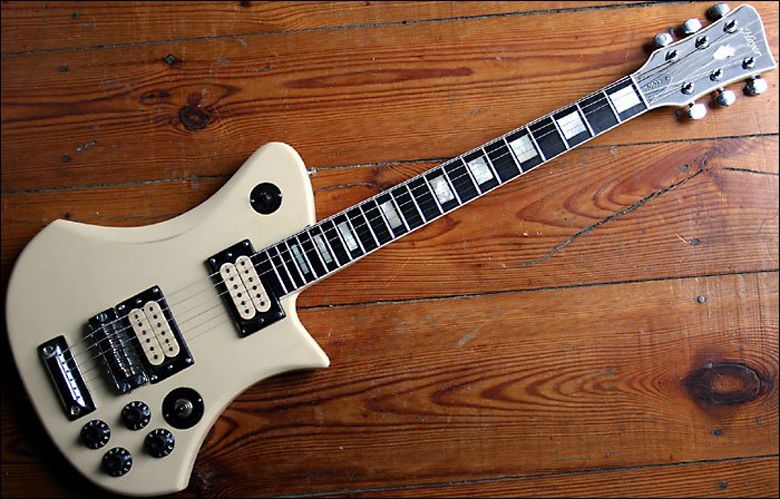
Here's a Greco BR600 Brawler, a late 1970s Japanese-made guitar that I am totally unfamiliar with. Made by FujuGen Gakki, it's quite possible this model was intended for the Japanese home market only. Unlike many other Japanese guitars of this era - certainly those that they exported to the West - it isn't a copy of any pre-existing guitar model, although to my eyes it does seem to have a Rickenbacker-like quality to the design. The body is made of ash with a top of white sycamore (great maple), the neck is maple with a rosewood fingerboard, and the guitar features a 24-fret neck, two single coil pickups and a top mounted vibrato.

Currently being auctioned on eBay with a starting price of US $799.99.

G L Wilson

© 2014, Guitarz - The Original Guitar Blog - the blog that goes all the way to 11!
Please read our photo and content policy.

Thursday, 13 March 2014

Gretsch Broadcaster 1970s solidbody oddity

guitarz.blogspot.com:
This Gretsch Broadcaster circa 1975-76 wouldn't win any beauty contests. It's as if they wanted to make a Fender-like solidbody but didn't spend too much time actually designing the guitar, so it's a big slab-bodied affair. Despite that, I'm sure it's a perfectly competent player; the seller claims that "you can obtain tones from twangy country to AC/DC".

Currently listed on eBay with a possibly overly optimistic starting price of US $1,175.

G L Wilson

© 2014, Guitarz - The Original Guitar Blog - the blog that goes all the way to 11!
Please read our photo and content policy.

Tuesday, 11 March 2014

Hoyer German-made copy of a R-style stereo bass

guitarz.blogspot.com:
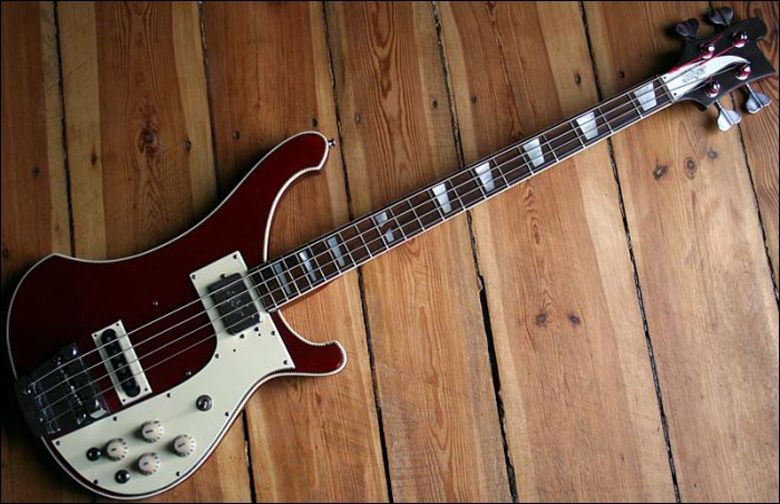
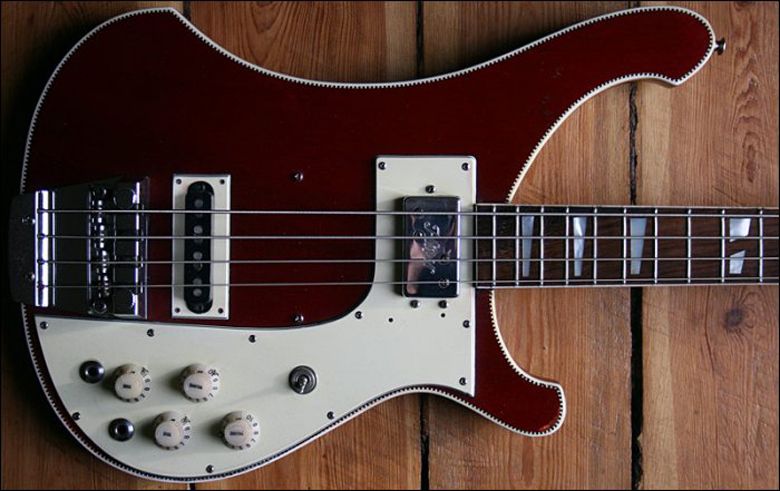
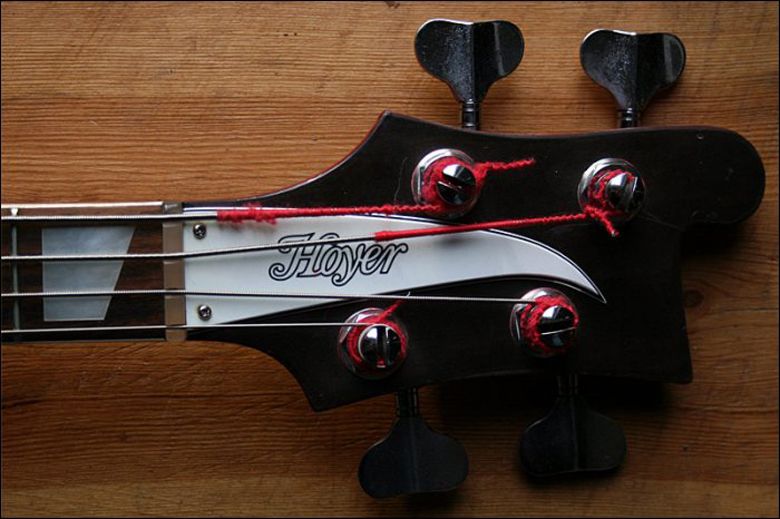
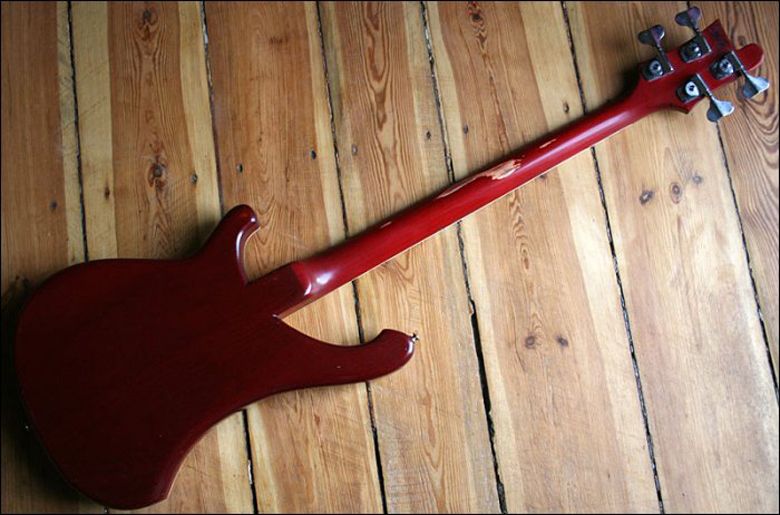
I think just about everyone viewing this blog will know immediately what kind of bass it is that this 1970s Hoyer is copying in its design. Somehow it seems almost righteous that an instrument designed by the company founded by Adolf Rickenbacker should end up being copied in Germany. And although it isn't the most accurate copy, it does seem to be beautifully made; witness the checkered binding, the glued in neck, and note the stereo outputs on the pickguard. The seller insists that this is "one of the most hard to find basses made by Hoyer and extremely rare" and goes on to sing its praises as regards playability and performance.

Currently listed on eBay with a Buy It Now price of €1,249 (item currently located in Berlin).

G L Wilson

© 2014, Guitarz - The Original Guitar Blog - the blog that goes all the way to 11!
Please read our photo and content policy.

Friday, 7 February 2014

Memphis A2 - 1970s Japanese Strat-shaped Junior style "project" guitar

guitarz.blogspot.com:
I've always liked nice simple guitars. A single pickup and just a volume and tone control are all you need sometimes. It's so easy to get bogged down by the confusion presented by a myriad of volume and tone controls, pickup selector switches, coil taps, series/parallel switches, active electronics, and so on and so forth. I guess, for me, it all goes back to the acoustic guitar; you don't get all that kind of nonsense on an acoustic. If you want a different tone then you adjust your playing style. And that's kinda the way I view no-nonsense single pickup guitars such as the one pictured here.

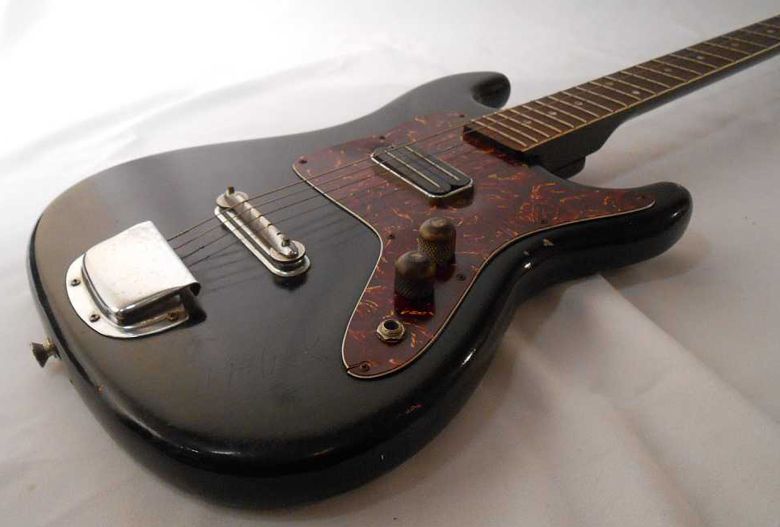
The Memphis A2 is a Japanese-made guitar from the 1970s. It has a short 23 3/4" scale length, a fat Gibson 58 Les Paul-like neck radius, non-adjustable bridge, and a Bill Lawrence blade pickup mounted in the centre position (surely the most sensible location for it on a single pickup guitar?). Despite its Gibson Junior-like appointments, the body seems to have been modelled closely on that of the Fender Stratocaster.


Currently being auctioned on eBay with a starting price of US$79.95, which sounds pretty reasonable for a guitar that the seller describes as being in "project" condition. This guitar looks like it might have potential. Auction ends Monday night.

G L Wilson

© 2014, Guitarz - The Original Guitar Blog - the blog that goes all the way to 11!
Please read our photo and content policy.

Thursday, 9 January 2014

1970s D'Agostino through-neck Japanese-made electric guitar

guitarz.blogspot.com:
Here's another Japanese-made guitar, this time from the 1970s and it's of genuine through-neck construction rather than being a "faux though neck" like the Morris guitar we looked at earlier this week. It's a D'Agostino, a brand about which I unfortunately know very little (and neither does the eBay seller of this guitar). However, the DiMarzio (or DiMarzio design) pickups, the control knobs, and the brass nut, brass truss rod cover and the very particular brass fingerboard inlays are all highly reminiscent of those on the Kay K45 travel guitar (marketed in the USA as the Austin Hatchet); surely it's some relation?

Currently listed on eBay with a Buy It Now price of $600.

G L Wilson

© 2014, Guitarz - The Original Guitar Blog - the blog that goes all the way to 11!
Please read our photo and content policy.

Saturday, 28 December 2013

Epiphone SC-550 "Scroll" guitar circa 1976-79

guitarz.blogspot.com:
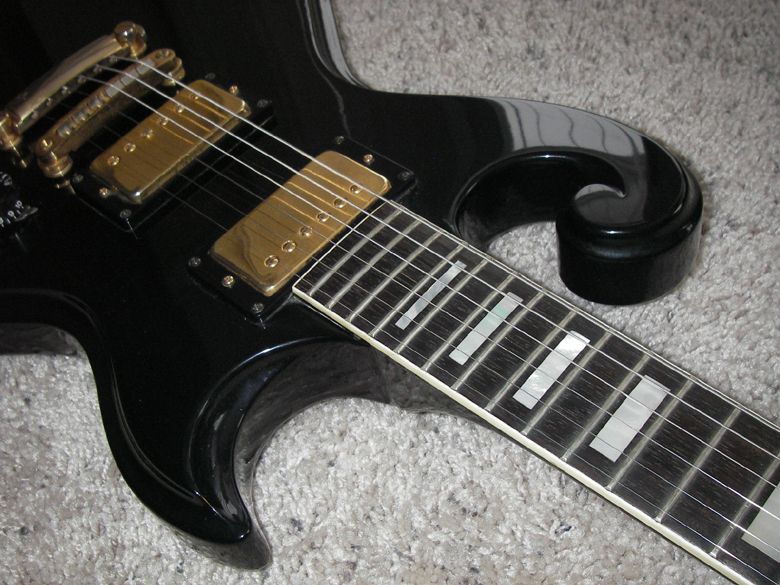
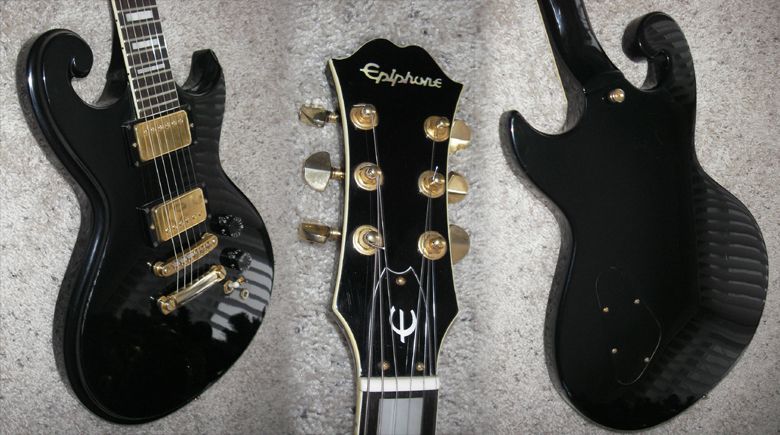
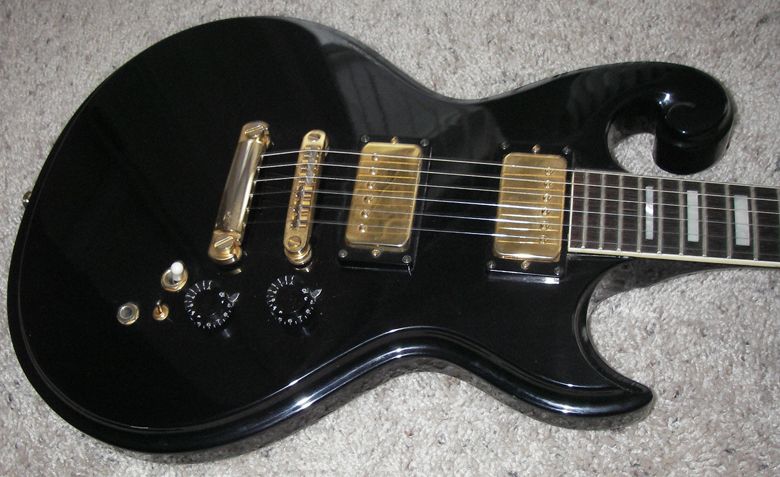
Here's another of my favourite guitar designs; it's an Epiphone SC-550 from the late 1970s, back in the day when Epiphone had their own discrete range of guitars and weren't merely Gibson's equivalant of Fender's Squier brandname. Made in Japan, the scroll-bodied SC-550 is a very cool alternative to Gibson's Les Paul with Black Beauty finish, set-neck construction, ebony fingerboard, 24 fret neck, abalone markers, and - looking at the controls - I'm guessing some kind of coil tap facility. I particularly like the body shape with its German carve which helps accentuate the scroll motif.

Currently listed on eBay with a Buy It Now price of $800.

G L Wilson

© 2013, Guitarz - The Original Guitar Blog - the blog that goes all the way to 11!
Please read our photo and content policy.

Wednesday, 2 October 2013

Music Man Sting Ray II guitar from 1977 (back when they were cool)

guitarz.blogspot.com:
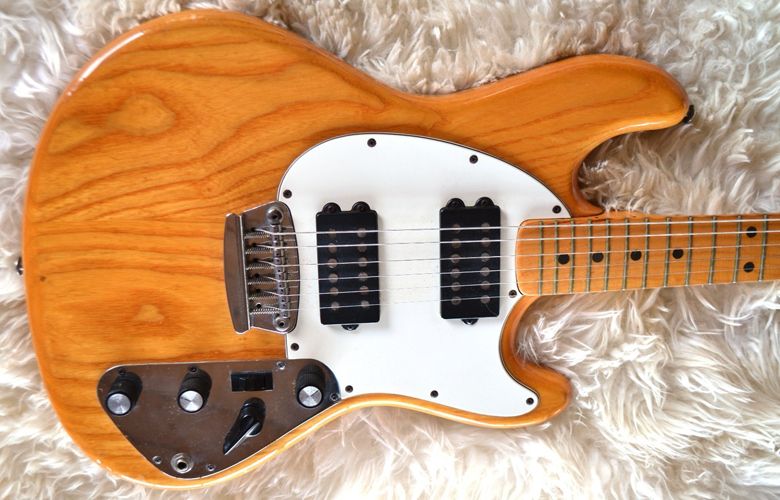
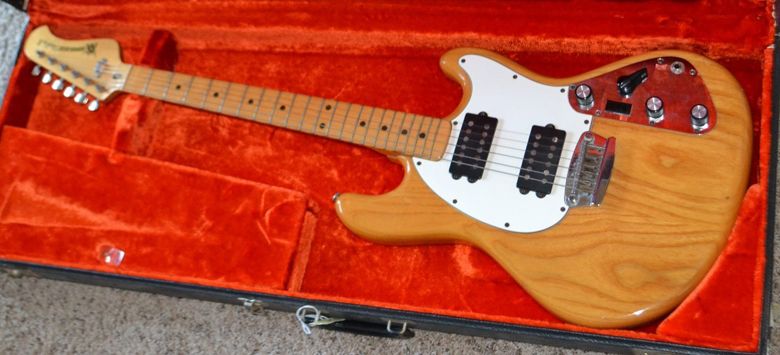
Music Man had as one of its founding members a certain Mr Leo Fender, who had sold his previous eponymously named company to CBS in 1965. They started out in the early 1970s producing hybrid solid-state/tube amps, but by 1976 had started production of guitars and basses. This particular Music Man Sting Ray II guitar dates from 1977, their second year of guitar production. Its Fender pedigree is quite apparent in the design - you can see how this instrument could represent the next logical development following the Telecaster and the Stratocaster.

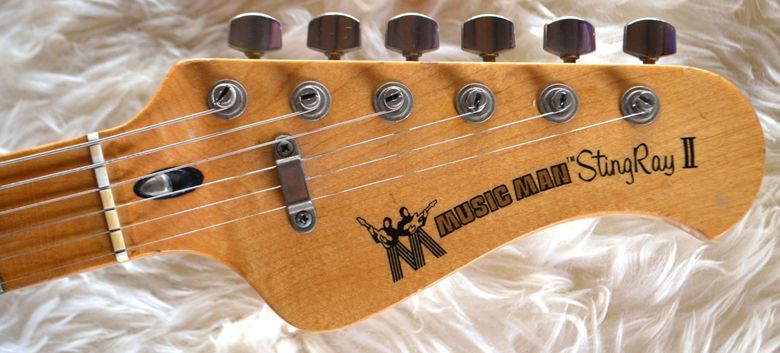
The original Music Man guitars were not as well known or as popular as their basses; some would say that this was because they weren't particularly good instruments, but I can't believe this to be true. I've personally seen one in the hands of Doggen Foster (sometime guitarist with Julian Cope and Spiritualized) and he certainly made it sound incredible. Of course this guitar dates from well before Ernie Ball got their mitts on the Music Man brand; their later guitars would become very popular, endorsed by the likes of Eddie Van Halen, Albert Lee, Steve Lukather, and John Petrucci. Note how this pre-Ernie Ball Music Man features a headstock with six machine heads in a line a la Fender, as opposed to the later ridiculously small headstocks with a 4+2 tuner arrangement that Ernie Ball nicked from certain Gretsch and Teisco guitar design from the 1960s and then claimed was their own copyrighted trademark.

Currently listed on eBay with a starting bid of $1,090.

G L Wilson

© 2013, Guitarz - The Original Guitar Blog - the blog that goes all the way to 11!
Please read our photo and content policy.

Wednesday, 28 August 2013

1970s JHS copy of a Gibson Marauder

guitarz.blogspot.com:
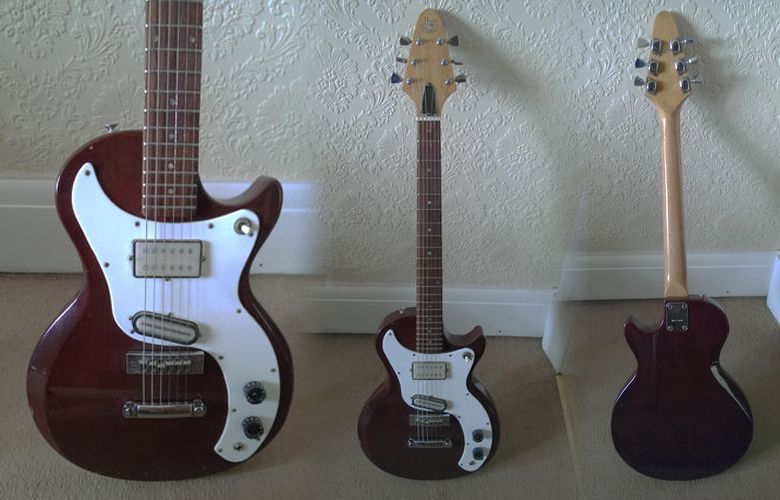
This 1970s-era JHS branded guitar is another copy of one of the lesser known - and certainly more unpopular - Gibson solidbodies. I always used to like the Gibson Marauder design back in the day; I think The Buzzcocks used them and to me they were very punk rock. I also liked the use of a Flying V type headstock on an LP shaped body.

The seller of this JHS copy, however, makes some very weird claims about it:
I bought this fantastic guitar off a friend about a year ago, who didn't know a lot about it.

Once I acquired the guitar, I did some research into its history and I was pleasantly surprised!

It turns out that in the late 1970s, there were a lot of Gibson Marauder copies being sold under different brand names such as Avon, Cimar, ESP, Maya, Rose Morris, CSL and finally JHS (now known as Vintage & Encore).

After digging a little deeper I found out on a forum that all of these guitars were made in the same factory where the Gibson Marauders were made in the late 70s.

This leads me to believe that the spec of the guitar is very similar if not completely the same as the Gibson's. This is because it would be very odd for them to have separate production lines because of pricing and tooling etc.
I find it very hard to believe that these copy guitars would be made in the same factory as the Gibson originals. Surely the copies are Japanese in origin, and outside of Gibson's Orville and Orville by Gibson brands, Gibson guitars have always been made in the USA. Can anyone confirm or deny the seller's claims here, or at least explain where his story has gone off the rails?

This guitar is currently listed on eBay UK with a Buy It Now price of £180.

G L Wilson

© 2013, Guitarz - The Original Guitar Blog - the blog that goes all the way to 11!
Please read our photo and content policy.

Thursday, 25 July 2013

From Germany of the 1970s - the Hoyer 50603

guitarz.blogspot.com:
This 1970s German-made Hoyer 50603 has a body shape strangely reminiscent of certain Guild guitars (e.g. this one), and is one of those designs that I look at and say to myself, "Is it ugly? Is it attractive? I can't decide!"

The guitar features a pair of DiMarzio Super Distortion humbuckers (as was fashionable at the time) with a volume and tone control for each and a pair of switches, one of which will be the pickup selector, but as for the other... Anyone out there know? Coil top or phase inversion, maybe?

This guitar is currently located in Berlin, and is listed on eBay.de with a Buy It Now price of €799.

G L Wilson

© 2013, Guitarz - The Original Guitar Blog - the blog that goes all the way to 11!
Please read our photo and content policy.

Friday, 5 July 2013

S.D. Curlee Liberty Bell bass

guitarz.blogspot.com:


To me, the name S.D. Curlee evokes three piece through-necks, DiMarzios, Badass bridges and wood finishes like my Mum's coffee table. This Curlee bass from 1976 does not disappoint. I remember seeing the ads for them at the time and, although they've never really appealed to me, I never forgot them. This is the kind of guitar I associated with big, hairy armed, denim clad rockers who, for some reason, wore midriff revealing girly tops and hairstyles like Roger Daltrey or Jimmy Page. Probably because that's the kinds of band I used to see a lot at that time, Strider, Strife, Stray, Savoy Brown, Bob Story, lots of bands whose names began with "S" (star?), and Rory Gallagher, The Enid, Caravan, Colloseum II... Yes, I was weird. Anyway, what I mean to say is, these are men's guitars, designed for hard rocking, tough talking, shit kicking, mean, SOBs. Sorry, came over all American then. Must be the Curlee effect.


This odd shaped bass is a little out there but not all that over the top really. It's supposed to be in the shape of the Liberty Bell. Like the Airline Map is supposed to be in the (art deco styled) shape of the US of A.

The seller says:
Made in the famous Matsumoku guitar factory. Amazing vintage Bass; all original electronics and pickups--works great, and have not been modified. Controls are volume/tone/tone and a pickup selector switch. Has 2 made in USA DiMarzio split coil pickups, and even still has the Dimarzio sticker on the back! Minimal fretwear, and the fret edges are nice and smooth. Brass nut. 32" scale with 1 5/8 inch nut. Weighs approximately 8.5 pounds. This bass sounds AWESOME! Has a huge tone, and can really thump!

And a couple of paragraphs from the S.D. Curlee website
Enter Denny Rauen. He was a young guy working for a construction company that ran the building SD Curlee was in, a player and ceramic artist with a natural ability for how things work. The workshop was battling a spindle sander they couldn't get working... "If I fix that sander, will you hire me?" He got it working in about 5 minutes, was hired, and within a year and a half he was in charge of the workshop. Denny tweaked the basic Dritz design, retooled everything, designed more jigs and systems and got it into smoother production. 
He designed the "Liberty" bass in 1976 to get some attention. (That's the Curlee bass that looks like an old telephone. Keep in mind this was the '70s and a bass shaped like a melting liberty bell wasn't all that far out.) They took some hand made versions to a NAMM show and... surprise, there was Hondo with dozens of them from a Japanese factory. Randy Curlee had licensed the design to Hondo. The flipside of this, though, is he was one of the (if not the) first to license and purchase overseas copies of a company's own designs for a lower line - a business model now followed by most big guitar companies and many independents.
I don't know if that corroborates the sellers claim of it being Matsumoku made or not. I couldn't find any reference to Hondo having guitars made by them. I'm sure someone out there knows. US made SD Curlees seem to have carved logos whereas this has a decal. so might mean something. I wonder if the Hondo made guitars were branded Hondo or S.D. Curlee...

David in sweaty Barcelona

© 2013, Guitarz - The Original Guitar Blog - the blog that goes all the way to 11!
Please read our photo and content policy.

LinkWithin

Related Posts with Thumbnails

ShareThis