guitarz.blogspot.com:
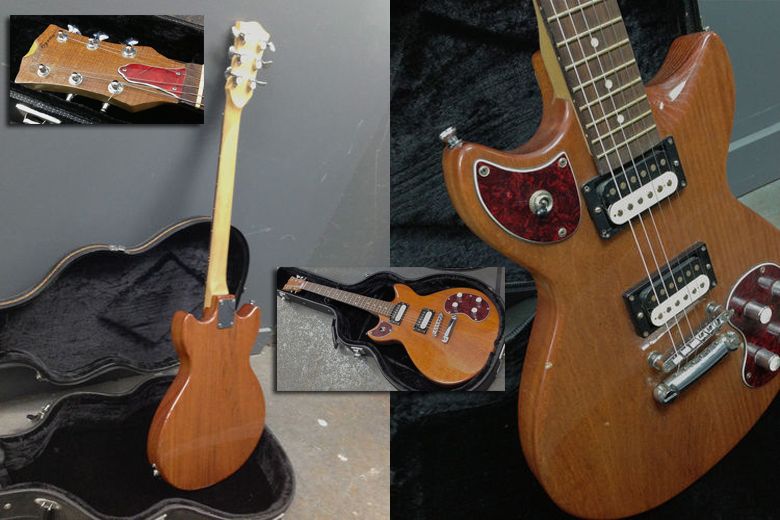
This is a nice example of a handmade guitar that I want to dislike, but just cannot bring myself to hate.
The elongated Strat style body, and exaggerated cutaways and horns are way too much for my taste. I also would have gone for less shiny hardware. Those knobs are a bit too bling-esque.
I would guess though, that a lot of time and care went into the build.
It looks to me that this guitar is higher in quality than the camera used to take these blurry pictures.
At $250, it's an affordable way to get into a one of a kind handmade guitar
R.W. Haller
© 2015, Guitarz - The Original Guitar Blog - the blog that goes all the way to 11!
Please read our photo and content policy.
Showing posts with label wood. Show all posts
Monday, 9 February 2015
Friday, 26 July 2013
Born Custom Guitars OG-Drop solidbody electric guitar with Pistachio top
guitarz.blogspot.com:
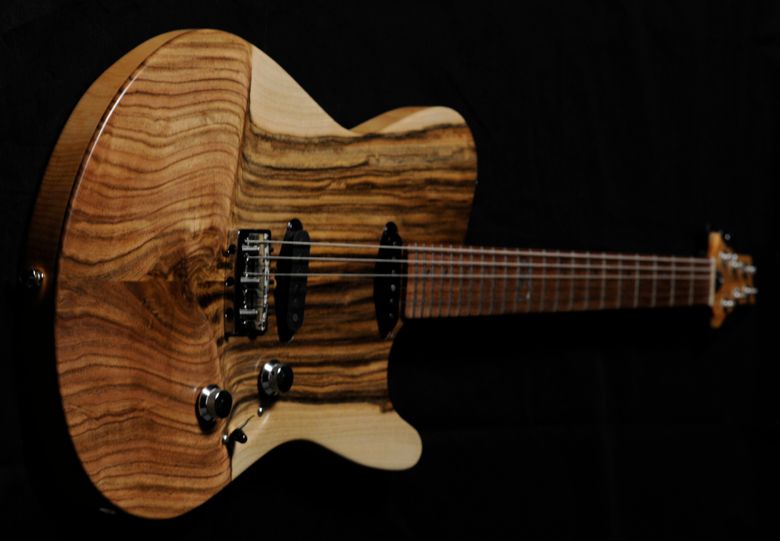
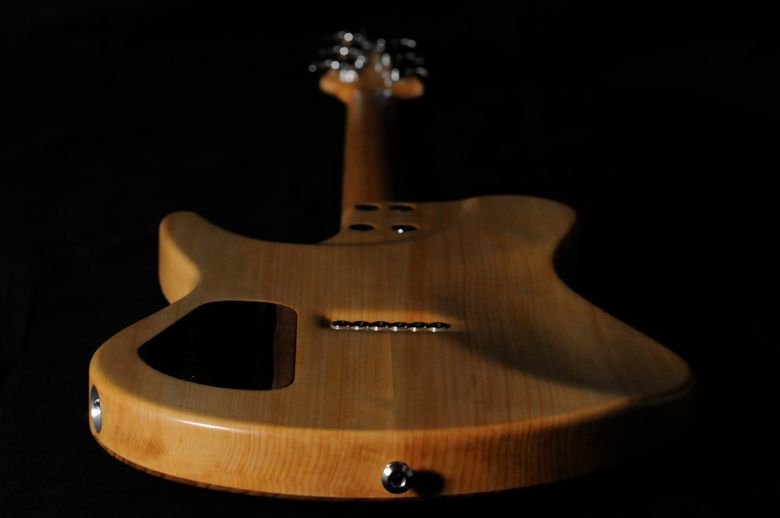
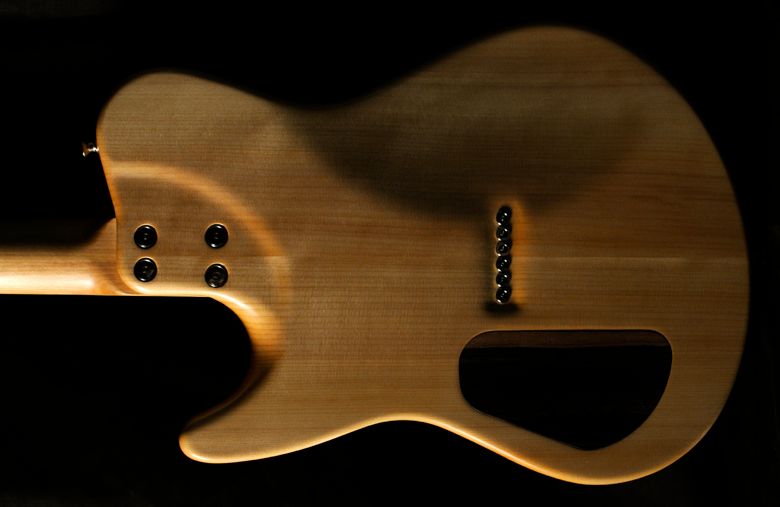
Of course, here at Guitarz we don't just focus on weird and wonderful guitar finds on the auction sites. We're guitar aficionados and besides all the weird and wonderful guitars, vintage instruments, beautiful - or even occasionally horrendous - guitars, we are very keen to celebrate contemporary guitar design, and we have a particular fondness for the "little guy", i.e. the small guitar companies out there who are keeping the spirit of experimentation and guitar design alive. The guitar pictured here is a case in point, an experimentation in the use of an alternative and rather unusual tonewood. I'll allow Campbell Davis of Born Custom Guitars to explain:
G L Wilson
© 2013, Guitarz - The Original Guitar Blog - the blog that goes all the way to 11!
Please read our photo and content policy.
Of course, here at Guitarz we don't just focus on weird and wonderful guitar finds on the auction sites. We're guitar aficionados and besides all the weird and wonderful guitars, vintage instruments, beautiful - or even occasionally horrendous - guitars, we are very keen to celebrate contemporary guitar design, and we have a particular fondness for the "little guy", i.e. the small guitar companies out there who are keeping the spirit of experimentation and guitar design alive. The guitar pictured here is a case in point, an experimentation in the use of an alternative and rather unusual tonewood. I'll allow Campbell Davis of Born Custom Guitars to explain:
We (Born Custom Guitars) are a new and small company located in Colorado. We're all big fans (all three of us!) of your blog, and we wanted to share a guitar that we recently completed that we feel is pretty unique. As a company, we love traditional tone woods, but we also really like experimenting with and promoting alternative tone woods. In either case, we use only salvaged, reclaimed, or sustainably sourced woods.Thanks to the guys at Born Custom Guitars for showing us this beauty. I personally think it looks quite stunning, and as the video demonstrates it sounds sweet too!
The guitar seen in the attached photos and video is our "OG-Drop" model. This particular guitar sports a Port Orford Cedar body and neck, Granadillo fretboard, and a Pistachio top…that's right, Pistachio! Pistachio trees are grown commercially for their nuts, but are only commercially productive for 50-80 years. After that point, they are usually chipped/scrapped, despite the fact that they can often live up to 200 years. The Pistachio top on this guitar was salvaged from a farm in California before it was scrapped. Pistachio is very heavy, hard, and dense and pairs very well with the lightweight and airy Port Orford Cedar (POC). The POC neck and body originate from a southern Oregon forest that was almost completely destroyed by a 500,000 acre fire a little more than a decade ago. The fire left many dead but harvestable trees. POC is really lightweight but incredibly straight grained and stable and we've found it to be an excellent alternative for Maple necks.
G L Wilson
© 2013, Guitarz - The Original Guitar Blog - the blog that goes all the way to 11!
Please read our photo and content policy.
Tuesday, 5 February 2013
BJ & Byrne Roundhouse electric guitar handcrafted in London, UK
guitarz.blogspot.com:
BJ & Byrne Guitars were started in 2006 by luthier Brian "BJ" Troup and financier/guitar enthusiast Tommy Byrne. Their range of electric guitars are all named after famous British music venues, and thus we have the Cavern, Marquee, Apollo, Troubadour and - as seen here - Roundhouse models. These guitars have earned themselves rave reviews for their playability, build quality, and vintage-style tones.
BJ & Byrne have also been developing an exciting new technology to produce what they call "The Green Thing". To quote from their website, this technology:
In the meanwhile, the above-pictured BJ & Byrne Roundhouse guitar is being offered for sale on eBay UK with a Buy It Now price of £380. It is a used guitar, but compare that to the price of £895 for a new example.
G L Wilson
© 2013, Guitarz - The Original Guitar Blog - the blog that goes all the way to 11!
BJ & Byrne Guitars were started in 2006 by luthier Brian "BJ" Troup and financier/guitar enthusiast Tommy Byrne. Their range of electric guitars are all named after famous British music venues, and thus we have the Cavern, Marquee, Apollo, Troubadour and - as seen here - Roundhouse models. These guitars have earned themselves rave reviews for their playability, build quality, and vintage-style tones.
BJ & Byrne have also been developing an exciting new technology to produce what they call "The Green Thing". To quote from their website, this technology:
... organically turns soft woods, such as Pine into a hard, denser wood. This technology also increases the stability of the wood by over 80%. Essentially, this intellectual property is able to effectively limit the amount of moisture absorbed in and expelled out of the wood to unheard of levels. Consider a guitar neck, body or in the case of an acoustic guitar, it's Sitka Spruce soundboard which was not affected by the climate. No warping, bending, expanding etc, all of which constantly tests the integrity of the guitar build and constantly throws your axe out of tune.Indeed, this sounds like absolutely groundbreaking work in the world of luthiery, and I look forward to hearing more from BJ & Byrne on this topic in the future.
So now, imagine a guitar that is a little bit lighter, has tremendous tone and sustain that does not dry and crack in the winter or in any dry climate as well as being impermeable to moisture in humid environments. NOW, on top of all of that, IT'S MADE FROM PINE !!! One of the most abundant natural resources on the planet!
Though all standard handmade BJ & Byrne electric guitars are made out of English Ash and Mahogany, we are custom building guitars using this new technology and looking to manufacture them on a larger scale once we have hit our stride in our Research & Development endeavours. We are also experimenting with this Green technology on acoustic guitars.
In the meanwhile, the above-pictured BJ & Byrne Roundhouse guitar is being offered for sale on eBay UK with a Buy It Now price of £380. It is a used guitar, but compare that to the price of £895 for a new example.
G L Wilson
© 2013, Guitarz - The Original Guitar Blog - the blog that goes all the way to 11!
Sunday, 3 April 2011
Got Wood?
guitarz.blogspot.com:
I just picked up a Fender Classic Player Baja Telecaster last week and posted on my Facebook page (My first "real" Fender apart from a couple of Squiers and a FR48 resonator). I mentioned that I'd like to see it with a rosewood fingerboard and that got me thinking...
Rosewood vs Maple... hmmmm? What other kinds of woods would be suitable for fingerboards? So I did a little Googling and came up with this interesting snippet from www.axehandle.net
Are these the only suitable materials or we just a very conservative bunch?
I wonder if any of our readers have come across bizarre or unusual fingerboard materials.
David in Barcelona - A bit snowed under at the moment so aplogies for lack of recent posts.
© 2011, Guitarz - The Original Guitar Blog - now in its 10th year!
I just picked up a Fender Classic Player Baja Telecaster last week and posted on my Facebook page (My first "real" Fender apart from a couple of Squiers and a FR48 resonator). I mentioned that I'd like to see it with a rosewood fingerboard and that got me thinking...
Rosewood vs Maple... hmmmm? What other kinds of woods would be suitable for fingerboards? So I did a little Googling and came up with this interesting snippet from www.axehandle.net
"The most common fingerboard materials are Maple, Rosewood ,and Ebony.
Maple (Acer Saccharum) can be available in different flavors including flamed, quilted, birdseye, and hard maple. A maple fingerboard will brighten the sound of any instrument. It is a very strong and stable wood that can be found on most fender necks.Of all these the only uncommon wood I recognise is Bubinga. I have seen a couple of guitars with eye boggling figured curly (or birdseye) maple fingerboards and I have a Maccaferri with its plastic fingerboard as featured here in 2009.
Brazilian Rosewood (Dalbergia Nigra) is the wood of choice for fingerboards of high-end guitar manufactures. Right now, this beautiful dense wood is the trend but because of CITES making it illegal to harvest living rosewood trees, it is getting harder to find. Brazilian Rosewood will add a warm clear rock + roll like tone to your guitar as well as $$$.
Ebony (Dispyrus Melanoxylon) is by far our favorite choice for fingerboard material. Its sexy black color is perfect for popping the white mother of pearl inlay that will really show off your custom guitar features. This fast feeling fingerboard offers a bright tone with uncompromising sustain!
Some other wood suitable for fingerboards include Bocoto (Cordia Elaeagnoiders), Bubinga (Guibourtia Demeusei), Canary (Centrolobium Ochroxylon), Cocobolo (Dalbergia Retusa), Indian Rosewood (Dalbergia Latifolia), Macassar Ebony (Dispyrus Macassar), and Bloodwood (Brosimum Paraense).
Some of these different species are more pleasant to work with then others. A word of caution: Different people react differently while milling exotic woods. Several of the types of wood mention above are considered somewhat poisonous. They are very oily and during sanding can create vapor-like fumes that will irritate skin and respiratory systems. Please educate yourself and take the proper precautions".
Are these the only suitable materials or we just a very conservative bunch?
I wonder if any of our readers have come across bizarre or unusual fingerboard materials.
David in Barcelona - A bit snowed under at the moment so aplogies for lack of recent posts.
© 2011, Guitarz - The Original Guitar Blog - now in its 10th year!
Subscribe to:
Posts (Atom)