Showing posts with label guest blogger. Show all posts

Tuesday, 30 November 2021

Playing by ear: Top tips

guitarz.blogspot.com:

Guest post by Alex Bruce

Learning to play by ear is a really important skill for guitarists. It furthers your understanding and knowledge of your instrument, prepares you a whole range of situations, and makes you a better, more rounded musician.

It isn’t necessarily an easy thing to do, however, it’s a skill you can actively cultivate and slowly but surely improve. If you practice the right things and get into good habits, your ear gets better and better.

Here are some top tips to make sure to set off - and continue - on the right kind of paths with this aural development. Good luck, and have fun!

Keep it simple

There is so much that you can deduce just by asking yourself “What do I actually hear?” And thinking critically about your response.

A note played in the 2nd string doesn’t sound exactly the same as the very same pitch on the 4th string, for example, the tone produced is quite different. Is this a high note, or a low note? Played hard or soft? is it the only note being played or one of several? How is it being played? Is there vibrato? Is there a bend or slide or legato technique present? Is the note sustained, or played staccato? The difficult thing with this stuff is figuring out which specific note or chord is being played - is it an A or a B for example?

But these questions above should be fairly simple to answer, at least after a few attempts and some practice.

So the first lesson here is to keep it simple! Assess the background information, as so much useful info is readily available

Chord types

It’s important to develop your ability to recognise whether a chord is major or minor, at first, then later whether it’s a major7, minor7 or ‘dominant’7. (Then much later, to more advanced chords too)

This is something that really helps you when figuring out chords in a progression by ear. Knowing whether a chord is major or minor is half the battle when doing this, and when combined with knowledge of what key the song is in, really narrows your options of what chords could possibly be in the chord pattern.

To get started with this, consider major chords as chords that sound upright, complete, happy, bright and resolved, and minor chords as ones that sound sadder, ‘lower’, still complete but more melancholic, melodic and less final.

Get together with a musician friend and take turns to test each other on this (and all the other elements of ear training) to make it a fun challenge.

Rhythm transcription

This is about cultivating the ability to determine, by ear, the rhythm of a riff or the rhythmic strumming pattern of a chord progression.

This is often the final piece when learning a song by ear - you may have figured out the chord pattern but the strumming eludes you. This is a very common situation, especially with complex instrumentations, or music where the guitar isn’t mixed front and centre and is therefore harder to hear with absolute clarity.

Practice this with as many songs as you can, and it’s also a good idea to learn basic rhythm notation, if you don’t already know it.

This means that you can practice rhythm transcription - i.e. Hearing a rhythm, then notating it roughly and briefly. By doing this, you make it something you can immediately play without repeated listens to remind yourself of the vibe. Simply consult your transcription!

Improvised soloing / backing tracks

This is a great tip, because it contains multiple benefits simultaneously. Besides being fantastic ear training, it also trains soloing, technique, improvisation, and is fun too!

Put on a backing track or a song and attempt to play over it. Ideally one which doesn’t reveal thekey it is in, as figuring this out is part of the process.

There are many ways to figure out the key, from rudimentary trial and error, to complex thought processes, and you’ll probably develop one that mixes various methods over time, as most guitarists do.

A really nice one is to find a note that works (as in fits / sounds good over the backing) then spread out from there. - What is the next note on that same string that works? - Go one string either side - which notes work nearby?

And so you spread out from there and within a minute or so you have a full position of a scale that you can solo with.

Jam!

As well as being a great way to work on your ear, this is also in essence one of the main applications of all of the above. This is about entering a real, lively, engaged, fun musical scenario, performing well and enjoying it, because you’re putting honed musicianship to good use.

Get together with friends who play and jam. Whether you have an originals band, or you play covers for fun, or you take turns soloing over each other playing rhythm parts, it doesn’t really matter. What matters is that jamming is a spontaneous and interactive process.

In the best jams, the musicians use their ears to ensure that they try to play things that fit with, respond to, or in some other interesting way relate to, what the other musicians are doing. This is a fantastic, fun way to put your musical ear to the test, apply your new knowledge, and keep growing on the path to becoming a better musician.

Alex Bruce writes for guitartricks.com which offers guitar lessons for beginners

Friday, 1 October 2021

Beginner Guitarists - 5 Things You Should Know

guitarz.blogspot.com:

Guest post by Alex Bruce

Image by Valéria Rodrigues Valéria from Pixabay

Hindsight is a wonderful thing, so the saying goes, and this seems objectively true in any walk of life. Learning is a beautiful, sometimes painful process, and there’s really no getting around it.

However, every intermediate or advanced guitarist can reel off a list of things they wish they’d known as beginner guitar players, quicker than you can say “Don’t-worry-the-finger-pain-goes-away-in-about-a-week”.

These aren’t ways to avoid the absolutely necessary processes of learning and practice (there’s really, really no getting around those) but they are little insights, and tricks, and shortcuts, and reassurances that should combine to help you progress faster and happier.

So, beginner guitarists, here are 5 things you really should know, embarking on your instrumental learning journey. And ironically, it could be argued that the 5 points also make pretty good general rules for life. Maybe that’s too deep for now though, so let’s talk guitar:

1 - Rapid Progress Is Around The Corner

Time after time teaching beginner guitarists, we see the same thing play out. It goes like this:
  • Beginner guitarist picks up the instrument
  • Finds it challenging (obviously)
  • Presumes they’re innately ‘not very good at it’ or it’s ‘too hard’
  • Stops playing.
There’s one crucial thing they’re failing to understand here, and it’s the difference between being bad at something, and being new to something.

So the question is - what should you compare yourself to? The answer might be yourself, five minutes ago. Or it might be other people who also only just picked up the instrument. But it certainly isn’t Jimi Hendrix, who - once upon a time, five minutes after picking up the instrument - had exactly the same ability as you have right now.

You are not bad at playing the guitar, and the guitar is not inherently too difficult. You are new to playing the guitar, and it takes a bit of time to make progress.

The good news, though, is that - with little-and-often practice - progress rapidly accelerates, especially at the beginning, where there’s so much space to progress into, and so much to learn.

Do not be deterred by something challenging being challenging. In some sense it’s a test of your commitment and resolve, a wall representing your desire to learn the instrument - beyond which is a world of creative expression and enjoyment. But never forget the difference between being bad at something, and being new to something.

2 - Your Body Will Adapt

The pain-in-the-fingers point in the introductory paragraph has already referenced this idea. Because again, another presumption beginners make all too easily is that playing guitar simply causes painful fingertips, or a sore wrist. 

The truth is - unless you have poor posture and technique - that playing guitar causes painful fingertips, for about a week. After which time this goes away and never returns. 

Your body will adapt. Your fingertips quickly develop calluses - very slightly firmer skin - and then that’s that, you’re all set. No pain, no problem. 

In some ways this is the same overall point as the first point: Don’t presume that how it is in the beginning is how it’s always going to be. It isn’t. Everything improves exponentially if you move beyond the initial obstacles and keep playing.

3 - Try Almost Everything

I mean this in two different ways:
  1. When learning your first riffs, chord patterns and songs, there’s much to be learned from all the usual beginner guitar songs and styles, but don’t stop there. You might just find - if you turn your hand to beginners’ country guitar, or thrash metal, that you one - really enjoy it, and two - have a natural flair for it too.

  2. Of course you’re going to primarily take on beginner level material, and rightly so. It’s important you follow the well-worn paths that have led so many guitarists to advanced levels, success and creative fulfilment. However, trying to play more complex, advanced bits of material gives you an insight into what’s to come, may make you learn something new, is good inspiration, and great fun. Don’t be afraid to try these things once in a while. It’s not about mastery, it’s about testing yourself.

4 - Don’t Avoid Things

If you hit an obstacle, that might feel like a brick wall - and there are some common ones: Barre chords, alternate picking, and so on - it’s so so easy to turn away. You should fight this urge, though, because there’s really only one way forward.

Furthermore, these obstacles are never the monsters they seem, especially when broken down by practice, good teaching, online lessons, repetition, determination, and so on. 

It is in the act of avoiding the challenge that you create the monster. Every time you avoid it, you unconsciously tell yourself that this should be avoided because it is something to fear. The reality is always very different.

Play your barre chords badly, then again, then again, then take on a barre chord song beyond your level, and play it badly, and again, and again, and then click - suddenly youcan play barre chords. If you don’t believe me, try it!

5 - Acquire The Tools You Need

A bad workman blames his tools, but a beginner workman often doesn’t have the tools in the first place.

No you don’t need to immediately buy every bit of guitar gear you can get your hands on (that’ll come later) but having a working version of each of the essential accessories is really important.

This might sound very obvious, but perhaps you’d be surprised how many guitarists can find themselves without a pick, tuner, or capo to hand when needed. 

Make sure you have at least one properly functioning version of each of the following to hand:
  • Guitar (the obvious one)
  • A pick
  • A tuner or tuning app
  • A capo
  • A cable and amplifier if playing electric guitar
  • Spare strings
Alex Bruce writes for guitartricks.com which offers guitar lessons for beginners

Sunday, 15 August 2021

5 Things Rock Guitarists Can Learn from Classical Guitarists

guitarz.blogspot.com:

Guest post by Alex Bruce


Image by _Alicja_ from Pixabay

As a Guitar teacher, one hour I’m teaching Hendrix songs, and the next hour I’m helping someone prepare their Classical Guitar grade 4 exam pieces. The next day it might be Jazz and Blues, the following I’m teaching songwriters - From Punk band leaders to Folk ballad weavers.  This kind of overview of aspiring Guitarists and Musical styles got me thinking about the Guitar playing discipline as a whole. What divides these styles? What unites them? And what can they learn from each other?  


What’s fascinating is to compare two styles that strike you as opposites. For example, Rock Guitar with its crowd surfing, soloing and distortion, and Classical Guitar - with its nylon strings, bow ties and sight reading.


So, here’s a list of 5 things that Rock Guitarists can (and should) learn from Classical Guitarists:


1 - Learn To Read!

OK, you don’t have to be taking sheet music on music stands up on stage at your band’s gigs, but you need to be able to write out a lead sheet for a band member or even more importantly, understand one that’s being presented to you. Whether you’re a hobbyist, performer, songwriter, teacher, jamming with friends, it doesn’t matter. It’s important to be able to read the basics of pitch and rhythm, and it’ll make you a more secure performer, and a faster learner. Go and do it!


2 - Posture Not Posing! 

Again, this doesn’t mean you should start playing your electric in a Classical Guitarist’s pose. It means you should look after your body and hands. Not bending your back right over, not developing wrist pains, but playing in a comfortable, sustainable position! Standing or sitting, you should have a straight back, and your feet on the floor. Position your elbow in such a way that your wrist isn’t having to bend dramatically to hold the Guitar’s neck. Your Guitar heroes might not always hold perfect posture for the hour they’re on stage, but if they’re putting in serious practice time (which they definitely are!) then they’re either in a good posture, or in regular physiotherapy!


3 - Cut The Noodles!

OK this is a tricky one, because from Steve Vai’s 10 hour practice routine, to the great many of you who spend every spare minute on all things Guitar, plenty of Rock Guitarists are very dedicated to playing and improving. The point here is that the Classical Guitar’s approach brings with it certain associations, one of which is a generally higher opinion of dedicated practice! Plenty of us Rock Guitarists will happily noodle out Pentatonic licks in front of the TV for 3 hours at a time, but lack the discipline to spend just 10 minutes a day with the metronome and a new chord pattern. You should separate “Practice” (learning/working on new/difficult things) and “Playing” (Existing repertoire, noodling, jamming).


4 - Finish What You Started!

In Classical Guitar, playing one section of a piece quite well, then blundering through the next section, then just stopping playing all together, short of the final section is unthinkable. In Rock Guitar, at all ability levels, we do the equivalent all the time. Whether you’re preparing for gigs, exams, personal enjoyment, jamming or anything else, learning a few songs from beginning to end is an extremely important, validating, much-overlooked skill to possess. It’s a Psychological barrier broken, a performance piece in the bank, and exactly what you’d need to do in any amateur or professional gig setup. 


5 - Play Clean Not Cool!

Rock Guitar’s cool, often aggressively played, energetic approach can be mistranslated and result in sloppy articulation or loose rhythm.  What we perceive as a laid back approach to technique and accuracy from our Guitar heroes, is in fact such mastery of technique and accuracy that the performer has been able to also switch some focus to presence, persona and energy. There has to be steel in the walls! In Classical Guitar,- clean fretting, consistent picking, and economic finger usage all come first, not thrashing the strings or jumping around! (In fact, in Classical Guitar, they never seem to jump around at all! Maybe that’s something Classical Guitarists can learn from Rock Guitarists…but that’s a different list!) Get your playing clean and correct before you speed up/jump around/pick with your teeth/play behind your head (delete as appropriate). 


Alex Bruce writes for guitartricks.com which offers guitar lessons for beginners

Friday, 22 November 2013

The Golden Guitar of Tampa Red - guest post by Kevin Clinton

guitarz.blogspot.com:

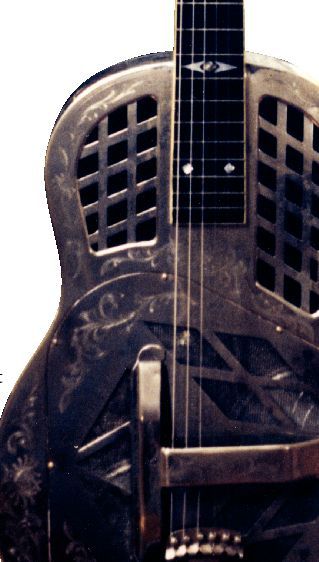
Despite the change in popular music over the last 100 years, one thing remains constant: we all crave a loud and flashy guitar. In the 1920s the loudest and flashiest guitars on earth came from the National String Instrument Corporation. National pioneered what is known as a ‘resonator guitar’, which utilizes a metal cone that sits under the strings and acts very much like a stereo speaker. The strings connect to the cone via a bridge. When the strings are played, the metal cone vibrates, moving air and amplifying the sound. The result is more volume, but also a completely distinct tone and timbre. In the days before amplifiers, the resonator was the only way for a guitarist to compete with horns and drums in a jazz or brass band and get a piece of the spotlight.

National made not only the loudest, but the most beautiful and elegant guitars of the day. Their metal body guitars were plated in brilliant chrome and nickel and inlaid with extravagant scrolls and floral patterns. Amongst these visual juggurants, one guitar stood out above all the rest: the Gold Plated Style 4 Spanish Tricone made for blues guitarist Tampa Red.

Tampa Red was one of the most prolific early blues artists of the 20s and 30s, recording over 300 tracks throughout his career. In 1928, the first year that Nationals were available, he bought the gold plated guitar. He soon became known as ‘The Man with the Golden Guitar’. The Style 4 was the most intricate and elaborate model that National produced, hand engraved with chrysanthemum carvings, a celluloid mother-of-pearl headstock and diamond shaped fret markers.
photo credit: Oklahoma Gazette
The tri-cone design featured three smaller resonator cones that were linked by a ‘T’ shaped bar, rather than the more popular and lower priced single cone models. The tri-cone was more difficult and expensive to build, but produced a more sophisticated tone with richer sustain. Apparently only one other golden Style 4 National was ever produced.

Unfortunately, Tampa Red’s career slowed down in the 1950s, he turned to drinking, and died destitute in Chicago in 1981. Rumor has it the guitar was stolen decades before and resided for half a century in a chicken coop. One day, in 1994, a woman walked into a Ray Clemon’s guitar store in Belleville, Illinois looking to sell a beat up and corroded old metal guitar that had the words ‘Tampa Red’ legible on it. After a cleanup and confirmation of its authenticity, the guitar eventually sold to the Experience Music Project in Seattle for $85,000.

While today resonator guitars are synonymous with the blues, in the 1920s and 30s they were the province of sophisticated big bands and far beyond the reach of most African American musicians. Tampa Red became the first black artist to record with a National guitar, and more or less invented the style of ‘bottleneck’ slide guitar that has shaped modern rock and roll. His Style 4 National has been called one of the most influential guitars in American history.

About the Author: Kevin Clinton writes for ResonatorGuitarGuide.com, an online hub run by musicians that covers information, reviews and tips and tricks for purchasing and playing a National, Dobro, Regal or other resonator guitars.

© 2013, Guitarz - The Original Guitar Blog - the blog that goes all the way to 11!
Please read our photo and content policy.

Saturday, 4 February 2012

Passion in Pinstripes: the Synyster Gates Custom-S

guitarz.blogspot.com - Guest blog by Olivia Lennox:
Musician endorsed guitars go way back. Axe masters such as Steve Vai, Slash and Joe Perry have all put their name to Les Paul guitars, while Fender and Gibson also have a huge catalog of models endorsed and used by famous guitarists. Schecter have had some big name relationships over the years too, including Mark Knopfler and Pete Townshend, but it’s their long-term sponsorship with Avenged Sevenfold guitarist, Synyster Gates, that has resulted in this latest and rather special offering.

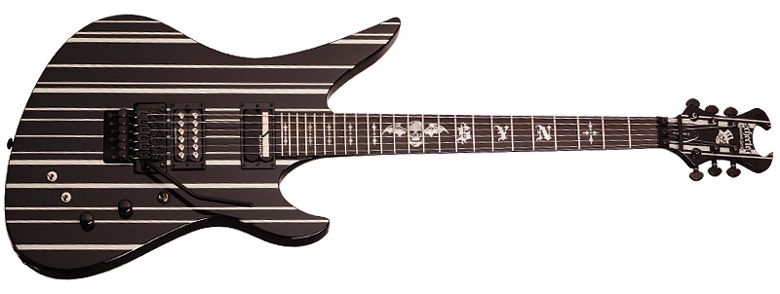
The Synyster Gates Custom-S features many of the specifications used by the Avenged Sevenfold guitarist on his signature model, including Sustainiac Stealth. This unique pickup system replaces the normal neck Humbucker and enables Gates to sustain feedback at all levels, a feature that makes Gate’s heavy attack style so distinctive.

Available from January 2012, the Synyster Gates Custom S is a startling-looking guitar. In black, three-piece mahogany and featuring silver pinstripes, the guitar is as distinctive in color as it is in design. With sleek Avenger body and clawed head, it provides a statement worthy of any hard rock or metal outfit. With left-handed models available, the price tag for the 24-fret, 25.5 inch neck guitar is $50 shy of the $1,700 mark, but it’s doubtful you’ll find a more distinctive Avenger axe for the money.

Sustainiac

Described by Gates as his “secret weapon,” the Sustainiac feature provides sustained and controlled feedback. In the position where the normal neck Humbucker pickup sits, the Sustainiac circuit processes the pickup signal and sends it to the Sustainiac driver, where the amplified note is turned into vibrational energy and fed back to the strings. The result is an ability to sustain feedback indefinitely, as if playing the guitar inches from a loud amp. Of course, the Sustainiac system can be turned off, allowing normal Humbucker tones.

Features

Gates’ signature pinstripe design is one of the most distinctive in the metal world. It works well with the Avenger shape, creating quite a unique-looking guitar that while clearly metal and rock in shape, also exudes a retro feel. Made in three-piece mahogany for extra stability, the Synyster Gates Custom-S is obviously built to last. With an ebony fingerboard that Schecter say produces a snappy and crisp attack with the density of Maple but with a stronger fundamental tone, the Synyster Gates Custom-S is equipped with a Floyd Rose 1000 Series bridge and a Floyd Rose 1000 locking tremolo system. The Synyster Gates Custom-S also has a Grover Rotomatics 18:1 gear ratio for finer tuning, Seymour Duncan Invader pickups that complement the Sustainiac system, 3-way volume toggle, on-off mini toggle, and 3-way normal-mix-harmonic mode mini toggle.

Schecter

When it comes to American guitar makers, Schecter are often overlooked with the likes of axe giants such as Fender and Gibson taking more than their fair share of the guitar world’s laurels. Yet, Schecter are a passionate guitar manufacturer and the Synyster Gates Custom-S is a good example of the dedication and fastidiousness they invest in their axes. The Custom-S had been on Schecter’s design drawing board for years, but the company always seemed reluctant to release the product to the market until they were wholly satisfied that it was not only the best guitar that they could produce, but also that it was as close to Gates’ original signature guitar.

For those not familiar with the company, Schecter was founded in 1976. Originally selling only replacement parts for Fenders and Gibsons, by 1979, founder David Schecter launched his own fully assembled electric guitars based on the Fender designs. An exclusive range, but very expensive, originally only 20 stores across America stocked Schecters. They owe much of their contemporary success to Pete Townshend of The Who, who fell in love with one of these early Schecter guitars and was the first high profile guitarist to use one on stage. Mark Knopfler of Dire Straits also used Schecter Stratocaster-style guitars to record "Making Movies", and has owned many Schecters over the years.

In 1987, Hisatake Shibuya, a Japanese entrepreneur and owner of the Musicians Institute in Hollywood, bought Schecter. Hisatake Shibuya devoted all his efforts to manufacturing high-end, expensive custom instruments. As a result, Schecter have been endorsed over the years by high profile guitarists, such as Stone Temple Pilots’ Robert DeLeo, and Jay Noel Yuenger and Sean Yseult of White Zombie. And Synyster Gates complements such esteemed company rather well.

Olivia Lennox is a professional writer and amateur singer/songwriter. Her day job involves writing on behalf of a premium sofa retailer and a number of travel blogs, but her real passion lies in strings and vinyl.

© 2012, Guitarz - The Original Guitar Blog - now in its 10th year!

Saturday, 28 January 2012

Gibson Moderne - "reissue" of a classic guitar that probably never existed in the first place

guitarz.blogspot.com - Guest blog by Steven Williams of www.dawsons.co.uk:

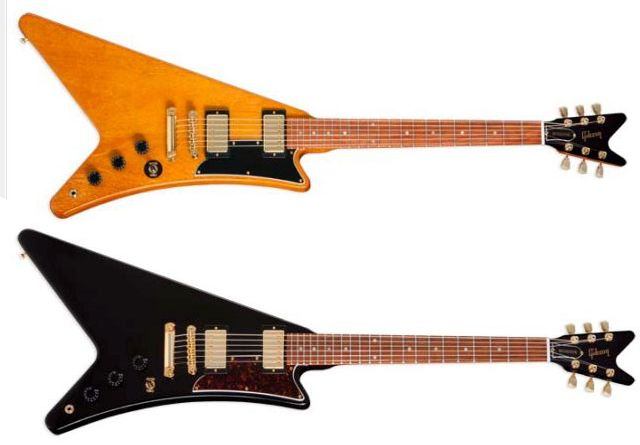
The Gibson Moderne is the closest guitar equivalent of the Bigfoot, in the sense that there is little evidence to prove its existence and there is yet to be solid proof of a real one anywhere on Earth. Guitar collectors consider the original Moderne the holy grail of Gibson collectable guitars. This is because the prototype designed in the late 50s as part of the ‘Futura’ range, along with the Flying V and the Explorer, failed to make it into production and simply vanished with no other prototypes appearing in pawnshops or even any trace of its existence until 1982 where it was released as part of the ‘Heritage Series’, and again later by Epiphone in Korea. Now decades later Gibson have released a new rendition of the fabled Moderne to start the hype, the mystery and the rumours all over again.

From what we know of this mystical creature, it appears to be almost identical to the original guitar. The very distinctive body, which looks like the cross-breed result of the Flying V and the Explorer, is made from mahogany along with its neck, which features a rosewood fingerboard and dot inlays. The Moderne is then finished off with a very cool forked headstock and to make sure it can replicate that vintage Gibson tone it has two ’57 Classic humbuckers.

The Gibson Moderne is going to pretty popular with collectors, as it’s the next best thing to the original, and people who simply like unique guitars. The guitar will be available in amber with a black scratchplate, or ebony with a tortoiseshell scratchplate. For more information on this guitar and its release date check out this site or sign up to the newsletter to be kept posted.

Steven Williams

© 2012, Guitarz - The Original Guitar Blog - now in its 10th year!

Monday, 26 September 2011

Yamaha SG-3 guest blog article over at Vintage & Rare

guitarz.blogspot.com:

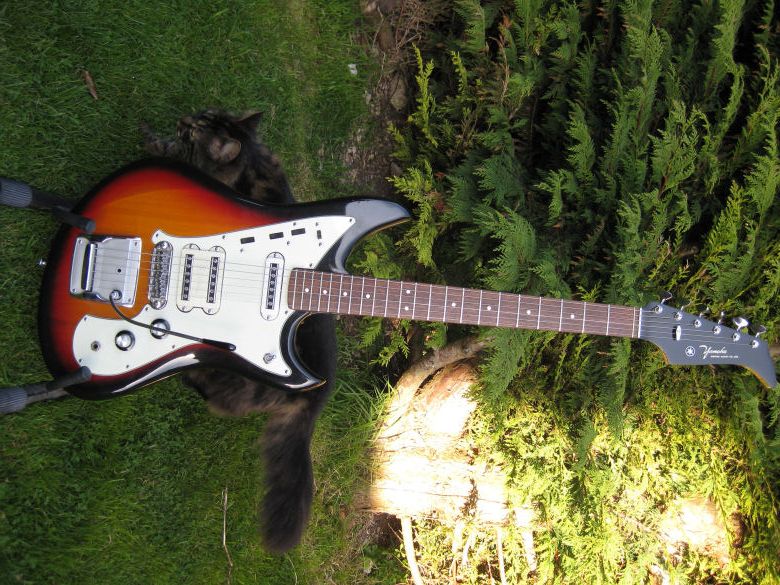
I've written a guest blog article for our friends at Vintage & Rare. It's all about what regular readers will recognize as a favourite hobby horse of mine, the Yamaha SG-3 guitar.

You can read all about it (plus siblings, the SG-2, SG-12 and SB-2) here.

G L Wilson

© 2011, Guitarz - The Original Guitar Blog - now in its 10th year!

Monday, 2 August 2010

A brief history of the classical guitar

guitarz.blogspot.com:

This is a guest post by Christopher Davis, author of The Classical Guitar Blog

Our instrument has a long history. Dating all the way back to 1400s when an instrument called the Vihuela flourished in Spain. Vihuela featured six courses of strings - a course being a pair of strings tuned to the same pitch in this case. Much like today's guitars, the tuning was fourths and one third. In today's terms, Vihuela tuning would be E A D F# B E.


Interestingly, vihuela was really a family of instruments: they came in all sizes. There are only three original Vihuelas in existence today, and each is slightly different in scale length and pitch. Some would even be considered bass-like. There was also a four course guitar that flourished in France during the Renaissance.

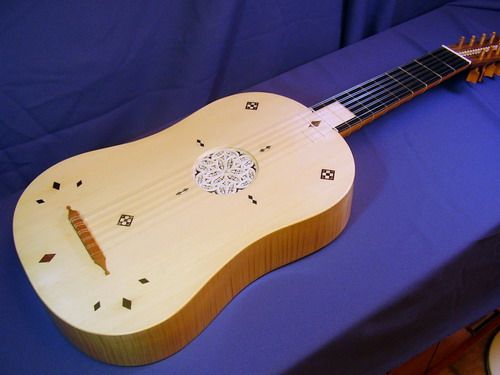
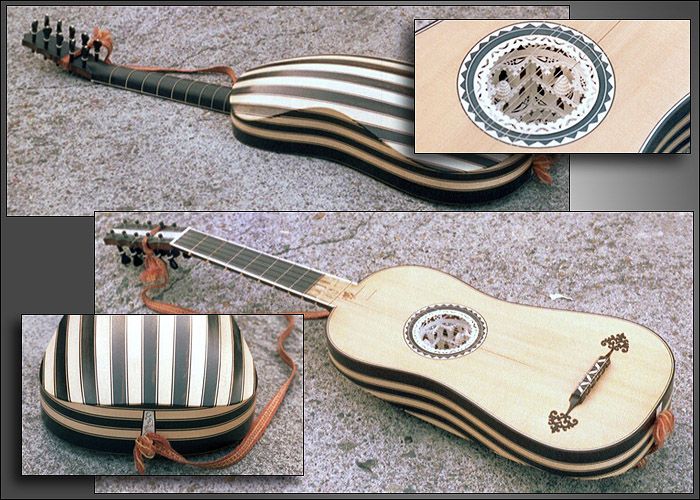
The Baroque guitar (around 1600-1800) flourished in many European countries. These guitars are as much works of art as they are instruments. They featured extensive ornamentation and inlays.


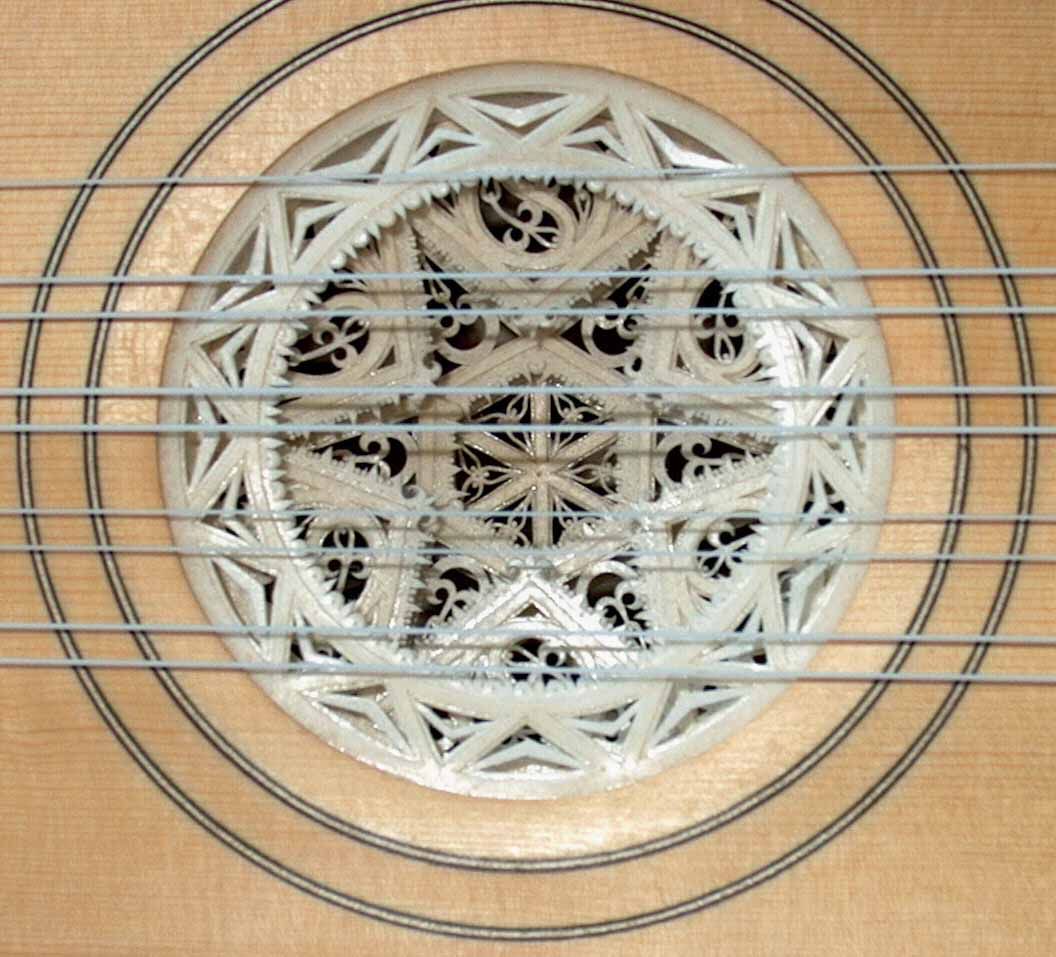
And elaborate rosettes that filled the sound hole.


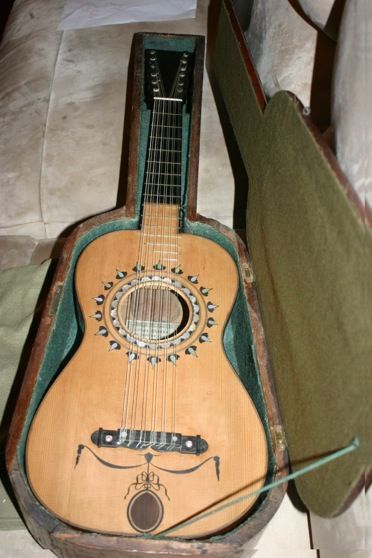
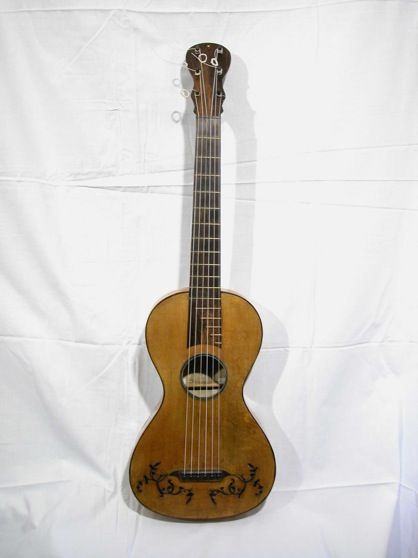
Around 1800 guitar builders gradually added a sixth course, and went to single strings. Check out this instrument, a six course guitar built around 1800.


And this one built just a few years later.


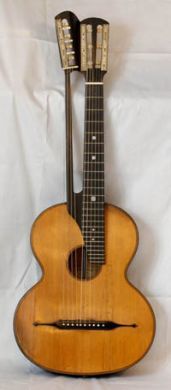
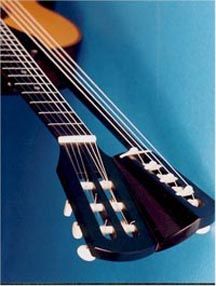
Like guitarists today, guitarists in the later 1800s explored guitars with more than six strings. Composer/Guitarist Johann Kaspar Mertz played on a ten-string instrument similar to the modern harp guitar.


Napoleon Coste also added more strings and wrote music for this seven string guitar.

The ten-string guitar is still alive today thanks to the work of Narciso Yepes.


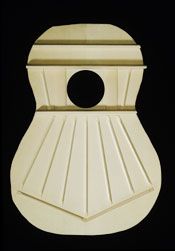
Classical, nylon-strung guitars today, however, are mostly pretty tame. And they're all descendents of the grand-daddy of the modern guitar, Antonio Torres. Torres built guitars in Spain during the late 19th century, and his instruments are the first that we consider modern. The bodies on his instruments were slightly bigger, and the braces on the underside of the top were arranged in a fan.


While electric guitars may feature gorgeous wood on the top, the back and sides of a classical guitar are often the most beautiful. Below is my guitar, built in 2009 by Michael Thames.


Most professional level classical guitars - called "concert guitars" - are custom shop jobs. They are built specifically for one person, and you choose a guitar builder based on the features you want. Some builders specialize is construction methods that are a bit unorthodox or strange. Check out the inside of this "lattice braced" guitar.


The tops on these guitars are extremely thin (you could puncture it with your finger), and that black stuff inside is carbon fiber. Another popular construction method today is a "double top". These guitars have a thin top, then a layer of honey-comb style material called Nomex, then another thin top is glued on the other side. Here builder John H. Dick shows off the inside of his guitar tops (towards the end).


There's a lot out there in the world of classical and nylon-strung guitars, and it's well worth exploring.


Christopher Davis

Guitarz - The Original Guitar Blog - now in its 9th year!

Wednesday, 14 July 2010

A Little Bit Country, a Little Bit Rock 'n' Roll

guitarz.blogspot.com:

By our guest blogger, Alexis Bonari

In the world of country, where acoustic instruments have ruled for decades, electric guitar, mandolin and banjo are inching their way into this predominantly unplugged arena that frowns upon change. Since the seventies, bands such as Lynyrd Skynyrd and the Allman Brothers have ridden the line between country and rock, creating their own type of sound that caught on like wildfire by using electric instruments. This sound influenced country's rebels like Waylon Jennings and Jessi Coulter, angering many country fans while creating a brand new breed of music and followers.

Ticking Off the Old Timers

Some of the country music elders have been outraged by artists like Shania Twain for her use of electric guitar, overproduction and a sound that wasn't considered "country” thanks to her (at the time) husband, Mutt Lange, who produced albums for groups such as Def Leppard and AC/DC. Mutt and Shania fused her country sound with electric instruments and a belly-baring rockin' look that exploded up the charts and sold out stadiums around the world. Reigniting country brought millions of new fans into a world that had become stagnant and paved the way for newcomers who wanted to incorporate electric instruments into their music but were too afraid to be shot down.

Metal Catches On

Just as electric guitar has made its mark on country, eighties metal hair bands were also influenced by country's acoustic sound and the effect that a simple acoustic guitar and a microphone had on their audience. Poison's "Every Rose has its Thorn” and dozens of other metal bands had their signature acoustic song that made them millions and brought tears to their fans.

Breaking Down Walls

Other top bands in their own right like ZZ Top and Heart, have just recently been embraced by country's hottest rising stars, expanding country's acoustic sound into a whole new arena of electric instruments. Taylor Swift who was featured on CMT's Crossroads with Def Leppard is a great example of why country rock is hotter than ever thanks to a little electricity!

Bio: Alexis Bonari is a freelance writer and blog junkie. She is currently a resident blogger at onlinedegrees.org, researching areas of online degree programs. In her spare time, she enjoys square-foot gardening, swimming, and avoiding her laptop.

Photo: The American country singer/guitarist Taylor Swift, with her Taylor acoustic guitar made of Acacia koa wood, at the Maverick Saloon & Grill in Santa Maria, California, June 16, 2006 by Dwight McCann / www.DwightMcCann.com.

Guitarz - The Original Guitar Blog - now in its 9th year!

Saturday, 29 August 2009

Rare Heartfield EX-2 electric guitar

guitarz.blogspot.com:

Hey folks, Its Ben from All About Guitars

Built in 1989 in Japan (Fuji-Gen Gakki), possibly a prototype because it differs from print advertising of the time as well as the catalog photo in terms of switch placement, scaled down strat-style body with 22 fret set-in maple neck with rosewood fingerboard.

Alder body with spectacular two piece bookmatched gray flamed maple top.

Original electronics included three single coil pickups with 3 way strat-like switching and two mini-switches with volume, tone, and midrange boost knobs.
Bridge is a Gotoh licensed Floyd Rose clone.

Tuners were also non-locking Gotohs (guitar has a locking nut).

The neck has large jumbo frets and is a pleasure to play.

Hardshell case with crushed velvet that matches the color of the guitar.

This guitar is for sell on ebay Heartfield EX-2


NB: There are a lot of blogs STEALING content and bandwidth. If you read this anywhere else but on guitarz.blogspot.com then you are reading a blog that STEALS content. Please support original bloggers!

Monday, 25 May 2009

KTone Lucite headless bass


My name is Scott Gentzen and I'm another guest blogger here at the Guitar Blog. I was drawn to this blog by its pictures of fabulous vintage oddball European guitars with much knob and switch goodness. I also have a thing for horrible design, modern designs with interesting new ideas, and mangled beat up vintage guitars. I haven't been as productive as the other guys yet, but will do what I can.

Speaking of which, here's my first entry....


This thing apparently is new and unplayed, but definitely has that 80s vibe with the small body and no head. The clear lucite body is a bonus. No holes in it though. I'm not a bass player but if it was a guitar I don't know if I'd even be able to play this...with the small body and no headstock but it looks way cool.

Sunday, 15 March 2009

self playing robot band

Hey its Ben from All About Guitars again
The Trons is New Zealand's band made of four robots who play guitars, drums and keyboard to convincing effect.
Ham is the frontman (vocals, rhythm guitar), Wiggy is the lead guitarist, Swamp is the drummer & Fifi is the keyboard player.

Tuesday, 3 March 2009

1982 G&L SC-2

The following is an article written by Glynn from the Generally Electric guitar blog, and concerns an unassuming-looking but highly desirable guitar from the genius that was Leo Fender:

G&L was founded by George Fullerton and a certain Leo Fender in the late 1970s following the deterioration of Fender’s relationship with Musicman, and the SC-2 was one of G&L’s earliest production guitars.

They’re perhaps best known as Bob Mothersbaugh of Devo’s guitar of choice but, for me, inspiration came from early Helmet and Band Of Susans records. The latter even used SC-1s, customised with pick-guards, in their album photography and on posters, apparently catching the attention of Leo Fender himself. Nevertheless they remain a relatively obscure guitar.


Being of rather Spartan design, the SC models are often thought of as “student” or "economy" guitars, though I’ve heard a conflicting story along the lines that G&L's intention was to produce a reasonably priced, high quality US built instrument to compete with inexpensive instruments from the Far East. Whatever the motivations, the SC’s utilitarian appearance is perhaps an acquired taste and, possibly as a result of this, it was never a terribly popular guitar. In fact, by 1984 the body shape had been completely re-designed, supposedly at the behest of a G&L sales team who were struggling to convince buyers with the original design.

Nonetheless, there's nothing budget about the construction, specification or tone of these guitars. Body, neck and fingerboard are all of high quality maple, while the hardware and Magnetic Field Design pickups are the same as those used on G&L's more expensive guitars. In fact the only area where any obvious financial savings have been made in the guitar's construction, other than the function over form design, is the use of fairly cheap looking plastic tone and volume controls which, if the owner found them particularly offensive, could be replaced for pocket change. Really, the SCs remain an outstanding example of how to make a no-frills affordable guitar, and it's a shame that, these days, manufacturers concentrate their efforts on making their entry level instruments ape the slick appearance of their pricier models, rather than focusing on build and component quality.

Ultimately, only around 600 SC-2s were made, and the registry at G&L owners’ site Guitars by Leo records only 100 or so, many of which have been modified to varying degrees, and often to their detriment. Mine, a lucky eBay find, was no exception, but too good an opportunity to miss all the same.

On first opening the case the smell of paint was overpowering. It had been treated to a rather uneven spray-can paint job and the fretboard, including the fret wire itself, had been varnished with a brush. Worse yet, there was a tellingly humbucker shaped indentation between the two original pickups and, more tellingly still, the control plate had two additional holes drilled into it.

With the SC-2’s rare-bird status in mind, I decided to set about restoring my SC-2 to its original condition, or as close to it as possible. This began with the painstaking task of gently removing the excess varnish from the fret wire with a razor blade and cleaning the tarnished hardware with Brasso. I then managed to source a replacement control plate from a 1983 SC-3 body I found on eBay.

Having never refinished a guitar before, and concerned about what I’d find under the existing paint, I decided to let a professional finish the job. In the end, I settled on David Ridgeway of Ridgeway Guitars who, over the course of a couple of months, made me very grateful I didn’t try to do the work myself.

Having stripped the spray paint, David discovered an unevenly gouged hole between the pickups which had been filled with soft putty. Having removed the putty, he re-routed the hole and then filled it with a properly sized block of maple. After sanding and priming, the guitar was finally finished in blue.


Oddly, as this work was being done, G&L re-issued the SC-2 in updated form. Well, actually G&L say that it’s “not a re-issue” and is, in fact, an “evolution”, but I think their efforts to evolve the design have robbed it of all the charm that made the original truly special. If you want one, my advice is to keep your eye on eBay in the US and buy the real deal.

Monday, 2 March 2009

Saturday, 28 February 2009

My Third Electric Guitar Project

[Ben writes...]

My Third Electric Guitar Project
I rebuilt 90's "Maison" made in Korea electric guitar.
This one is for my little brother that just learning to play on guitar.

Guitar Body: Sandvich.
Guitar Neck: Maple.
Bridge: Vintage style.
Guitar Tuning Machines: Plain.
Pickups: H-S-H Maison.

Pictures of the guitar:


for more visit: All About Guitars & Guitars 110

Tuesday, 24 February 2009

My second electric guitar project

[Ben writes...]

This guitar was a 70's "Harmony" made in U.S.A "strat" style electric guitar
Almost A year I had work on this one!
Body: Alder.
Neck: Maple.
Bridge: Gotoh.
Tuners: Gotoh.
Pickups: Seymour Duncan Jazz, SSL1 - Middle/Neck.


The idea for this shape came to me from the funk rock band "The Offspring" Sign:


For videos and more pics: http://guitars.110mb.com/index.php?p=1_11_Second-Guitar-Project

Saturday, 21 February 2009

My first electric guitar project

Hey there, I'm Ben from All About Guitars and Im gonna keep this blog rocking!
First I'll introduce u to my website: Guitars 110 .

lets begin...
my first electric guitar project:
I started from an unknown 70's japanese "strat" style guitar, named "Stiefel".
And here are the features:
Guitar Body: Many pieces of different woods.
Guitar Neck: Maple.
Fretboard: Rosewood Scalloped.
Pickups: Fender Made In Mexico.
and here are the pictures of the guitar:


After a week, I'd made a pickguard from wood:


sound check: http://www.megaupload.com/?d=71RPJR7Y

Friday, 15 August 2008

My Guitar (by Gary)


I only have one electric guitar and this is it, an early '90s ESP Telecaster. The pups are all supposed to be Seymour Duncans, though I haven't disassembled it to find out. It doesn't matter though, because it sounds and feels great. There's loads of versatility from the 5 way switch and coil tap on the bridge pup (an SD Jeff Beck) (7 combinations, I think) It also feels great - well worn and well used. I've had this for less than a year - I bought it after i was loaned it when my Koreacaster broke for the second time.

Wednesday, 13 August 2008

Casio Synth Guitars


Casio synth guitar


Ah yes, the constant quest for the sound of tomorrow - the synth guitar. There have been many advances since these Casio's were produced - though I know Bob Weir of The Grateful Dead (Best Band In The World) used a Casio MG510 for a while.
I've never played a synth guitar, but of course with midi pickups and
everything it is much easier these days to get a realistic and responsive system - Garcia and Phil Lesh of the Dead also used them - I remember seeing The Dead at Wembley and Garcia's trumpet playing was stunning. This one is here, with the added advantage that you can type in the numbers "07734", turn it upside down and say "hello"!


This is the one that Bob Weir played for a while - the MG510

Tuesday, 12 August 2008

Groovy Guitar


I suppose if you're going to plough the lonely furrow of guitar playing, you might as well plough it with a guitar that's been, you know, ploughed. Apparently the grooves provide increased resonance.

Info from Blueberry: All Blueberry guitars are handmade and hard carved on the Island of Bali. Bali is home to the most gifted woodcarving artists in the world, whose traditions go back for thousands of years. Once our guitars are completed, they are sent to Montreal where tuners are added and final setup, inspections and adjustments are made. Prior to this project there had never been a guitar produced on Bali Island. It took twenty months from the conceptualization of Blueberry guitars in August 2005 until our Master Luthier agreed that our guitars were perfect and had his approval to be sold. Here

LinkWithin

Related Posts with Thumbnails

ShareThis