Showing posts with label Product news. Show all posts

Sunday, 8 November 2020

Something Strange Came Out Of The Skies

Please excuse this post for being not particularly guitar-related. Having said that, there are quite a few guitars, basses and mandocellos (!) used on the album. I'll go over all that in more detail in a follow-up post.

I am delighted to be taking pre-orders for the brand new Spurious Transients album, our very first to be released as a vinyl LP (and on Sky Blue coloured vinyl too!)...

"Something Strange Came Out Of The Skies" is a documentary soundtrack concept album using genuine eyewitness testimony to tell the story of "The Welsh Triangle" UFO phenomena of 1977.

Journey through bizarre tales of UFO sightings and close encounters via songs, musical soundtrack and spoken word content, taking in a variety of musical styles through psychedelia and dub to trip hop and ambient electronics.

A very limited quantity of the LP are available with a 12" square fine art print on 300gsm matte board PLUS a 12-page A4 full colour "UFO zine" complete with lyrics, sleeve notes, UFO newspaper cuttings and articles!

For your 10% discount code, what item of "flying" crockery is synonymous with the term UFO?

Expected release date of physical product: 15 January 2021

Now available to pre-order at:  spurioustransients.bandcamp.com


Friday, 6 May 2016

Viral video of the new SENSUS Smart Guitar

guitarz.blogspot.com:


Could this change guitar forever? What do we all think?

G L Wilson

© 2016, Guitarz - The Original Guitar Blog - the blog that goes all the way to 11!
Please read our photo and content policy.

Wednesday, 18 March 2015

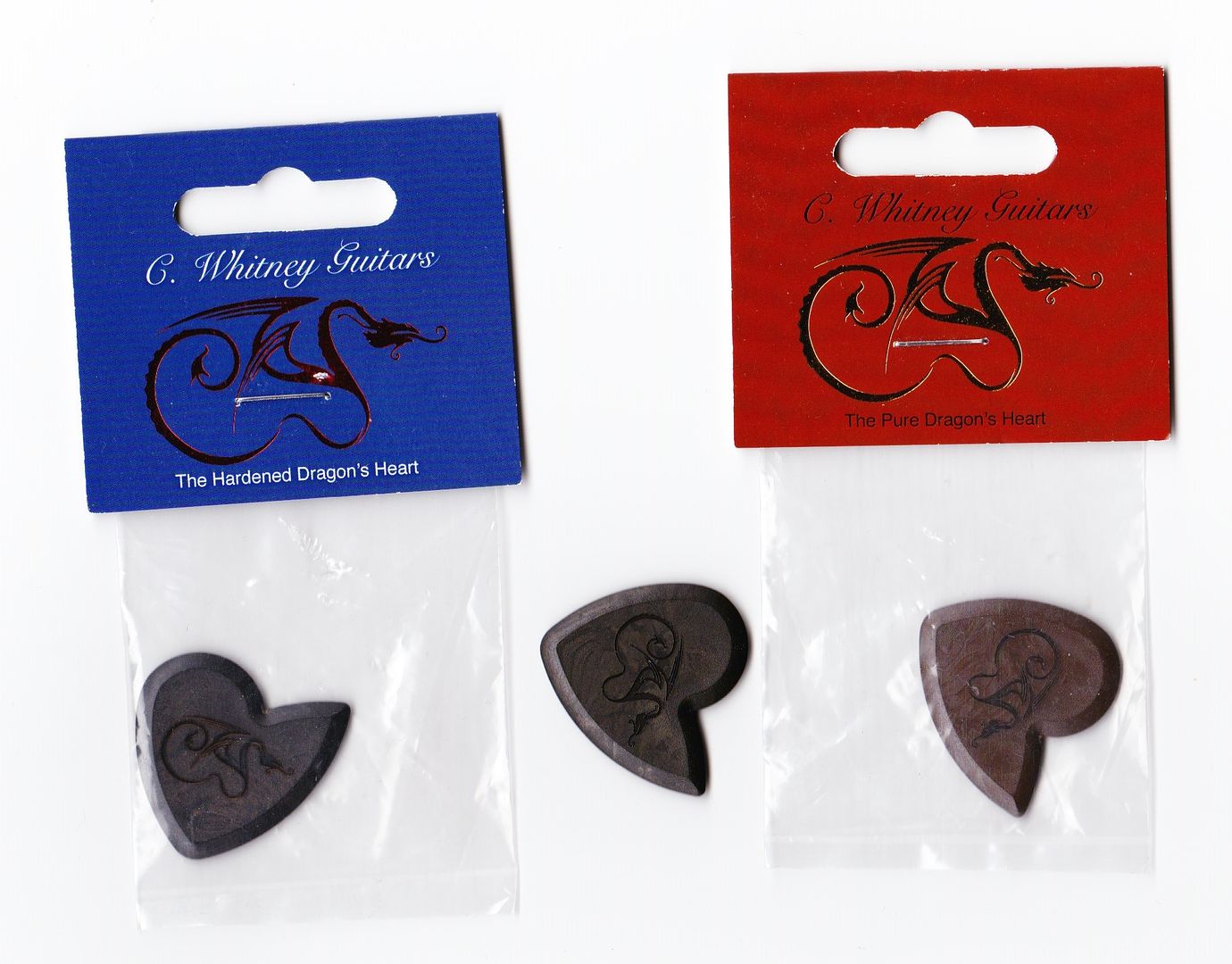
Dragon's Heart picks from C. Whitney Guitars

guitarz.blogspot.com:
From Fort Worth, TX, in the United States come three varieties of Dragon's Heart picks by C. Whitney Guitars: Original, Pure and Hardened. They are made from Polyamide-imide with glass fibre or graphite fill respectively for the Original and Pure varieties, and offer between 1,000 and 1,500 hours playing time. These are a chunky "double-thickness" pick with a bevelled edge. This design is very easy to grip and moreover to keep hold of in your picking hand. Three different shaped corners (or "tips") allow for enough choice to cover most preferences and playing styles.

The picks are designed for faster cleaner guitar playing and also to impart tone. The Original variety offers a brighter tone, whereas Hardened gives a warmer, softer tone, and the Pure makes for a faster action.

G L Wilson

© 2015, Guitarz - The Original Guitar Blog - the blog that goes all the way to 11!
Please read our photo and content policy.

Monday, 23 December 2013

Monster Grips: The Ultimate Guitar Pick Grip!

guitarz.blogspot.com:
Have trouble keeping hold of your guitar pick? Find that the pesky thngs are always slipping though your fingers? Well, maybe this product being launched via KickStarter is for you. Check 'em out!

© 2013, Guitarz - The Original Guitar Blog - the blog that goes all the way to 11!
Please read our photo and content policy.

Friday, 29 November 2013

Check out the Hammer Jammer from Big Walnut Music

guitarz.blogspot.com:


The Hammer Jammer from Big Walnut Music is certainly one of the most interesting guitar add-ons I've seen in a while. As to what it does, the clue is in the name; it more or less converts your guitar into a hammer dulcimer, adding a whole new palette of sounds to the instrument. I think the above video illustrates quite nicely what it's all about.

G L Wilson

© 2013, Guitarz - The Original Guitar Blog - the blog that goes all the way to 11!
Please read our photo and content policy.
Thursday, 1 August 2013

Squier steps up their game with cool new additions to the Vintage Modified series

guitarz.blogspot.com:
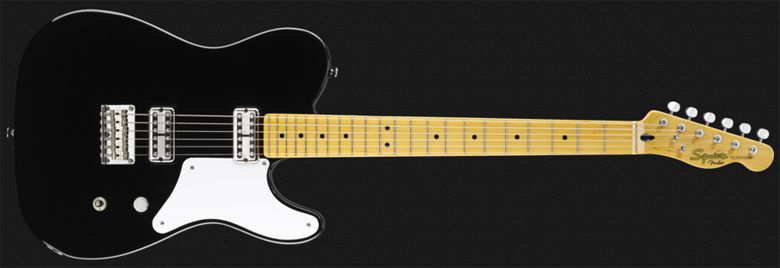
Squier Vintage Modified Cabronita Telecaster
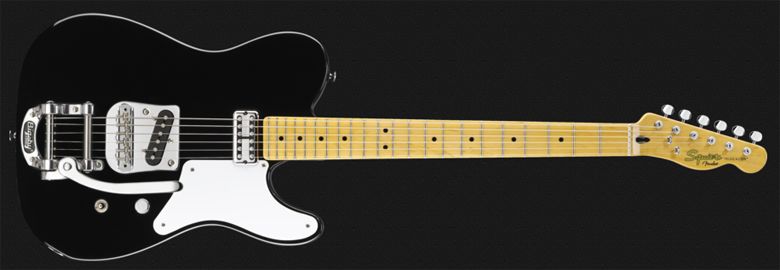
Squier Vintage Modified Cabronita Telecaster with Bigsby
Squier Vintage Modified Cabronita Precision Bass
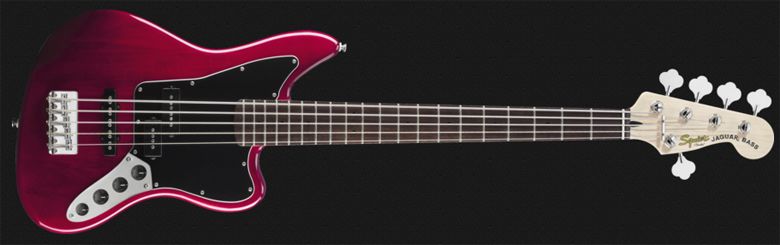
Squier Vintage Modified Jaguar Bass V
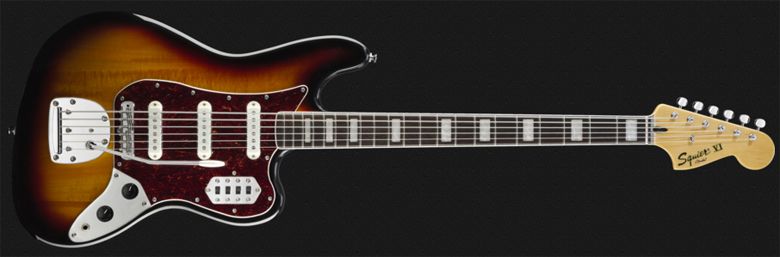
Squier Vintage Modified Bass VI
It looks like this is a long-overdue bid for Squier to be taken seriously with these latest guitar and bass offerings, and showing that they are not just about entry-level instruments.

Me, I'm a little peeved that they brought out this new version of the Bass VI which is far more faithful to the original than the Fender Pawn Shop Bass VI released earlier this year. The Squier also retails for under half of what I paid for the Pawn Shop version here in the UK.

I'm also very interested in the Cabronita Tele with Bigsby - at last an affordable Tele... WITH a Bigsby. How cool is that?

G L Wilson

© 2013, Guitarz - The Original Guitar Blog - the blog that goes all the way to 11!
Please read our photo and content policy.
Friday, 28 June 2013

EpicGrip - The Titanium Guitar Pick

guitarz.blogspot.com:

It sure looks cool but what are the advantages of a EpicGrip Titanium guitar pick to the modern guitarist? EpicGrips mainman John Wundes spills the beans:
Solid Titanium, super strong, incredibly light-weight, solid grip, durable as hell... This is the pick that rocks as hard as you do. Smooth rounded edges, high-polish, killer grip, insane durability, fantastic price. You won't find ANY titanium pick at this price, much less one with this level of craftsmanship.

Titanium is used in cars, planes, hiking gear, medical implants and spaceships, because it's light as plastic, with the strength of steel! The high strength to weight ratio makes the EpicGrip a great general purpose pick, and when you need to do high speed precision picking, THIS should be the pick you reach for.

Because it doesn't slip, the EpicGrip feels like an extension of your hand. Sound-wise, Titanium picks have a stronger attack if you hold them loosely, and a tighter grip softens the tone. It gives me an extra bit of dynamic range when I'm playing. Some rock guitarists in the 80s used to boil their strings to achieve a custom sound - now you can tweak your sound mid-riff, just by using the EpicGrip pick.
For more information and to get your EpicPick, please see the EpicGrip Kickstarter page.

G L Wilson

© 2013, Guitarz - The Original Guitar Blog - the blog that goes all the way to 11!
Please read our photo and content policy.
Wednesday, 5 June 2013

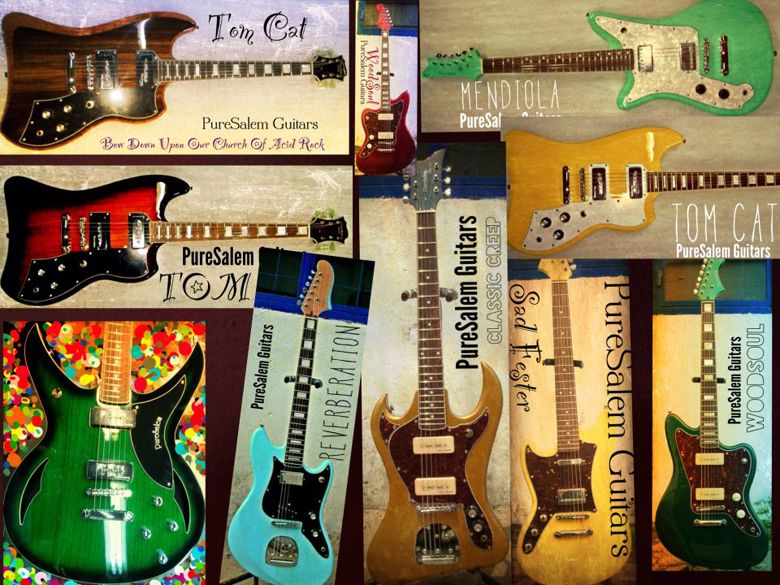
More from Pure Salem guitars - just look at these beauties!

guitarz.blogspot.com:
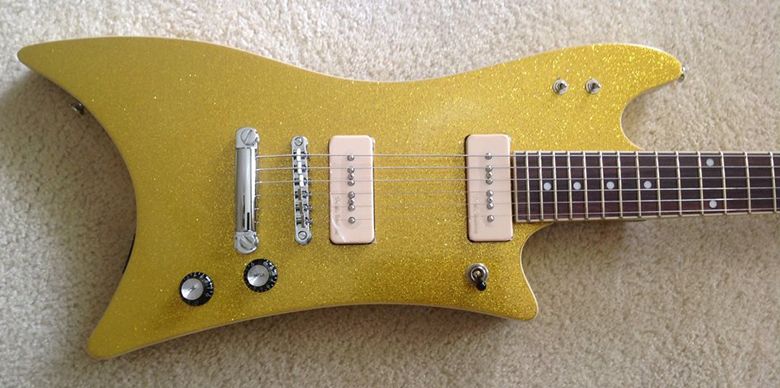
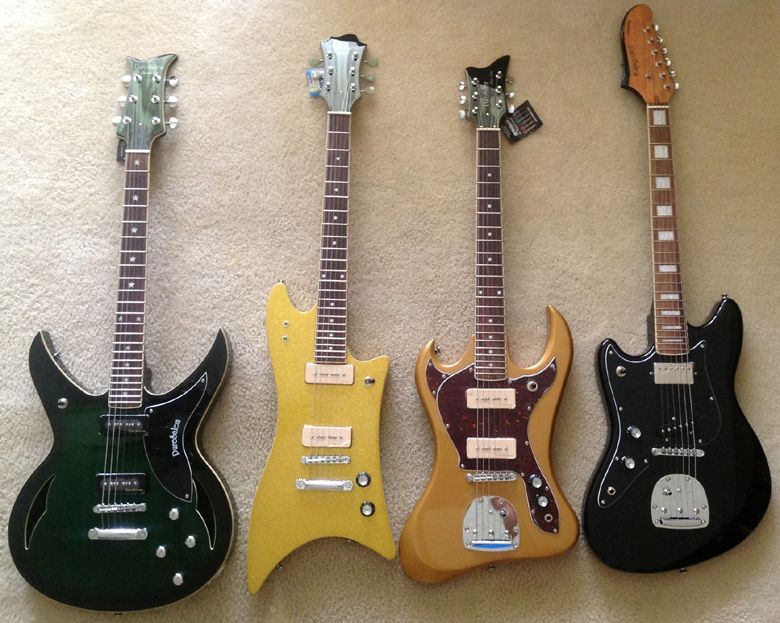
Just under a year ago we looked at a couple of prototype designs from Pure Salem, a new guitar company offering retro-styled guitars with modern production standards and playability. Pure Salem have recently unveiled their range of guitars (although not all the prototypes made it to final production models in case you were wondering what became of design based on the Meazzi Zodiac).

However, just look at what they ARE offering (pictures above), all of which are available in all finishes in both LEFT and RIGHT-HANDED versions. Lefties, take note!

Some of the guitars are obviously Fender inspired (the Wood Soul, Sad Fester, and Reverberation models), whilst the Tom Cat is a modern take on the Guild S-200 Thunderbird. As for the other designs, sharp-eyed readers may recognise some of the influences from vintage guitars featured here on Guitarz.

If you want a closer look, you could do far worse than check out this video demo of the Pure Salem Wood Soul by John Way:


Pure Salem guitars are priced between $625 and $825 depending on model. See their website for further info and/or their very busy FaceBook page. I think they look and sound fantastic, and would love to get my paws on one.

G L Wilson

© 2013, Guitarz - The Original Guitar Blog - the blog that goes all the way to 11!
Please read our photo and content policy.

Thursday, 25 April 2013

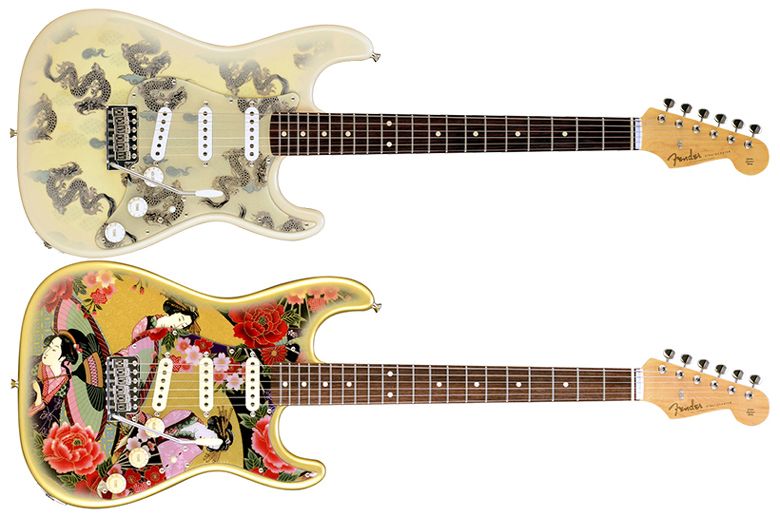
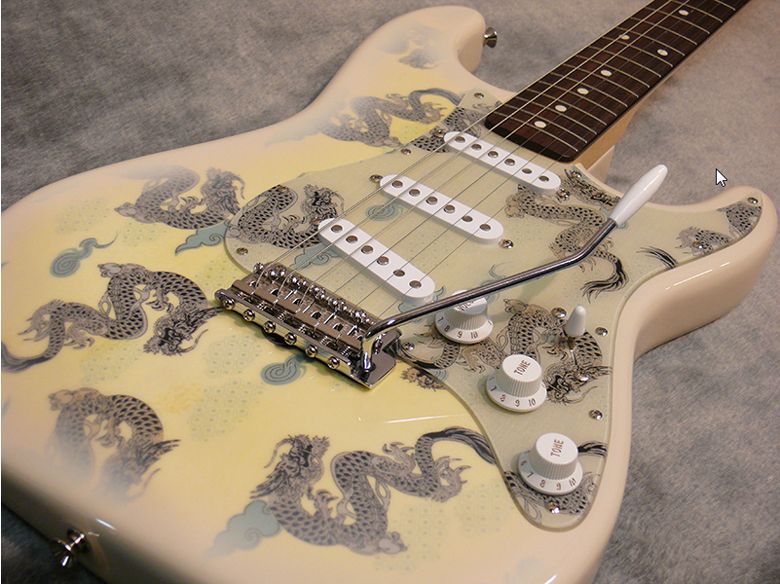
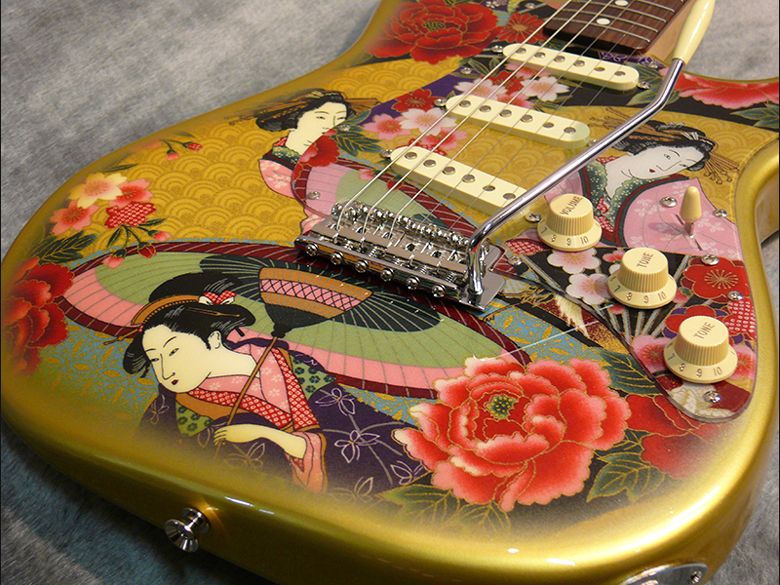
Fender Japan ST62-SPL Stratocaster in a choice of two eye-catching Japanese print finishes

guitarz.blogspot.com:
Although we here at Guitarz may sometimes speak a little disparagingly of the Stratocaster, it's not really because we don't like the Strat - we appreciate its place in the history of the electric guitar - rather its very omnipresence and a plethora of copies both "el cheapo" and boutique mean that the originality of Leo Fender's great design has become so diluted that when we see a Strat we find ourselves hard pressed to get excited by it. This is why we only ever feature the Strat on Guitarz if it is in some way unusual, be it customised, made from unusual materials, or if it has an unusual or particularly eye-catching finish.

Personally, I can categorically state that I do NOT hate the Strat. I have owned eight or nine of them over the years, having been a Strat player since 1987. I still own and play a Strat nowadays, although not my main go-to guitar it does have its uses and I wouldn't want to be without one. If money were no object and I was in the market for a new guitar, a Stratocaster would not be at the top of my list. However, having seen these latest offerings from Fender Japan does get me thinking, "Oh yes, I'd like one - or both - of those!"

The Fender Japan ST62-SPL Stratocaster is available in two quite tantalizing Japanese print finishes reminiscent of Fender's own pink paisley and blue floral designs, and indeed the Fender Japan TL69 SPL Telecaster which we looked at on this blog two years ago. Although I believe these particular Strats are being produced for the Japanese home market only and not for export, it does show how well Fender's marketing efforts work when someone like me sees a few pretty pictures and instantly wants one, even if underneath the finish it is a basic no-frills Stratocaster with all the usual Stratocaster accouterments. In fact, other than the finish the only unusual feature of the ST62-SPL Strat is that the output socket has been relocated onto the side of the guitar, possibly so as not to obscure some of the finish.

It's nice also, I think, to see Fender Japan issue a series of guitars that celebrates their own Japanese-ness.

G L Wilson

© 2013, Guitarz - The Original Guitar Blog - the blog that goes all the way to 11!
Please read our photo and content policy.
Thursday, 4 April 2013

Design your guitar with Moniker Guitars

guitarz.blogspot.com:
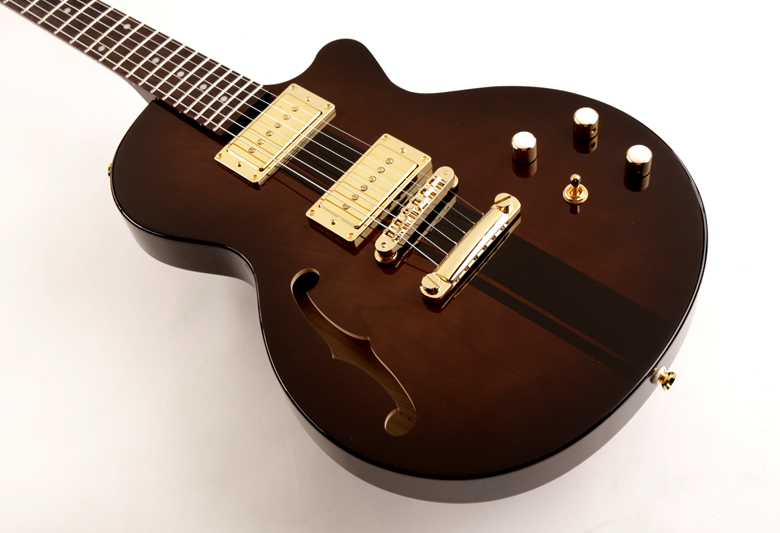
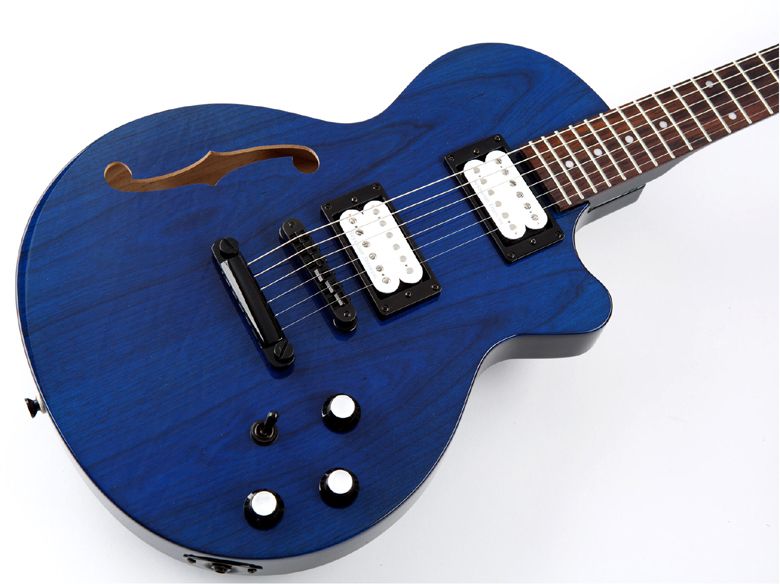
Kevin from Moniker Guitars here. Moniker Guitars is a small/brand new Austin, TX based guitar maker. We build custom electric guitars that you can design and order at MonikerGuitars.com. No one else is doing anything quite like this and guitar players have responded to the chance to design their guitar by choosing colors, parts, and even adding text or graphics.

We're currently running a Kickstarter campaign and have some awesome deals on our new semi-hollow guitars. Early bird specials starting at $800.

Kevin


Looks great to me - head on over to MonikerGuitars.com and/or their Kickstarter campaign for more information. - G L Wilson

© 2013, Guitarz - The Original Guitar Blog - the blog that goes all the way to 11!
Please read our photo and content policy.
Wednesday, 27 March 2013

Guitar review: Fender Pawn Shop Series Bass VI

guitarz.blogspot.com:
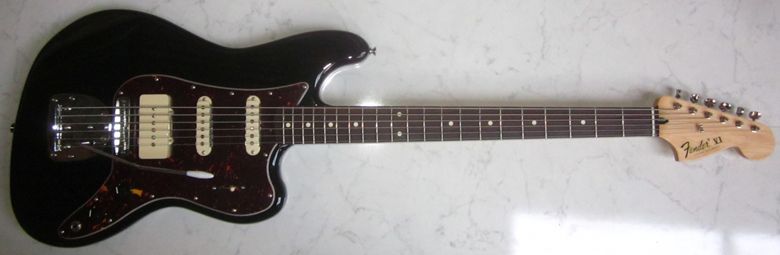
Fender's Pawn Shop series are - in their own words - "guitars that never were but should have been". The concept seems to be that these designs are influenced by weird old modified guitars that you might find in a pawn shop. Hence we see different pickup combinations and trem systems and variations on design that you wouldn't expect to see on stock Fender guitars. In some cases, the Fender Pawn Shop guitars go beyond such minor modifications and we see alterations to actual body designs, e.g. the Mustang Special has a re-designed chunkier body shape, the '72 is essentially a Thinline Strat, and the Offset Special is reminiscent of a Thinline Strat with an offset waist and equipped with a Jaguar/Jazzmaster tremolo.

The model that I was really interested in, however, was the Fender Pawn Shop Bass VI. I've been hankering after a Bass VI for years. I used to have a Hohner Hollywood (so-called) Bass VI but its 25.5" scale length meant that you couldn't really tune it down a full octave below a regular guitar, and so I had to make do with it being tuned down to G. That's still a whole lot lower than most baritone guitars which are often tuned to B or C - or A if you're lucky, but it still wasn't "bass" enough and that always really bugged me.

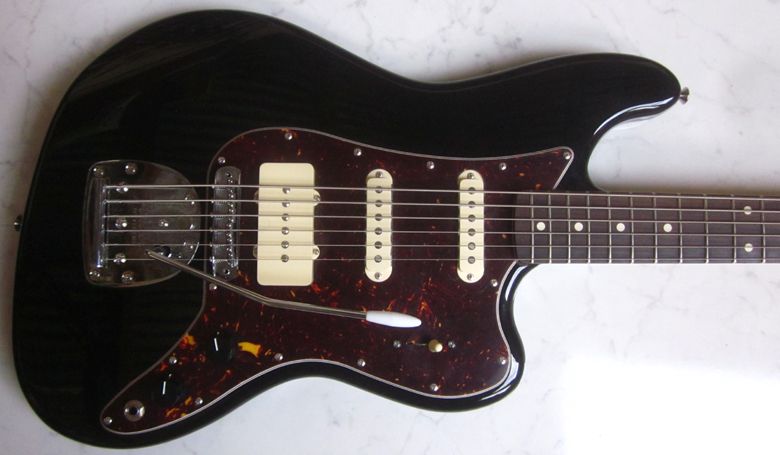
The Pawn Shop Bass VI, like the original, has a 30" scale and so has no such problems with being tuned to E. It differs from the original Fender Bass VI in a number of minor details: most notably it has a JZHB pickup in the bridge position - this does look a lot like a large P90 pickup but my understanding is that it is a double coil version of the Jazzmaster pickup. In the neck and middle positions are a pair of Jaguar pickups. These are all controlled by a Strat-like 5-way switch. It's a disappointment that Fender didn't use the individual pickup on/off switches plus "strangle" switch on a chrome plate as on the classic Bass VI. This doesn't seem so much like a quirky modification, rather a brazen cost-cutting exercise, which is a pity because I think Fender missed a trick here.

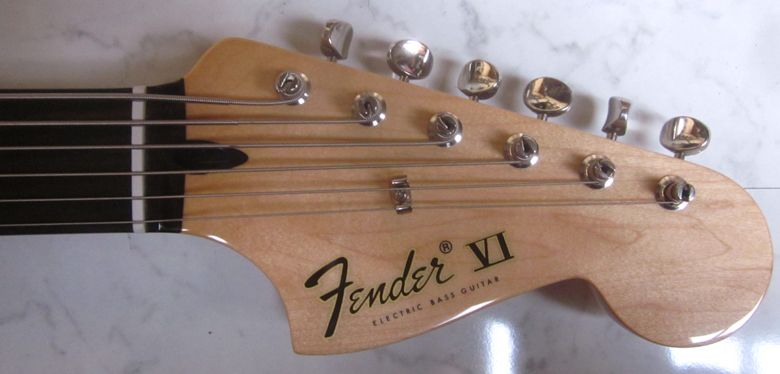
There's another chrome plate missing beneath the volume and tone controls and output jack. Here on the Pawn Shop Bass VI the pickguard has been extended to include this area. Other than that, it's a pretty faithful reproduction of the original. The neck is unbound, but then not all the "originals" had bound necks anyway. Interestingly the headstock bears the legend "Fender VI" (as used on the very first Bass VIs rather than the later "Fender Bass VI") with "Electric Bass Guitar" in smaller lettering beneath.

Part of the reason that I wanted a Bass VI was so as to encourage me to play more melodic parts and lead lines, as so often in a band situation I find myself ending up playing rhythm guitar which - although I am happy to do - I want my share of the limelight too. I also have an album to record and I was looking for new "voices" to use in my music, and decided that a Bass VI could be the very thing.

So, how does it play and sound? Well, the first thing that struck me was that it packs a punch as a bass. Some uninformed people insist on calling the Fender Bass VI a "baritone guitar". Believe me, it is nothing of the sort; indeed I'd go so far as to say that to call it a baritone guitar is an insult. It's as much of a bass as a Fender Precision or a Jazz Bass. Other people say that it's a "bass for guitarists", but I don't think this is so much of an insult - there's a lot of truth in the statement. It has six strings, it is tuned like a guitar only an octave lower, and the string spacing is like that of a guitar. It even has a tremolo (but I'll talk about that some more later). A bassist friend of mine tried out the Fender Bass VI and commented, "I'm not sure how I'm supposed to play it. Do I play it as a bass or as a guitar?"

For the most part I do play it like a guitar, although I expect I'll end up using it for bass lines too. The one thing that took a little getting used to was the extra stretch on a 30" scale. It didn't feel too bad, but when I changed back to playing a regular scale guitar again, that felt really awkward. However, having been changing back and forth between guitar and Bass VI for a month now I have gotten used to the differences in scale length.

It is possible to play guitar chords, but open chords can sound muddy; you wouldn't really want to strum on a Bass VI, but careful arpeggiation of chords can be quite effective. Barre chords are possible too - they sound better the higher up the neck you travel. I've even played the Bass VI using a capo on certain songs so as to put me into baritone guitar range - that has proven to be quite effective.

Initially I was underwhelmed by the JZHB pickup in the bridge position. My initial reaction was that Fender had put it there just for the sake of making it different so as to justify the "Pawn Shop" label. However, I was initially using my guitar amp but after a band performance during which the poor amp struggled, I got myself a most excellent bass amp from Roland's Cube series which complements the Bass VI beautifully. Prior to that I only ever used the bridge JZHB pickup in conjunction with the middle Jaguar pickup through the guitar amp because I thought that on its own it sounded thin and weedy, I have since found that through a proper bass amp it gives me a really usable treble sound that cuts through nicely when playing in a band situation that includes another bass player.

When playing with another bass player, I've been very conscious that I need to dial in a different bass sound so that we don't clash or else end up in one big bassy muddle. Using the JZHB pickup helps cut through, but also choice of effects helps too - and thankfully my Roland Bass Cube has a whole load on-board.

The Bass VI is an instrument crying out to be played with a chorus effect. It really does bring the sound to life. I've also found it best to scoop the middle out on the EQ on the amp, but obviously one can experiment and find out what works best for them.

I love also the sound of the Jaguar pickups, although I think perhaps I would use them more when recording rather than when in a live situation when I want my sound to be distinct from that of the (4-string) bass player in the band.

Now the tremolo... it's the same kind of Fender trem as featured on their Jaguar and Jazzmaster guitars. That, for me, should be a good thing as I've never got on with Strat-style tremolos. However, with this particular instrument I cannot get the trem arm to snap into place. I really don't want to force it into position and possibly break something. I've tried asking Fender in the UK what I might be doing wrong and so far have not received any response. I did wonder if the shop may have given me the wrong arm, but seeing as it was a shop specialising in bass guitars that is rather unlikely (the only other Bass VI they had was the Eastwood Sidejack and I remember that had its trem arm installed - also that's another Fender Jaguar/Jazzmaster type system). [EDIT - 16 April 2013: Today I received a parcel from Fender containing a threaded tremolo arm for Bass VI. It fits and operates percectly. Yes, it does seem that the shop gave me the wrong arm in the first place. A big "thank you" to Michael at Fender Customer Relations for sorting this out for me.]

I've seen the opinion expressed elsewhere thay the tremolo on the Bass VI is no great shakes anyway and is more of a gimmick than a usable trem, but I would like the opportunity to find out for myself. (Earlier I mentioned the Hohner Bass VI I used to own. That had a Wilkinson trem that was very effective in use).

Having seen comments on forums such as offsetguitars.com it seems that some people are buying these Pawn Shop Bass VIs and modifying them to look and function like the originals, which is an irony seeing as the whole point of the Pawn Shop series was to present ready "modified" guitars. I think Fender should have done a straight reissue of the Bass VI rather than a Pawn Shop version. A little bit of chrome shouldn't hike the price up very much.

I know it sounds like I have a few niggles with the Fender Pawn Shop Bass VI, but despite the unnecessary Pawn Shop accoutrements, despite the mix-up with the trem on my example, I do love my Bass VI dearly. I feel as if it might be the perfect instrument for me and can honestly say I haven't been as excited about a guitar purchase as much since I bought my first ever Fender Stratocaster circa 1987.

The Bass VI is a Made in Mexico Fender, which is something a few years back might have caused some to view it with concern, but Fender Mexico have really got their act together now and this is a quality-made and beautifully-finished instrument. Retails in the UK at prices between £601 and £755 so shop around. Colours are black with tortoiseshell pickguard (i.e. mine), sunburst with tortoiseshell pickguard, and candy apple red with matching headstock and white pickguard.

Just DON'T call it a baritone guitar, OK?

G L Wilson

© 2013, Guitarz - The Original Guitar Blog - the blog that goes all the way to 11!
Please read our photo and content policy.

Thursday, 28 February 2013

Gretsch Roots Collection G9500 flat top parlour-style acoustic guitar

guitarz.blogspot.com:
Guitarz reader Alan writes:
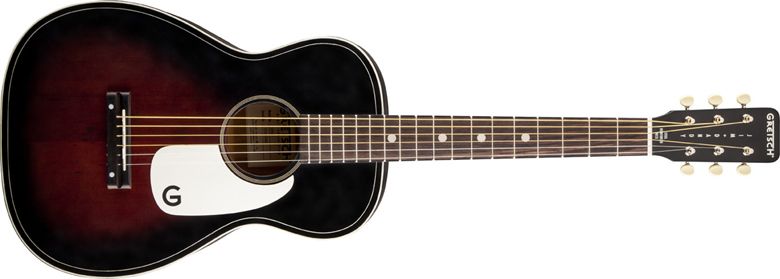
You gotta see this. Gretsch has rolled out a new guitar for their "Roots" series, recreating guitar models from a much earlier era. This time out they put their mark on a guitar that echoes the stylings of old plywood Harmony "Stella" models from the '40s-60s. Right down to the "Steel Reinforced Neck" stencil on the headstock.
Or, as Gretsch themselves put it:
Crackerjack quality at a sober price! Faithfull to the Gretsch "Rex" parlor guitars of the 1930s, '40s and '50s, the all-new G9500 Jim Dandy Flat Top parlor-style model embodies everything that was great about everyone's first guitar. Everything and then some, that is, because the G9500 is crafted with select guitar woods and is fully lined and braced for warm and pleasing tone, with a 24" scale for endless hours of playing comfort.
Indeed, it is a guitar that appeals. I've always had a soft spot for parlour-sized acoustics, and absolutely love those retro looks but with  the added bonus of modern quality materials and construction it should sound and play a whole lot better than its influences.

G L Wilson

© 2013, Guitarz - The Original Guitar Blog - the blog that goes all the way to 11!

Thursday, 10 January 2013

Fender reissues the Super-Sonic as part of its Pawn Shop series

guitarz.blogspot.com:
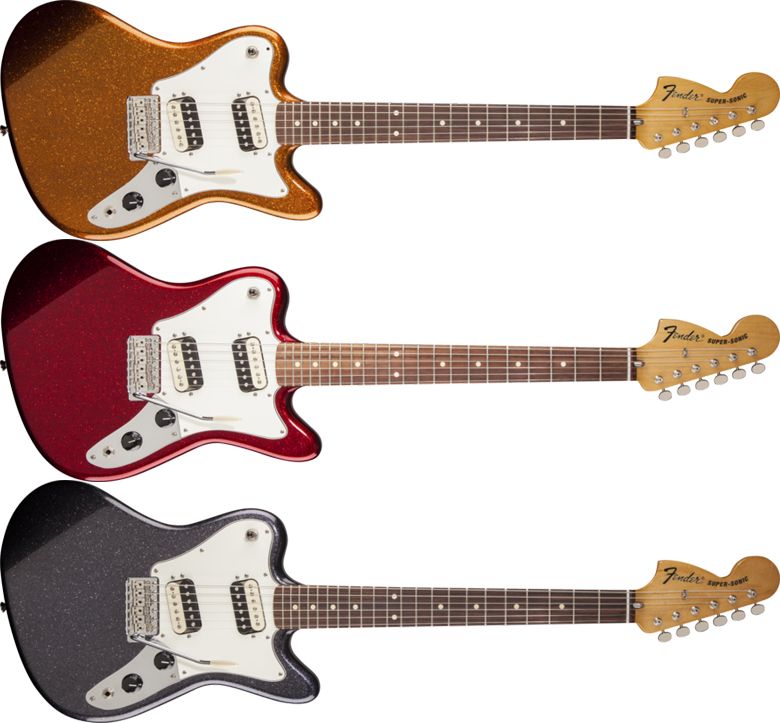
The new Super-Sonic now has the Fender logo on its upside-down head rather than the Squier logo, but of course the irony is that the Squier version would have been Made in Japan rather than in Mexico, which is where I believe the Pawn Shop Fenders are now being produced, and of course as every level-headed Fender fan should know by now the Japanese-built Fenders really are the dog's what-nots. Nevertheless, it's nice to see it back; it's one of the Fender designs that I really enjoyed and of course is based on a flipped Jazzmaster/Jaguar outline. It's like a left-handed guitar built for the right-handed. Although, having said that I recall seeing Gruff Rhys from Super Furry Animals playing one several years ago, and he always plays left-handed but tends to use right-handed guitars because he keeps the stringing the same as for a righty.

The Pawn Shop series from Fender supposedly "mashes up" old Fender designs, although the only differences I can see with the new Super-Sonic are that BOTH pickups are angled rather than just the bridge unit and that it comes in a nicer range of finishes.

For those wanting more info, here is the full press release from Fender:
FENDER® INTRODUCES NEW ADDITIONS TO PAWN SHOP SERIES

SCOTTSDALE, Ariz. (January 10, 2013) — The Pawn Shop Series introduces yet another pleasingly unconventional assortment of "guitars that never were but should have been," in which new models take the stage and long-vanished classics return in modern form. Fender is excited to welcome four new, out-of-the-ordinary models to its innovative and popular Pawn Shop series–the Pawn Shop ’70s Strat® Deluxe, Pawn Shop Super-Sonic™, Pawn Shop Mustang® Bass and Pawn Shop Bass VI.

The Pawn Shop ’70s Strat Deluxe is one of the most unusual takes ever on the world’s most archetypal electric guitar, with a pronounced 1970s style and vibe. For tonal versatility, its alder body houses a Telecaster® single-coil neck pickup and an Enforcer™ humbucking bridge pickup with a smaller Wide Range chrome cover. Other distinctive features include a "U"-shaped maple neck with 22 medium jumbo frets, 9.5" radius and "bullet" truss rod; four-ply white pearloid pickguard; three-way blade pickup switching and two Jazz Bass® control knobs (master volume, master tone); ’70s-style hard-tail Stratocaster® bridge and vintage-style "F" tuners. Available in 2-Color Sunburst, Black and Vintage White.

The Pawn Shop Super-Sonic model resurrects an unusual, short-lived and increasingly collectible ancestor of the late 1990s, the Squier® Vista Series Super-Sonic guitar. Very little about the Pawn Shop Super-Sonic isn’t highly distinctive—from its diminutive offset "reverse" body (resembling an upside-down Jazzmaster® or Jaguar®) and upside-down headstock to its short scale (24") and dual canted Atomic™ humbucking pickups (only the bridge pickup was canted on the original Squier models). Then there are the controls--neck pickup volume and bridge pickup volume only (no tone control), which are reverse-wired like the Squier original, meaning that the bridge pickup volume is the one closest to the bridge and the neck pickup volume is the one farthest from it. Other features include a "C"-shaped maple neck with "bullet"-style truss rod, 9.5"-radius rosewood fingerboard with 22 medium jumbo frets, three-way toggle pickup switching and dual Jazz Bass control knobs, three-ply parchment pickguard, vintage-style synchronized tremolo bridge, vintage-style tuners and new Super-Sonic four-bolt neck plate. Available in Apple Red Flake, Dark Gun Metal Flake and Sunfire Orange Flake.

With its racing stripe (305) and short scale (30"), the new Pawn Shop Mustang Bass authentically evokes the original "competition" Mustang Bass of the early 1970s. This time, though, you get the huge bass sound of a single humbucking pickup (the original had a single-coil pickup) and several classic Fender finish options. Other features include an alder body, "C"-shaped maple neck, 9.5"-radius rosewood fingerboard with 19 medium jumbo frets, four-ply white pearloid pickguard, two Jazz Bass control knobs (volume, tone) and a string-through-body bridge with four adjustable saddles. Available in 3-color Sunburst, Candy Apple Red with Olympic White stripe and Olympic White with stripe.

The Pawn Shop Bass VI marks the return of a historic Fender instrument, the Fender Bass Guitar (also known as the Bass VI). This updated version of the baritone classic features the short scale (30") and is armed with Special Design Hot Jaguar single-coil neck and middle pickups and a powerful JZHB humbucking bridge pickup. Other features include a "C"-shaped maple neck with 9.5"-radius rosewood fingerboard and 21 medium jumbo frets, five-way pickup switching, four-ply tortoiseshell pickguard (3-Color Sunburst and Black models) and three-ply parchment pickguard (Candy Apple Red model), two Jazz Bass control knobs (master volume, master tone), vintage-style adjustable six-saddle bridge with "floating" tremolo tailpiece, and vintage-style tuners. Available in 3-Color Sunburst, Black and Candy Apple Red.

For more information, go to www.fender.com.
It's nice also to see a non-Custom Shop reissue of the Bass VI at last, although it's a shame that the individual pickup on/off switches and strangle switch have been replaced by a bog-standard Strat-like 5-position selector.

G L Wilson

© 2013, Guitarz - The Original Guitar Blog - the blog that goes all the way to 11!

Wednesday, 12 December 2012

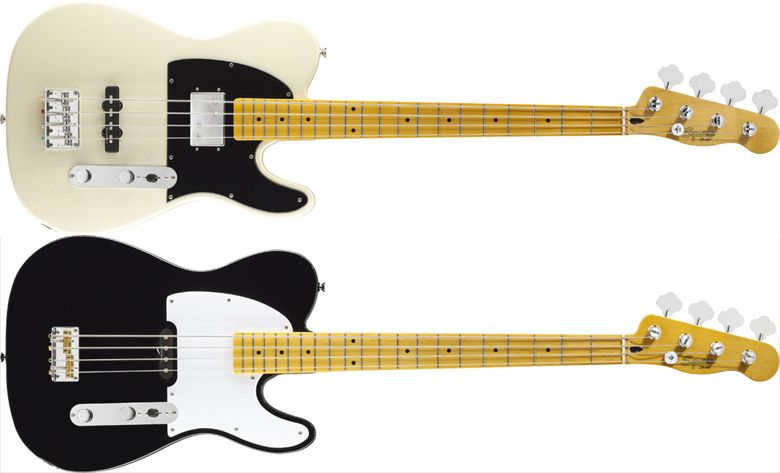
Squier Vintage Modified Telecaster Bass and Telecaster Bass Special

guitarz.blogspot.com:
Here are a pair of new basses from Squier's Vintage Modified Series, the new Telecaster Bass and Telecaster Bass Special (pictured top). These are not to be confused with the original Fender Telecaster Bass which in itself was based upon the original slab-bodied Precision design before it was redesigned to have a more contoured Strat-like body. 1970s examples of the Telecaster Bass (of which the Squier Vintage Modified Precision Bass is quite an accurate representation) featured a huge humbucker pickup in the neck position instead of the centre-position singlecoil pickup. It also had a twin-cutaway body, rather than the same basic shape as the Telecaster guitar as we see here on these new Squier offerings (although it seems to me that the body has been lengthened). I guess that Fender/Squier must have decided that bassists wanted the same shape as the Tele guitar but I can't imagine it'd balance anywhere near as well balanced as the double-cutaway P-bass shape.

It all seems a bit silly to me. What's next, the Stratocaster Bass? And no, the Precision is not already the bass equivalent of the Strat. It was originally the bass partner to the Telecaster, and if anything, the Jazz Bass was the Strat's opposite number in the bass camp, although some would argue that with its offset body shape the Jazz Bass's natural sibling would be the Jazzmaster/Jaguar. But of course these days there's a Jaguar Bass too. I wonder how long it is before Fender/Squier issue a Jazz Bass-bodied 6-string guitar? Hey, I reckon I could work for Fender marketing too with ideas like that.

With the Squier Telecaster Bass having a singlecoil pickup similar to that in the original P-Bass, and the Deluxe version having a 70s Telecaster Bass humbucker in the neck position and a J-Bass unit nearer the bridge, no doubt these new Telecaster Basses will appeal to players out there, although for me the designs are far too Frankenstein-like; for example that pickguard design is quite patently created for a guitar and not a bass. But never mind my nitpicking, if you're interested get yourself over to the Squier website and check out the specs for yourself.

G L Wilson

© 2012, Guitarz - The Original Guitar Blog - 10 years and counting!

Thursday, 22 November 2012

From Brazil: It's the return of the Giannini Craviola solidbody electric

guitarz.blogspot.com:
Guitarz reader Henrique writes:
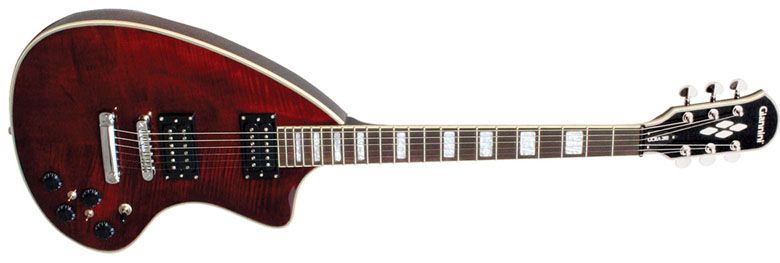
The Craviola is back! Giannini starded to produce a reissue of the Craviola this season. It is a solid body mahogany guitar with a flamed maple top and set mahogany neck. Two Wilkinson humbuckers with coil split and phase inverter! More info on Giannini website. I have already ordered mine!
Thanks for the heads up, Henrique. It certainly is a very good looking guitar and a refreshing change from the same old designs that get trotted out time and time again from all the usual suspects and their myriad copyists (earlier today I was looking through a bunch of Gibson's new models for 2013; they were ALL variations of Les Pauls and SGs).

Shape-wise it's reminiscent of the Ovation Breadwinner but without the rear cutaway. Of course the design is based on Giannini's own now legendary Craviola acoustic guitars, which have to be the coolest design for an acoustic guitar EVER.

For those who can understand Portuguese:

Now, I defy you to deny that those are indeed some very TASTY guitars. (Wish we could have heard them in the video clip, though).

G L Wilson

© 2012, Guitarz - The Original Guitar Blog - 10 years and counting!

Monday, 8 October 2012

Fender Stratocaster doubleneck production model from Fender Japan

guitarz.blogspot.com:
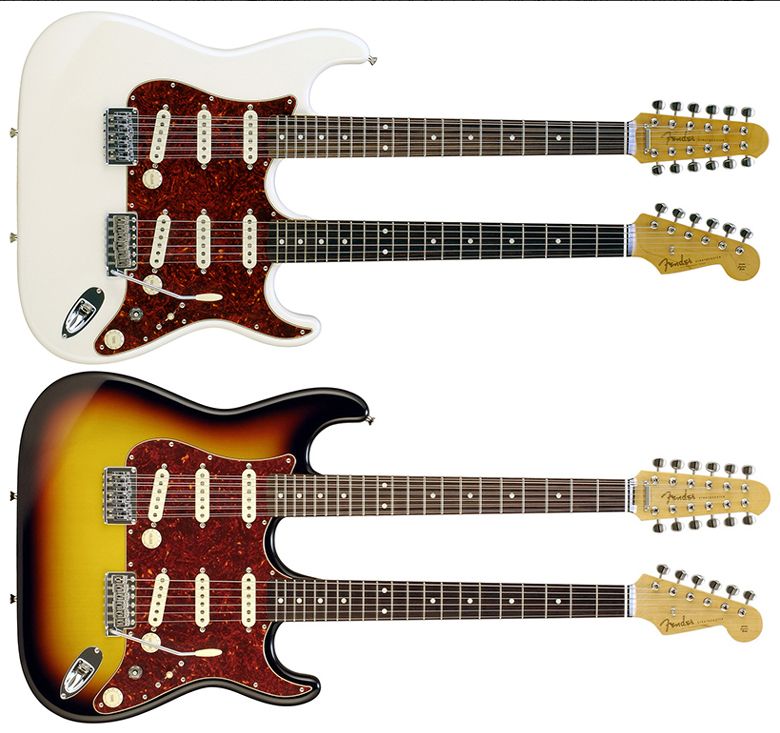
Fender have produced various doubleneck guitars over the years, either as prototypes or as Custom Shop guitars, but as far as I am aware they have never made available a production model instrument in the doubleneck format.

Until now, that is. Here we have a Fender Japan ST-W Stratocaster 12+6 doubleneck, which (I don't read Japanese but I strongly suspect) is being offered for sale as a non-Export Japanese-market only model. (I've commented before that the most interesting Fender guitars seem to be made by Fender Japan for the Japanese market only). Each side of the guitar has its own volume control, but it looks as if they share a single tone control, with the middle position pot where there would normally be a tone control having been replaced with a neck selector switch. The ST-W looks all the better for having the more compact 12-string headstock as featured on the Japanese-made Fender Stratocaster XII and instead of the oversized hockeystick 12-string headstock as seen the (American-made) vintage Fender XII and Custom Shop doublenecks.

The Fender ST-W is listed on the Fender Japan website, priced at ¥246,750 (that's over $3,136 USD at the time of writing and which is approaching Custom Shop prices for such an instrument anyway).

G L Wilson

© 2012, Guitarz - The Original Guitar Blog - 10 years and counting!

Thursday, 28 June 2012

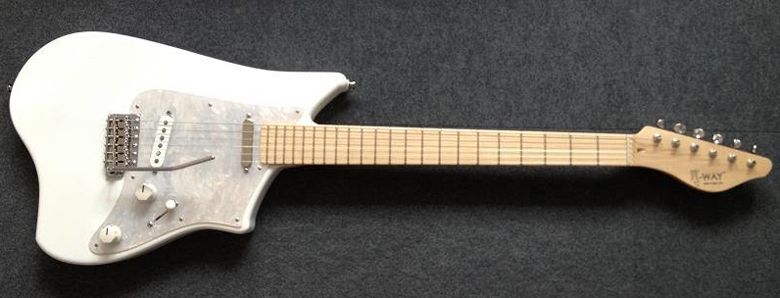
The Mercury Head from B-Way Guitars

guitarz.blogspot.com:
Ben Shin of New York's B-Way Guitars contacted us here at Guitarz with news of his new line, the Mercury Head guitar. It somehow manages to look new and familiar at the same time, and as I commented to Ben, reminded me of a Fender Strat hybridized with an Ovation Breadwinner and a little bit of Tele thrown in. I asked Ben about how the design came about, and whether he was thinking ergonomically. He told me:
How I arrived at the body shape: yes, it was partly based on ergonomics. I took some inspiration from Klein and Teuffel, which I would guess were in turn partly inspired by the Breadwinner. I also sat down and studied how my Strat and Tele sat on my legs and which parts actually touched me when seated in the typical electric and classical guitar positions and how the locations of the strap buttons and body contours affected the position of everything when standing. Then I started messing with a picture of a Strat on my Macbook, warping it this way and that, squeezing certain parts, blowing up others, trying my best to guess how the total mass and distribution of weight would work in reality. (I didn't have the resources to go through multiple prototypes.) Everyone's bodies and arms are built differently, but at least for me the shape feels very comfortable in both the standard horizontal and diagonal/classical seated positions.

I also had a theory that extending the overall length of the body and moving the center of gravity towards the tail without increasing the total volume might deepen the voice of the guitar a tad without making it heavier. Now that I have the prototype in my hands, I think it worked. Although to be honest it's hard to separate what's due to the body shape from what's due to that particular piece of alder. To my ears the bridge pickup has a nice bark to it, without the icepick highs that many don't like about Strat bridge pickups, the neck pickup has balanced highs and a good amount of tight bottom end without mud, and the in-between position sounds like your typical chimey Tele.
I think it looks and sounds great - you can hear it for yourself in this soundclip. It is indeed a quality instrument, with the bulk of the build process being carried out by Glenn Sweetwood of Sweetwood Guitars on behalf of B-Way. The Mercury Head features Sweetwood's innovative 2-bolt neck system using machine thread connectors and allows for a greater contact area under pressure in the neck join, which means better tone transfer.

Thanks to Ben for getting in touch with us and showing us this interesting new guitar. Here at Guitarz we're always happy to support indpendent luthiers and small, non-corporate, guitar companies. Keep in touch, Ben, and let us know of any developments.

G L Wilson

© 2012, Guitarz - The Original Guitar Blog - now in its 10th year!

Saturday, 4 February 2012

Passion in Pinstripes: the Synyster Gates Custom-S

guitarz.blogspot.com - Guest blog by Olivia Lennox:
Musician endorsed guitars go way back. Axe masters such as Steve Vai, Slash and Joe Perry have all put their name to Les Paul guitars, while Fender and Gibson also have a huge catalog of models endorsed and used by famous guitarists. Schecter have had some big name relationships over the years too, including Mark Knopfler and Pete Townshend, but it’s their long-term sponsorship with Avenged Sevenfold guitarist, Synyster Gates, that has resulted in this latest and rather special offering.

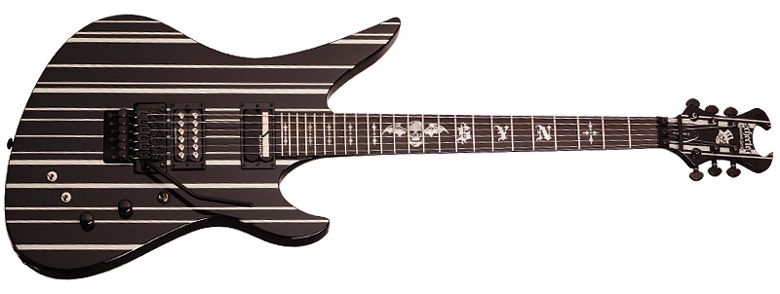
The Synyster Gates Custom-S features many of the specifications used by the Avenged Sevenfold guitarist on his signature model, including Sustainiac Stealth. This unique pickup system replaces the normal neck Humbucker and enables Gates to sustain feedback at all levels, a feature that makes Gate’s heavy attack style so distinctive.

Available from January 2012, the Synyster Gates Custom S is a startling-looking guitar. In black, three-piece mahogany and featuring silver pinstripes, the guitar is as distinctive in color as it is in design. With sleek Avenger body and clawed head, it provides a statement worthy of any hard rock or metal outfit. With left-handed models available, the price tag for the 24-fret, 25.5 inch neck guitar is $50 shy of the $1,700 mark, but it’s doubtful you’ll find a more distinctive Avenger axe for the money.

Sustainiac

Described by Gates as his “secret weapon,” the Sustainiac feature provides sustained and controlled feedback. In the position where the normal neck Humbucker pickup sits, the Sustainiac circuit processes the pickup signal and sends it to the Sustainiac driver, where the amplified note is turned into vibrational energy and fed back to the strings. The result is an ability to sustain feedback indefinitely, as if playing the guitar inches from a loud amp. Of course, the Sustainiac system can be turned off, allowing normal Humbucker tones.

Features

Gates’ signature pinstripe design is one of the most distinctive in the metal world. It works well with the Avenger shape, creating quite a unique-looking guitar that while clearly metal and rock in shape, also exudes a retro feel. Made in three-piece mahogany for extra stability, the Synyster Gates Custom-S is obviously built to last. With an ebony fingerboard that Schecter say produces a snappy and crisp attack with the density of Maple but with a stronger fundamental tone, the Synyster Gates Custom-S is equipped with a Floyd Rose 1000 Series bridge and a Floyd Rose 1000 locking tremolo system. The Synyster Gates Custom-S also has a Grover Rotomatics 18:1 gear ratio for finer tuning, Seymour Duncan Invader pickups that complement the Sustainiac system, 3-way volume toggle, on-off mini toggle, and 3-way normal-mix-harmonic mode mini toggle.

Schecter

When it comes to American guitar makers, Schecter are often overlooked with the likes of axe giants such as Fender and Gibson taking more than their fair share of the guitar world’s laurels. Yet, Schecter are a passionate guitar manufacturer and the Synyster Gates Custom-S is a good example of the dedication and fastidiousness they invest in their axes. The Custom-S had been on Schecter’s design drawing board for years, but the company always seemed reluctant to release the product to the market until they were wholly satisfied that it was not only the best guitar that they could produce, but also that it was as close to Gates’ original signature guitar.

For those not familiar with the company, Schecter was founded in 1976. Originally selling only replacement parts for Fenders and Gibsons, by 1979, founder David Schecter launched his own fully assembled electric guitars based on the Fender designs. An exclusive range, but very expensive, originally only 20 stores across America stocked Schecters. They owe much of their contemporary success to Pete Townshend of The Who, who fell in love with one of these early Schecter guitars and was the first high profile guitarist to use one on stage. Mark Knopfler of Dire Straits also used Schecter Stratocaster-style guitars to record "Making Movies", and has owned many Schecters over the years.

In 1987, Hisatake Shibuya, a Japanese entrepreneur and owner of the Musicians Institute in Hollywood, bought Schecter. Hisatake Shibuya devoted all his efforts to manufacturing high-end, expensive custom instruments. As a result, Schecter have been endorsed over the years by high profile guitarists, such as Stone Temple Pilots’ Robert DeLeo, and Jay Noel Yuenger and Sean Yseult of White Zombie. And Synyster Gates complements such esteemed company rather well.

Olivia Lennox is a professional writer and amateur singer/songwriter. Her day job involves writing on behalf of a premium sofa retailer and a number of travel blogs, but her real passion lies in strings and vinyl.

© 2012, Guitarz - The Original Guitar Blog - now in its 10th year!

Saturday, 28 January 2012

Gibson Moderne - "reissue" of a classic guitar that probably never existed in the first place

guitarz.blogspot.com - Guest blog by Steven Williams of www.dawsons.co.uk:

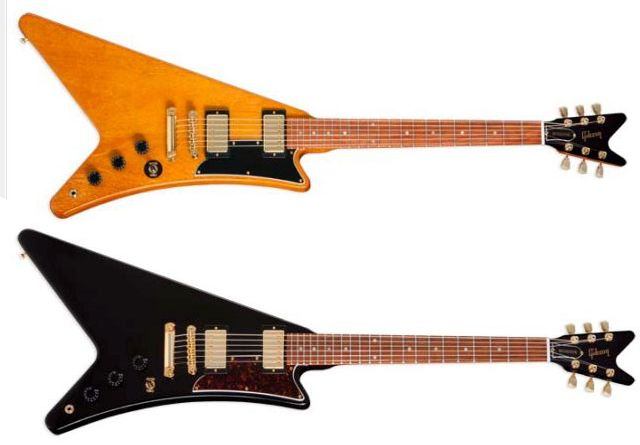
The Gibson Moderne is the closest guitar equivalent of the Bigfoot, in the sense that there is little evidence to prove its existence and there is yet to be solid proof of a real one anywhere on Earth. Guitar collectors consider the original Moderne the holy grail of Gibson collectable guitars. This is because the prototype designed in the late 50s as part of the ‘Futura’ range, along with the Flying V and the Explorer, failed to make it into production and simply vanished with no other prototypes appearing in pawnshops or even any trace of its existence until 1982 where it was released as part of the ‘Heritage Series’, and again later by Epiphone in Korea. Now decades later Gibson have released a new rendition of the fabled Moderne to start the hype, the mystery and the rumours all over again.

From what we know of this mystical creature, it appears to be almost identical to the original guitar. The very distinctive body, which looks like the cross-breed result of the Flying V and the Explorer, is made from mahogany along with its neck, which features a rosewood fingerboard and dot inlays. The Moderne is then finished off with a very cool forked headstock and to make sure it can replicate that vintage Gibson tone it has two ’57 Classic humbuckers.

The Gibson Moderne is going to pretty popular with collectors, as it’s the next best thing to the original, and people who simply like unique guitars. The guitar will be available in amber with a black scratchplate, or ebony with a tortoiseshell scratchplate. For more information on this guitar and its release date check out this site or sign up to the newsletter to be kept posted.

Steven Williams

© 2012, Guitarz - The Original Guitar Blog - now in its 10th year!

Wednesday, 23 November 2011

Fender Japan Floral Print Telecasters - a modern take on the Paisley and Blue Flower designs

guitarz.blogspot.com:
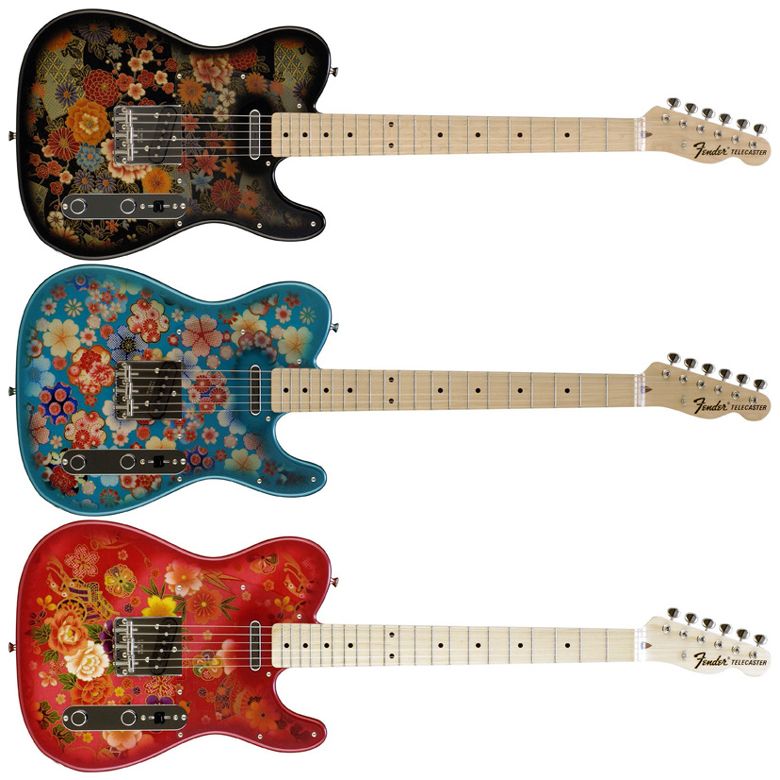
They are probably too flowery for many guitarists' tastes, but I think these new floral print Telecasters from Fender Japan (official designation TL69-SPL) are quite stunning. Perhaps you'd need to wear a Hawaiian shirt (or more appropriately a silk kimono) whilst playing one, or maybe that would be overkill.

Other than the particularly loud finish on, each of the three designs available are based on a pretty standard Tele with basswood body, one-piece maple neck, the usual two Tele pickups, and 3-saddle Telecaster ashtray-style bridge.

Thanks again to Keith McCreary who has obviously been closely scrutinizing the Fender Japan website.

G L Wilson

© 2011, Guitarz - The Original Guitar Blog - now in its 10th year!

LinkWithin

Related Posts with Thumbnails

ShareThis