Showing posts with label Your Guitars. Show all posts

Saturday, 21 March 2015

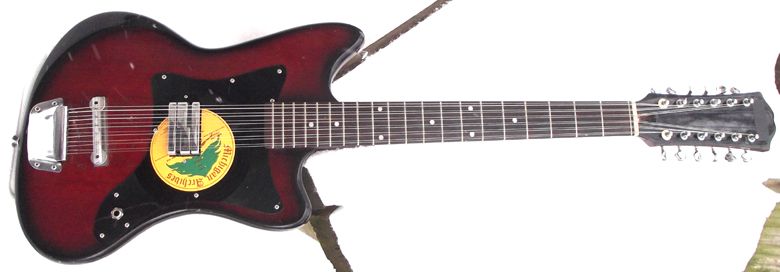
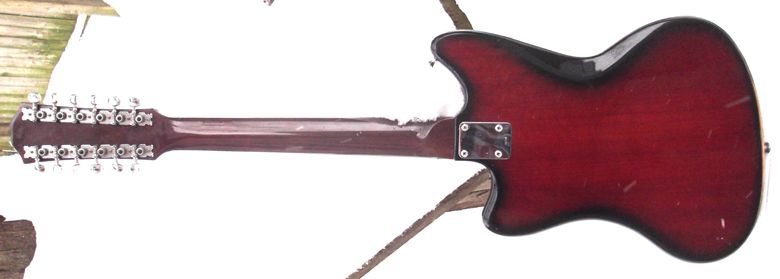
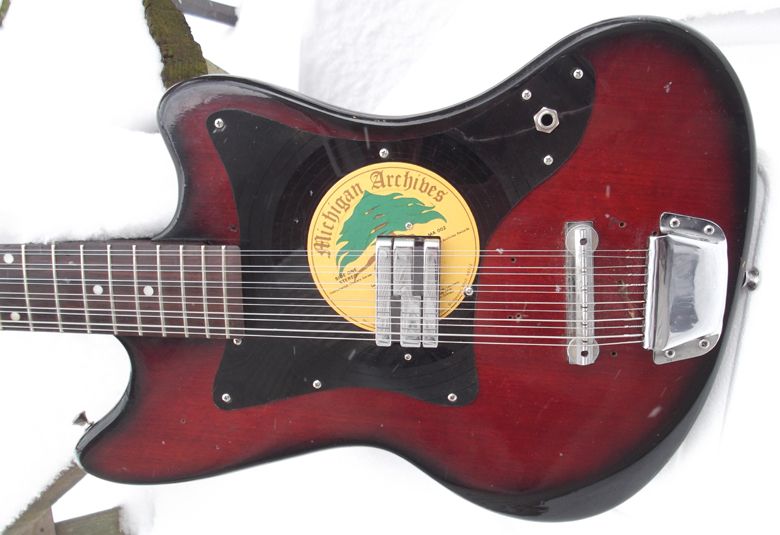
Blake's 12-string solidbody electric Frankenstein

guitarz.blogspot.com:
Here's an email we received from Blake:
This guitar was created in Grand Rapids, Michigan. The bolt on neck came from a 70s Epiphone acoustic 12 with broken bracing and poor tone. The body originated as an unidentified 60s Japanese Jazzmaster style guitar that was rescued from a dumpster. In order to combine these instruments, the neck pocket was slightly enlarged, the bridge and tailpiece were modified and relocated for proper intonation, and I designed and fashioned a pickguard from a 12" vinyl record. There are no volume or tone controls to weaken the signal output, just a Lace Alumitone wired straight to the output jack. Two barely playable guitars have been combined to form one highly playable electric 12 string. A recording of it can be heard on my bandcamp page: https://secretgeometry.bandcamp.com/

Rock on!
Blake Mandrayk
Nice job, Blake. It looks very cool and sounds great too.

Keep those readers guitars pictures coming in, folks!

G L Wilson

© 2015, Guitarz - The Original Guitar Blog - the blog that goes all the way to 11!
Please read our photo and content policy.

Sunday, 1 February 2015

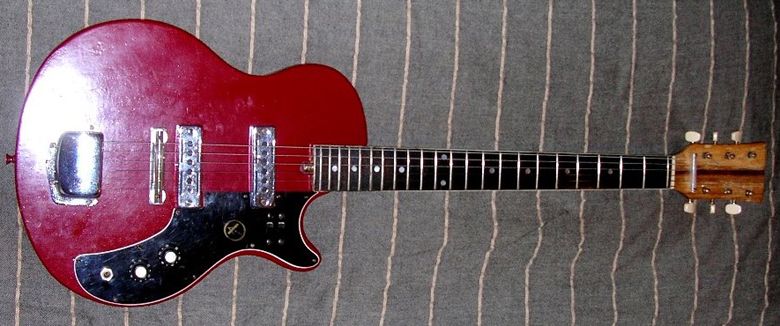
Info wanted on singlecut Kay electric guitar, probably 1970s

guitarz.blogspot.com:

Dear Mr. Wilson,

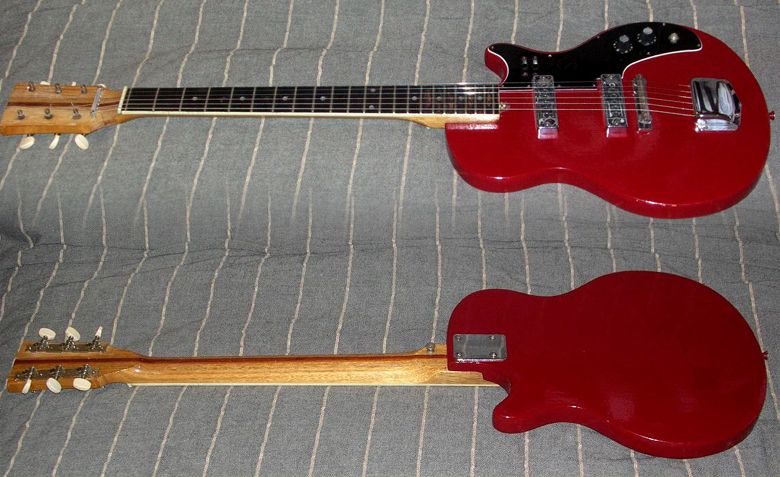
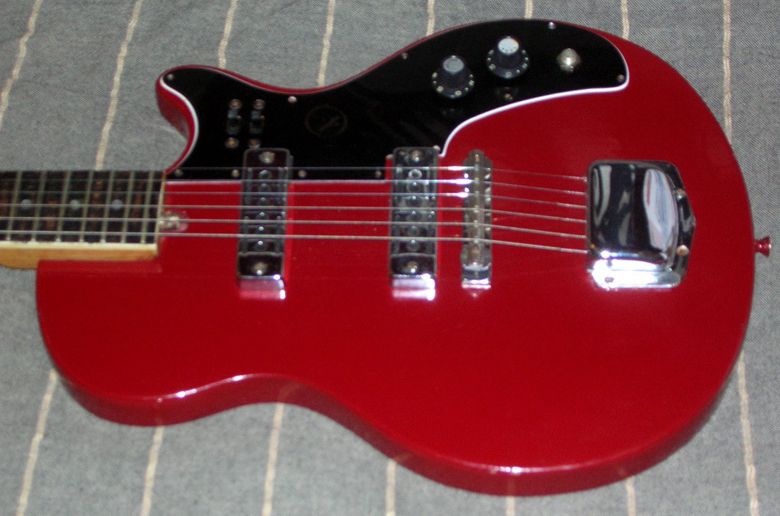
I have been following your amazing and entertaining Guitarz blog for some years. I am writing you as I just got a Kay guitar (for almost no money, to ease any guilt trip in such a risky decision... I am aware of Kay's reputation). There is no identification label on it and I could not find it in any online catalogue.

I attach a few pics (unfortunately their quality is as good as I could do with my old camera, I am the worst photographer in the world). Before I decide what to do with it I thought your website would be the good one to tell me something about it, as I had never seen such a model: sort of Les Paul-like, but with the typical Kay single coils. It is pretty much a mess, besides the cosmetic wear. The paint job is really questionable, part of the headstock broke and after the (bad) repair someone switched the two 3+3 pegs, the wiring was falling apart, the string retainer was missing and I just replaced it with a quickly-made metal block using the original holes to see if the guitar plays... In the end it does, and I am still curious to identify it because I find some attractive weirdness in it.

I would be really happy if anyone could give me some clues. Thanks in advance for your kind attention.

Best regards

Giancarlo
Thanks for your email and photographs. Although your Kay guitar does look familiar I am afraid that I can't identify the model for you. It does look like maybe it was supposed to be a (crude) copy of the Gibson L6S rather than a Les Paul. It does have a similar "pot belly" shape to it.

Quality on 1970s/1980s Kay guitars does vary considerably from one model to the next. This would be because they originated with a number of different manufacturers. I recently played on a friend's Kay branded acoustic. It was obviously quite a cheaply made instrument, but the action and playability were surprisingly good. Also the semi-famed K45 travel guitar (marketed in the US as the Austin Hatchet) was a quality instrument and so solid and sturdy you could have knocked a brick wall down with it.

If anyone has any more info on the above guitar, please contact us in the usual way via the comments below.

G L Wilson

© 2015, Guitarz - The Original Guitar Blog - the blog that goes all the way to 11!
Please read our photo and content policy.
Sunday, 28 December 2014

Erik's "Third Bridge" Bass VI / Baritone Guitar

guitarz.blogspot.com:

Whoah! Who would do something like this to an unsuspecting Jazzmaster body?

Erik explains:
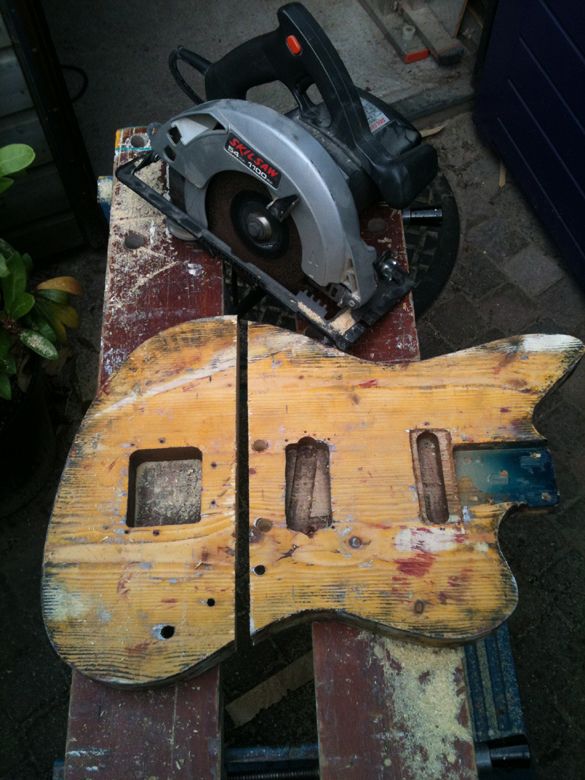
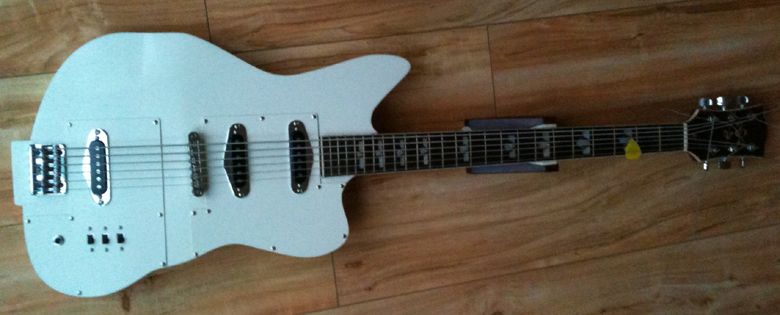
About a year ago you showed my 'plank guitar' on your blog. I have been building some more strange guitars and here are some pictures of the last project. It is a so-called third bridge guitar with baritone neck and Bass VI strings. Those were the only strings I could find with sufficient length. With a circular saw I cut the body in two pieces, add some wood and glued it all together. The extra wood was necessary to get enough length. There's a slight nod in the body to get enough tension on the strings. In the end I have to say: it plays and sound a lot better than I had previously thought!

Greetings, Erik
Groningen, The Netherlands
Thanks Erik! I'm sure the Guitarz readership would love to hear how it sounds. Do you have any sound clips?

G L Wilson

© 2014, Guitarz - The Original Guitar Blog - the blog that goes all the way to 11!
Please read our photo and content policy.
Wednesday, 24 September 2014

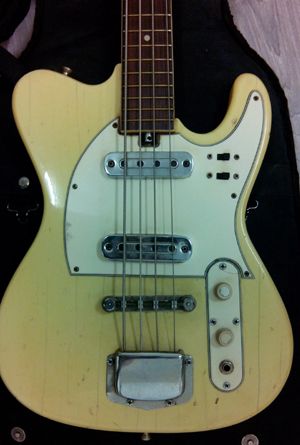
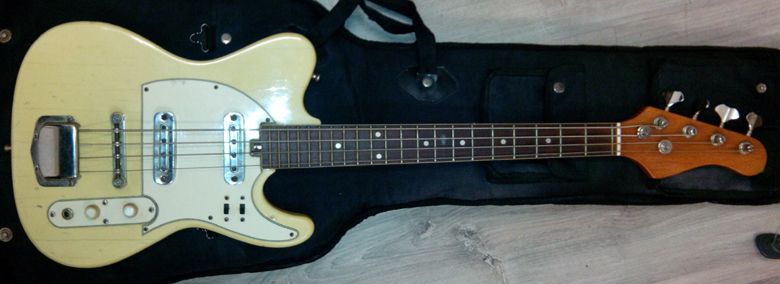
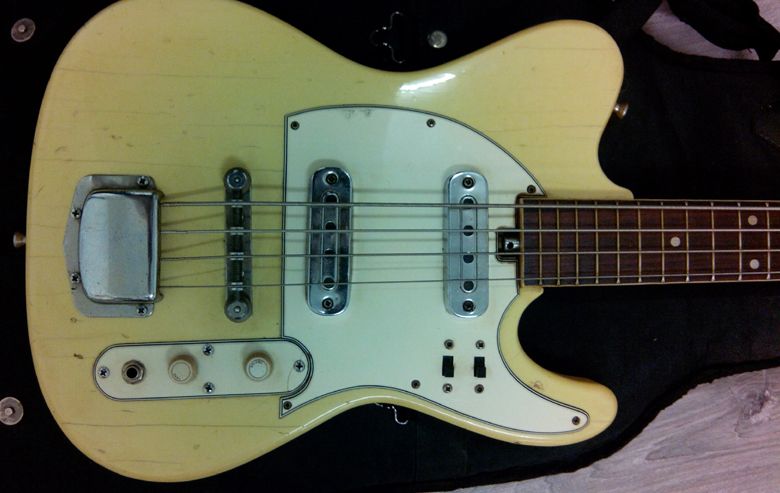
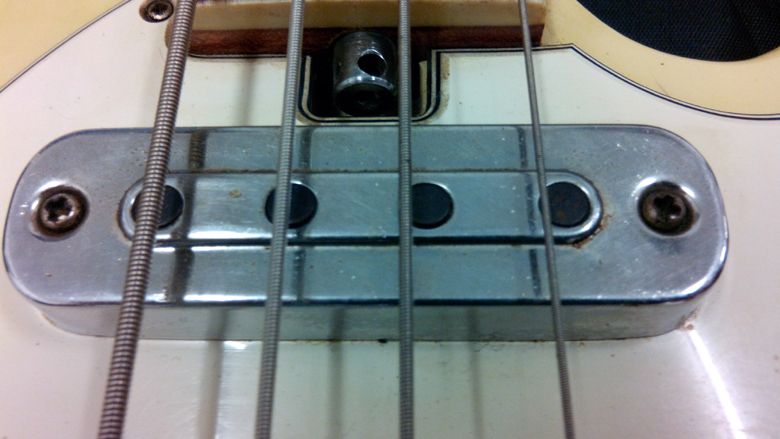
What is this vintage Japanese (very) short-scale bass?

guitarz.blogspot.com:

Dirk writes:

Hi Gavin...

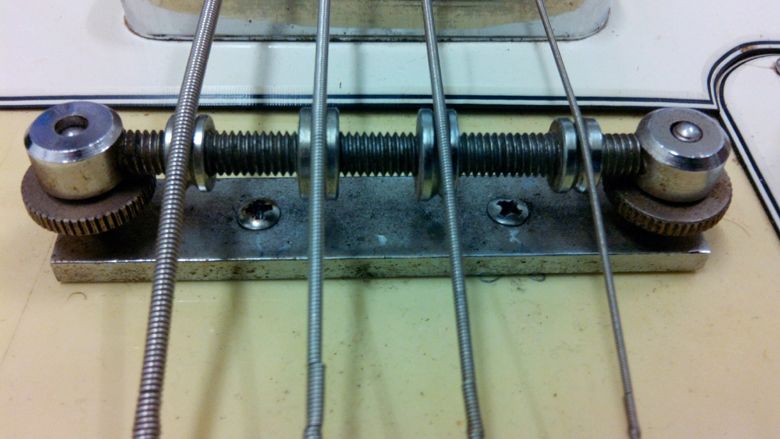
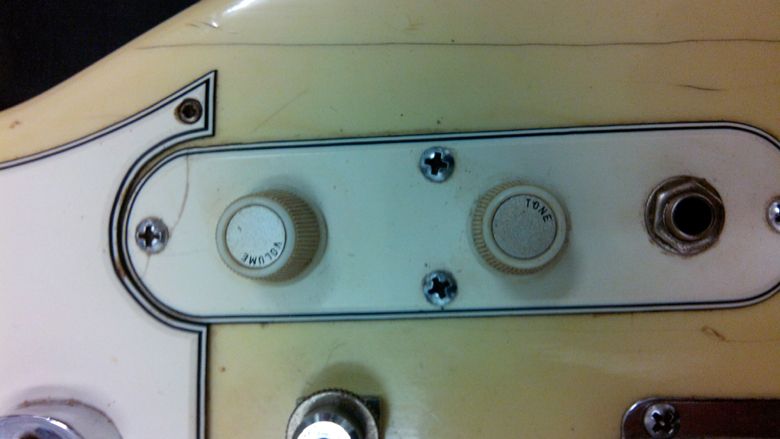
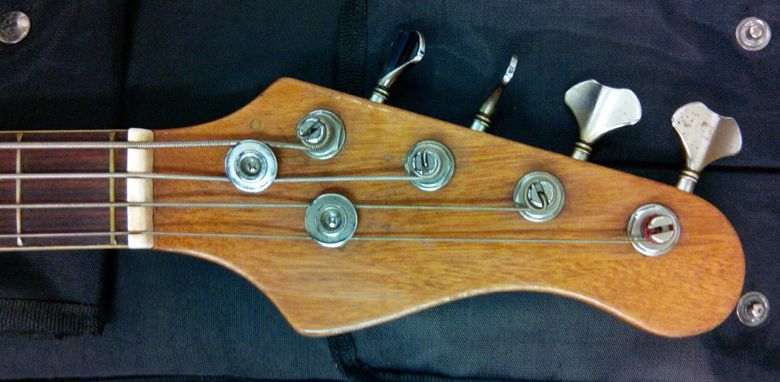
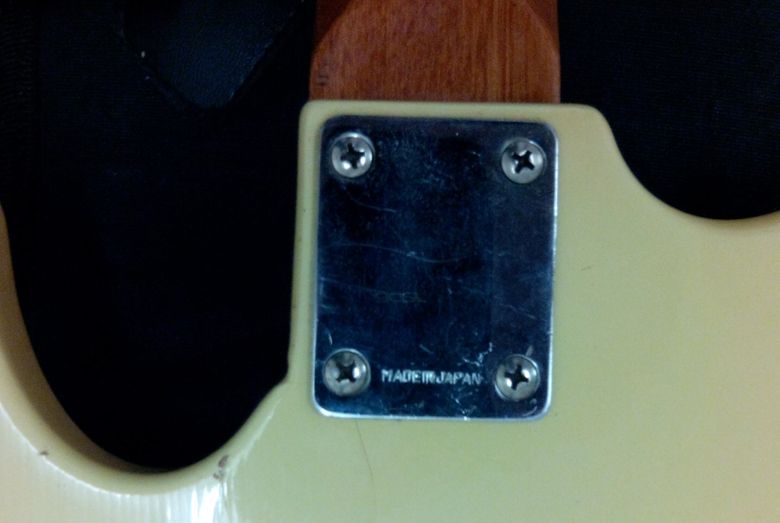
I'd need your help please to identify this plywood bass, short-scale...
Seems to be late sixties, early seventies, Japanese made...
Tuners changed, rest original...

Fully operating, no buzz, not quite playable got to fiddle out a set of strings.....
So if you or any of your readers could hint me, I'd appreciate highly....
Cheers, thanx and keep your Independence...

Dirk

Hi Dirk, it looks to me like a Jedson. The design is very loosely based on that of the Telecaster. I'm pretty sure these guitars and (very) short-scale basses also appeared with other brand names on the headstock, e.g. Zenta.

There is a similar Jedson bass in sunburst on eBay UK at the time of writing, and it is priced at £165 which seems to be the going rate for these today. Personally, I'd value it at nearer £50, but perhaps some Jedson/Zenta fans out there might like to explain why they are worth more.

The only (minor) claim to fame that these guitars have, as far as I am aware, is that Nigel Planer's character Neil was playing one of these (the six string guitar version) in the stolen Routemaster bus before it went over the cliff in the final episode of the classic BBC TV comedy The Young Ones.

G L Wilson

© 2014, Guitarz - The Original Guitar Blog - the blog that goes all the way to 11!
Please read our photo and content policy.

Monday, 22 September 2014

No-name 1960s Japanese solidbody guitar with a strong Burns influence

guitarz.blogspot.com:
Tyler B writes:

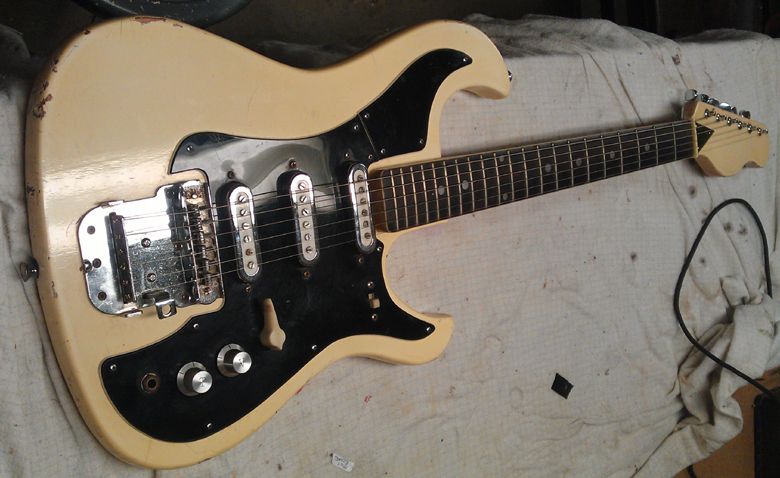
I thought I'd share with you the most recent addition to my collection. Outside of the fact that it is made in Japan, and likely mid-to-late 60s, I can't really tell you more about it's origin. The seller was quick to throw around the word Teisco and while that may very well be accurate, I'm not going to assert it as fact. I've seen the same truss rod cover and pickups on Imperial and Guyatone branded guitars specifically, but coming from a time when building guitars was anyone's game, who knows. There is no trace of any emblem or other branding anywhere; no glue residue, screw holes, etc.

However, I do know it has a definite resemblance to the Burns Bison. The pointed horns, large single coils, and a segmented pickguard really pick it out as an obvious influence.


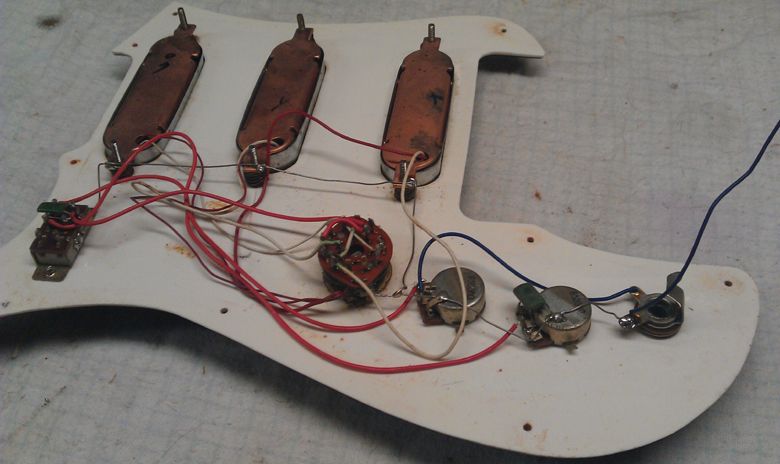
The rotary allows you to select the usual 5 positions on a Strat, and offers a sixth position for all 3 pickups at once. I can't really tell what the slider switch does for sure, though it seems to be wired to the tone circuit (you may be able to see in the picture), perhaps some sort of boost?

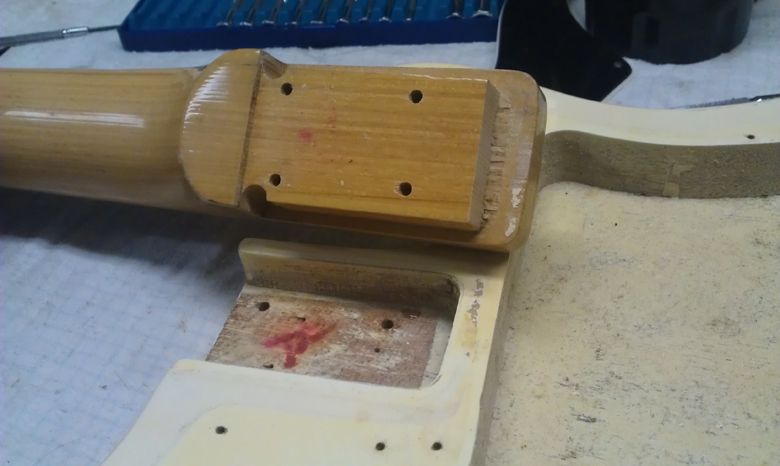
Beyond the electronics, the hardware is the usual kind you'd expect on a guitar like this. Sadly, while the bridge is still easily adjustable, the roller saddles have succumbed to decades of neglect and are frozen. That said, without the bar, the vibrato won't do much good anyhow...but it sure is pretty! I also found the neck pocket pretty interesting.


This was a rare one for me, I never seem to get these old things in working order, it was nice to be able to clean it up and go without having to completely restore it! Plays pretty well thanks in part to a straight neck and fairly clean frets, I'm hoping to get it out on stage sometime soon!

Tyler B

© 2014, Guitarz - The Original Guitar Blog - the blog that goes all the way to 11!
Please read our photo and content policy.

Friday, 19 September 2014

1980s Westone Rail Bass headless design with sliding pickup

guitarz.blogspot.com:
Hello!

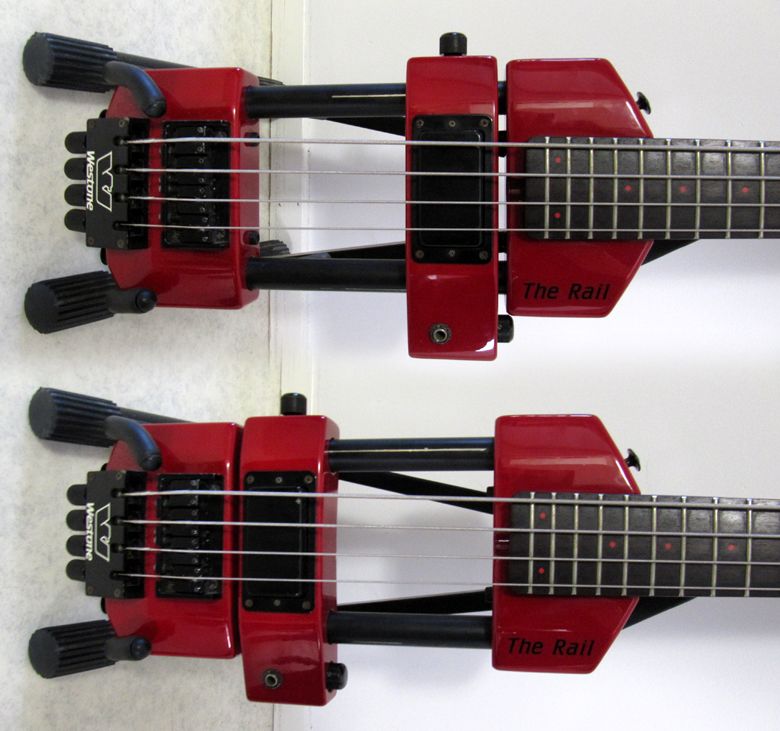
I'm a casual bass player with a lifetime goal to eventually become a bit better than at the moment. I first heard about Westone's Rail Bass in your blog (http://guitarz.blogspot.fi/2009/04/westone-rail-bass.html), and now a couple of years later I finally bought one on eBay. Cost me a bit less than 500 euros (£380, $650). Even though red is the least cool color it was produced in, I love the way it looks. Attached are a couple of photos of the bass and its sliding pickup. You can use them in the blog or store them in the archives.

Cheers,
Jorma Kim
Finland

Very nice. Thanks for the photos! - GLW

© 2014, Guitarz - The Original Guitar Blog - the blog that goes all the way to 11!
Please read our photo and content policy.
Friday, 5 September 2014

Can anyone help identify this mystery semi-hollowbody guitar?

guitarz.blogspot.com:
...Love your blog, I've been reading it daily for many years now!

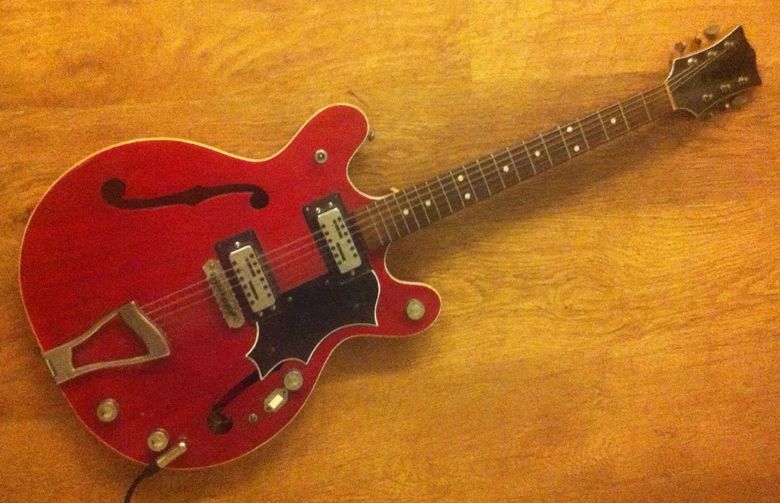
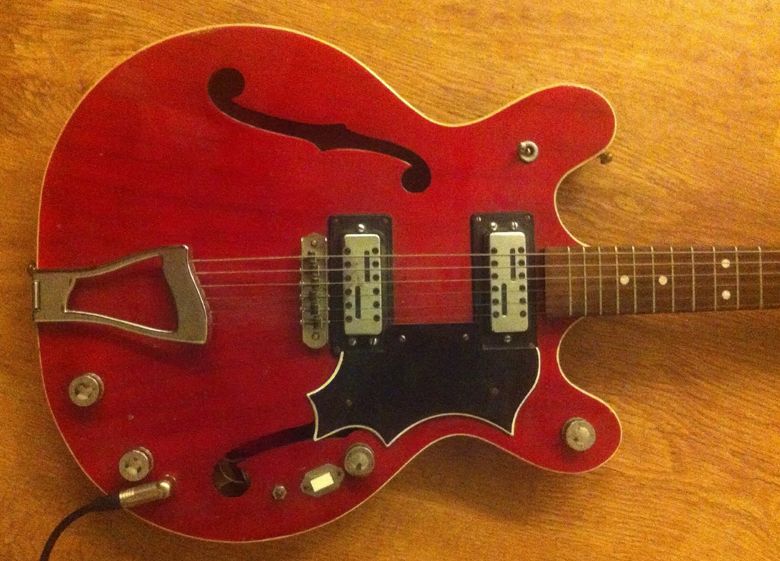
A friend of mine came up with this great looking, but un-branded hollowbody guitar. He got it from the original owner who bought it in 1962. The tailpiece is not original because it was missing when my friend got the guitar. It has some weird active technology in it, powered by a 9 volt battery. When you push the square white button, it activates a little circuit wich gives you a more trebly sound, controlled by the knob next to it. There are no markings, logo's or serial numbers anywhere on this guitar. We've been to a few luthiers but no-one knows what brand it is... So maybe the Guitarz-crowd can help us out!

Cheers!

Koen van Soelen (Holland)
Any ideas, guys? I readily confess that I haven't got a clue.

G L Wilson

EDIT (8 Sept 2014): Arjen Matthys Ehlers tells us via Facebook that "It's a German GIMA, occasionally they pop up in the Netherlands, most of the times in Zebrano wood, but very recognisable by bodyform, pu, controls and push button."

© 2014, Guitarz - The Original Guitar Blog - the blog that goes all the way to 11!
Please read our photo and content policy.
Sunday, 10 August 2014

Jim is looking for info on his "Triumph" archtop guitar

guitarz.blogspot.com:
Jim writes:
Hi Gavin,

I'm a fan of the Guitarz blog, it's been a great read. I started to learn how to play last year, and I'm finding the instruments and their history very interesting.

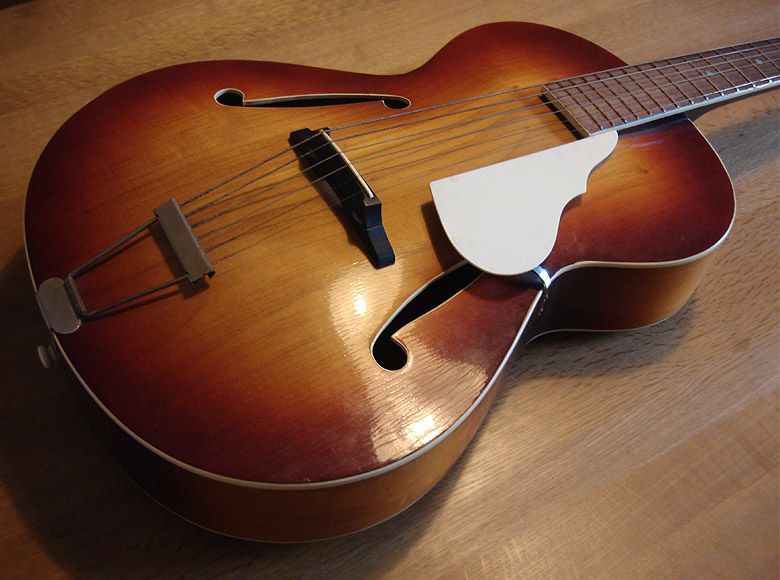
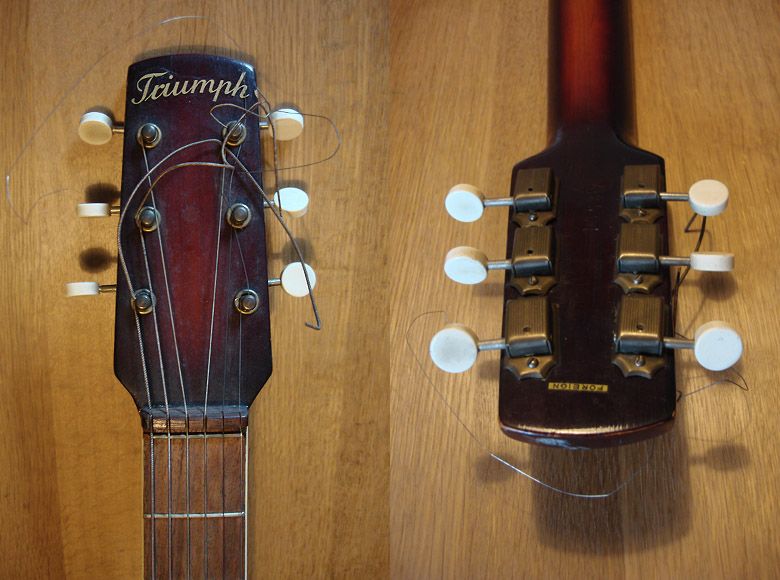
I bought this guitar in a junkstore yesterday (pictures attached), I was hoping someone at Guitarz might be able to tell me where it's from, how old it is? It's got a 'Triumph' sticker label on the headstock with a 'Foreign' label on the back, also stamped with number '13547'.

I think it's a cheap copy, but I've kinda fallen in love with it and I'm going to get it cleaned up and looking a bit healthier. It's currently smells of old books! Hope someone might be able to fill in some it's history, as I can't find anything about it.

Thanks for the great blog - it's been a really great resource.

All the best, Jim
Hi Jim, I believe what you have got there is a Selmer Triumph guitar. It's hard to pinpoint it to an exact model because the Selmer Triumph name encompassed several different guitar designs and a few amplifiers too.

To give some background, Selmer were a musical instrument manufacturer established in the early 1900s and based in Paris (surely their best known guitars were the gypsy jazz guitars as played by Django Reinhardt). By 1928 they had aquired a semi-independent UK branch. From the 1950s and through to the 1970s some of Selmer UK's own-brand guitars were produced by Germany's Höfner especially for the UK market.

However, rather than being a Höfner this particular guitar looks to be very similar to the Framus Studio 5/51. We've looked at one of these before here on Guitarz, although that example was unusual in having just a single f-fole.

Speaking of the f-holes, you'll notice that these Framus guitars have very distinctive shaped f-holes which omit the crossbar of the "f".

So, in brief, Jim, your guitar would be made in Germany, most likely in the 1960s. For further information you might want to check out this exchange I found on an internet forum, which concerns another very similar guitar.

By a strange coincidence, it also looks very similar to a guitar owned by my friend Frank, which has recently been restored by luthier Jeff Beer.

G L Wilson

© 2014, Guitarz - The Original Guitar Blog - the blog that goes all the way to 11!
Please read our photo and content policy.
Monday, 28 July 2014

Merlijn shows us his Welson

guitarz.blogspot.com:


Merlijn writes:
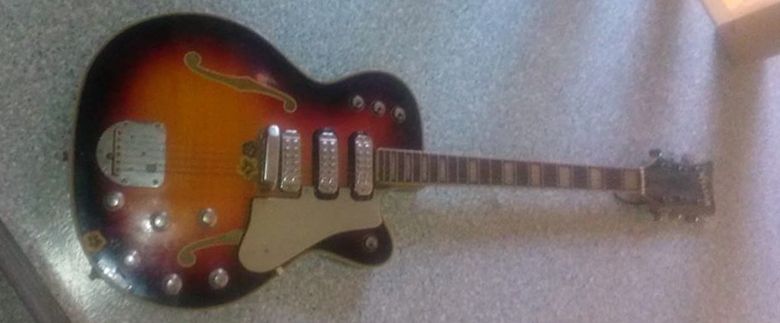
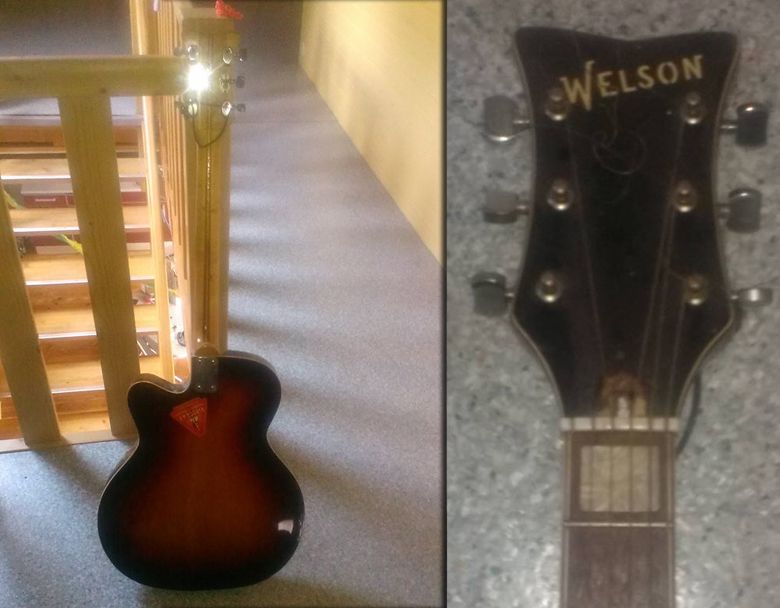
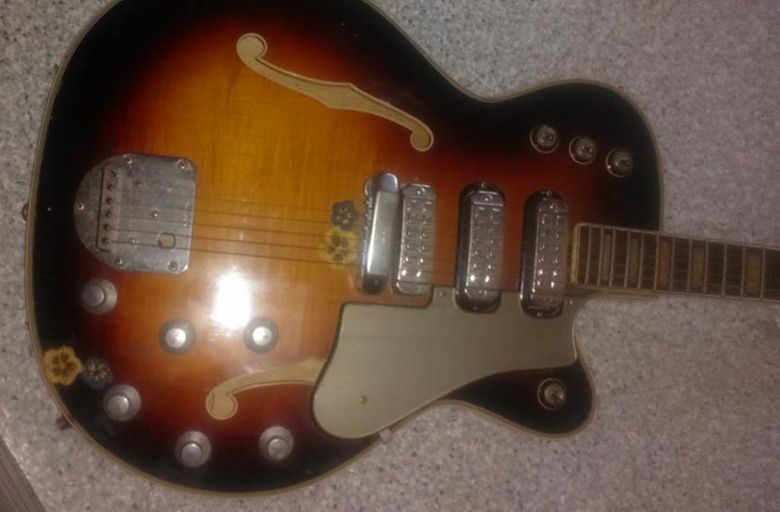
Hello everybody from the Guitarz blog! I love reading your blogs but I want to know something from you. On the photos [above] you can see an old guitar from the brand 'Welson'. It was a famous guitar brand during the 50s and 60s. This guitar belonged to my father. I'd like to get more info about it. Could you help me?
Sincerely, Merlijn.
Hi Merlijn, whilst I can't give you much specific information about your father's old Welson guitar, I can tell you that the Welson brand name belonged to a Castelfidardo-based (i.e. Italian) accordion making company founded by Orlando Quagliardi in 1921. Welson guitars were distibuted in Germany as Dynacord and in the USA under the Wurlitzer and Orpheum brands.

For more information see the always fascinating Fetish Guitars website.


G L Wilson

© 2014, Guitarz - The Original Guitar Blog - the blog that goes all the way to 11!
Please read our photo and content policy.
Sunday, 29 June 2014

Bernd 's Klira Patricia 196X jazz box renovation project

guitarz.blogspot.com:  Bernd writes to tell us about his renovation project as follows:
Bernd D.: Archtop Restoration Project &emdash; Klira Patricia 196X as I bought it ... Bernd D.: Archtop Restoration Project &emdash; the original headstock
I am Bernd from Straubing in Bavaria, Germany. I found a 196X Klira Patricia Archtop at an auction and decided to "restore" it to a blue Jazz-Machine with abalone-celluloid inlays.

Some people think, those old Kliras (and Lindbergs and Triumphators) should stay in the cellar - others think, they have some worth. As I didn't have such a Jazz-Box, I was ready to invest a few Euros and some elbow grease. The lacquer and the whole finish was very bad, and it seems to have been in a very humid environment for a few years. But the neck was straight and the frets were OK.

The headstock inlay was already dissolving - what looks like a kind of pearl inlay was in fact some kind of laquer, also in a very bad shape. The guitar looks much better on the images, as it was in reality.

Problem: I don't have a workshop, don't have any woodworking tools and I don't have any woodworking experience ...

Bernd D.: Archtop Restoration Project &emdash; Bling Bling ... Bernd D.: Archtop Restoration Project &emdash; Stained
So I stripped her and gave her some new abalone-celluloid inlays and also an abalone headstock and some "new clothes" - a RAL 5005 stain.

Bernd D.: Archtop Restoration Project &emdash; Playable ... Bernd D.: Archtop Restoration Project &emdash; Some More Bling Bling
Added a little make-up - two sheets of teak oil (I will add some more in the future ...) and some Grover like tuners from a Guild F130, a Gretsch bridge and her old tailpiece.

Now she sounds very loud and clear ... Great tone ...

Bernd D.: Archtop Restoration Project &emdash; Neck Pickup Bernd D.: Archtop Restoration Project &emdash; Controls
As she is a modern girl now, she gets some electronics - a Schaller Vintage 44 floating single coil and a volume and tone control. With a Yamaha THR 10c, she sounds absolutely stunning.

Bernd D.: Archtop Restoration Project &emdash; Nearly Ready
OK. This is in no way a perfect restoration. I did a lot of mistakes and everbody who takes a closer (and even a not so close) look will find some. But I like her, wife and daughter like her, people like her and she has great sound ...

Bernd D.: Archtop Restoration Project &emdash; The Very First Time ...
Already looking for the next old guitar ...

Bernd

Many thanks to Bernd for sharing his guitar renovation project with us. I'd like to congratulate him on tastefully bringing an old guitar that has seen better days back to life. - GLW

© 2014, Guitarz - The Original Guitar Blog - the blog that goes all the way to 11!
Please read our photo and content policy.
Saturday, 10 May 2014

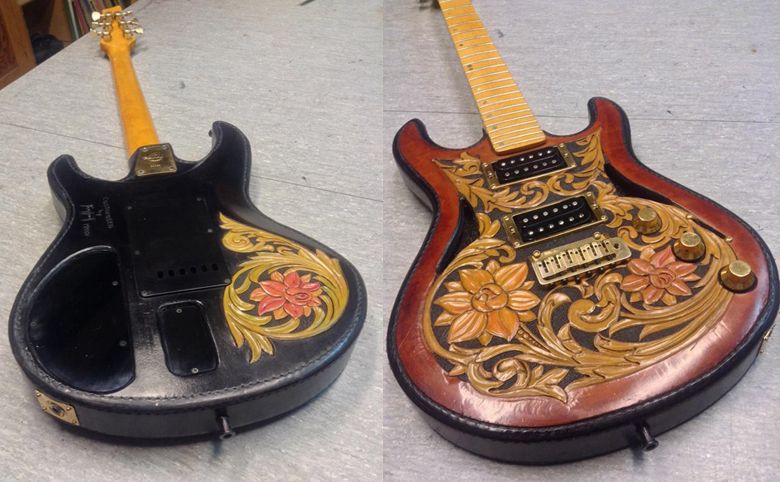
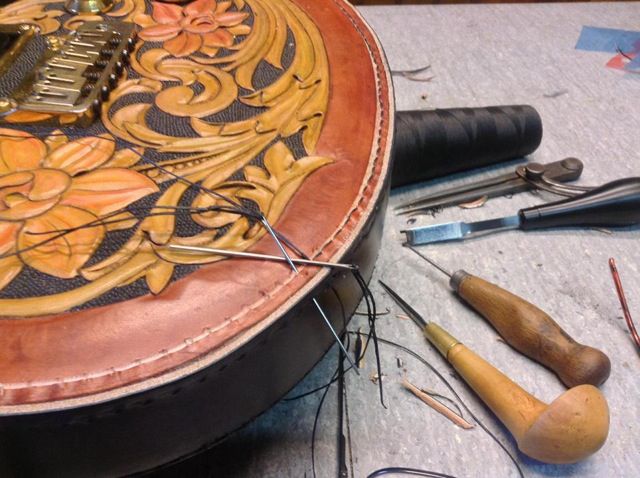
Leather-covered guitars by Serge Volken

guitarz.blogspot.com:

To keep introductions short, I work with leather since 30+ years and finally had the courage to customise some guitars. I used to be a professional leather worker, but luckily I regressed to amateur again to have more creative freedom. This allows me to select projects that are along the line of things I can stand for and can enjoy working on. My main job is still in leather, but more so with very old leather from archaeological sites. www.shoemuseum.ch

I don't have a webpage other than my Facebook page for my personal work

I'm still waiting for the occasion to customise a guitar with some of my organic textures but haven't found the occasion so far.

I am sending you some pictures of my latest unique baby I made for a friend of mine. The theme was his desire but I had total freedom to make the design myself. It took many sketches and quite some planning to create a design with a motion that takes contours and elements of the guitars body into consideration. I am just curious what some guitar experts could say about leather covered guitars. I am dead against covering acoustic guitars because I believe that the sound will suffer from it. E-guitars on the other hand are less prone to changes of sound, at least it's what I think, based on the theory, that the mikes depend more on the mass of the body than reverberation of a hollow body.

Feel free to post those pictures on your blog and lets see if I have sinned in the eyes of guitar aficionados ;)  So far I haven't dared to massacre a Fender or Les Paul. The one I'm posting is a LAG that has a curious feature: two hollowed openings. Having looked closely at different guitars I realised that the best ones for leather covers are those where the electronics are accessed from the back, leaving a maximum design space on the front. After all we wouldn't want to close permanently any access to the electronics on the inside, in case some repair or changes would be desired.

Cheers,

Serge aka Bigfoot


© 2014, Guitarz - The Original Guitar Blog - the blog that goes all the way to 11!
Please read our photo and content policy.
Saturday, 22 March 2014

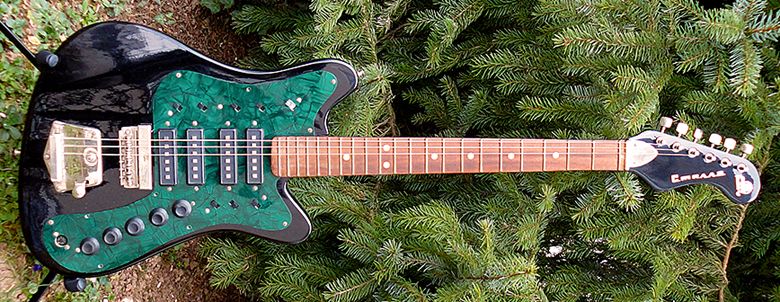
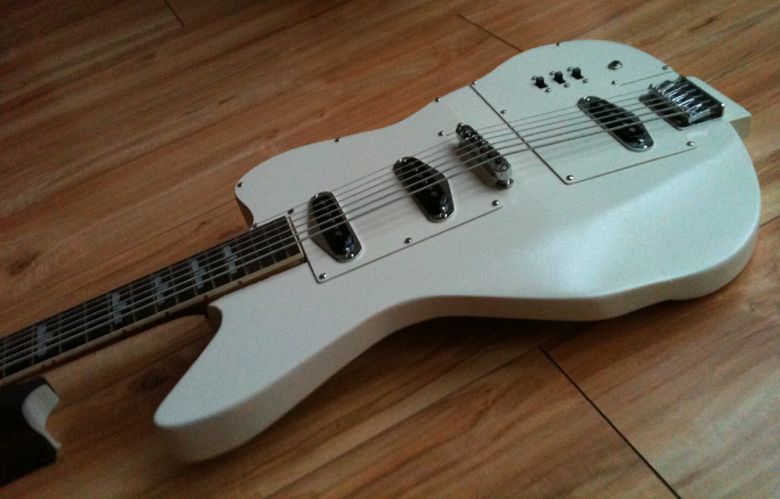
Your guitars: a Russian-made Stella guitar - inside and out

guitarz.blogspot.com:

Hi, Gavin,
 

I'm following Guitarz blog for quite some time and I have the guitar you already posted but I find it just too interesting not to send you more info and pics on it, in case you want to post it.
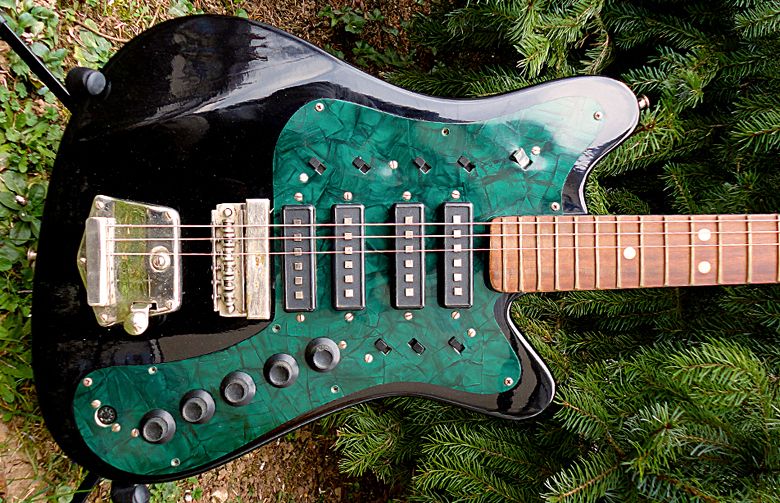
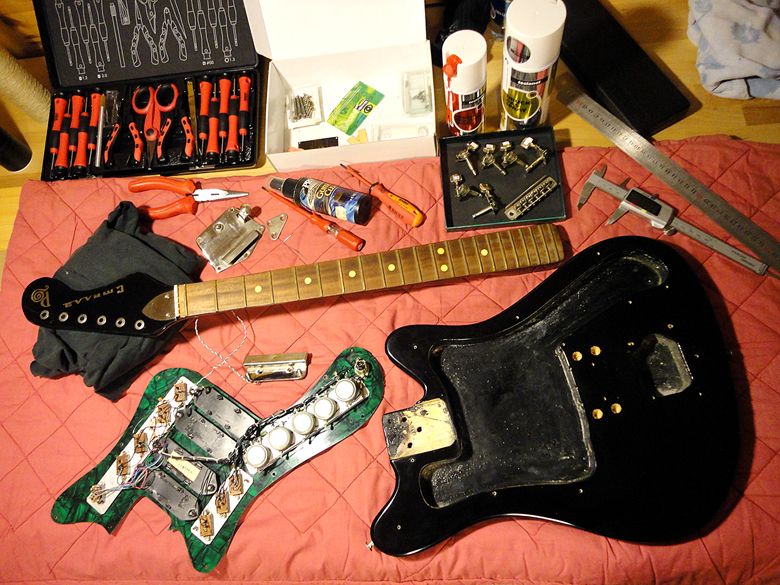
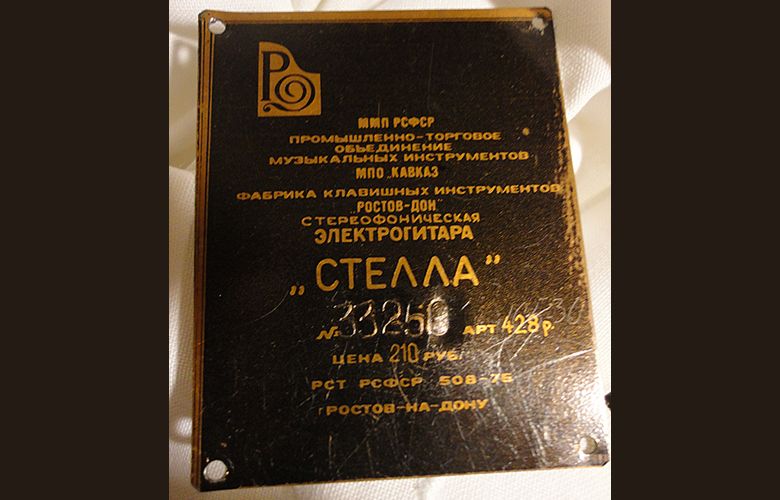
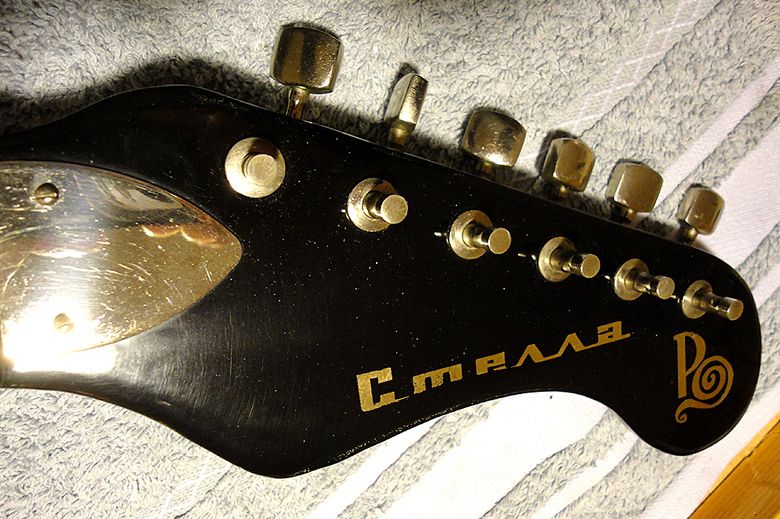
It's Russian Stella electric guitar, made in 1979. A friend of mine had it for years in his closet, looks almost brand new, and decided to give it to me. I opened it up and took bunch of pictures - it's quite a crazy guitar.

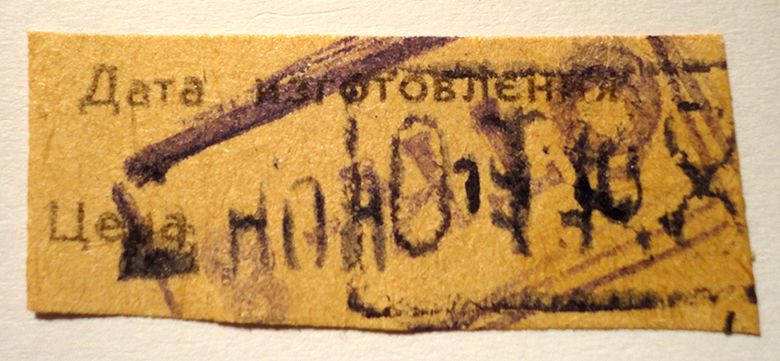
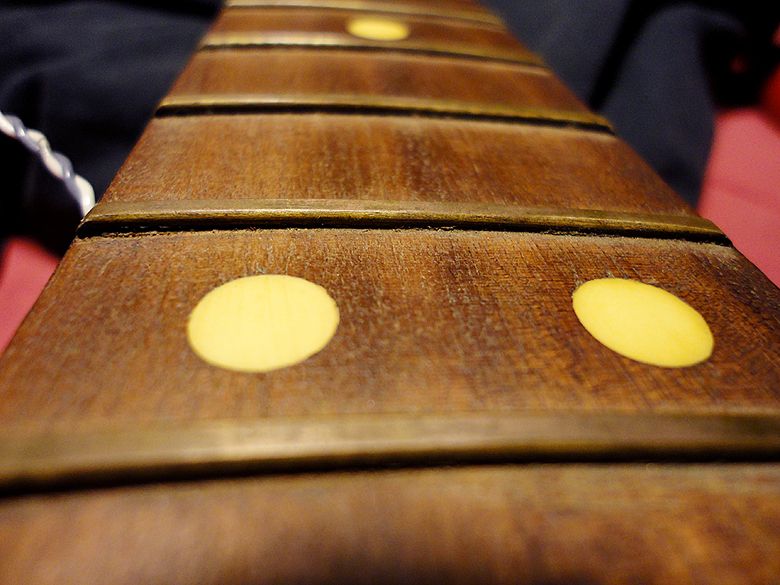
Its made in Rostov Na Donu in the USSR in 1979 then put together in 1980 - at least judging from labels I found inside on piece of deteriorating paper. It cost 210 Rubelj, and it says so on plate on back of the guitar :)  Finish is the weirdest thing I've seen (but not weirdest part of the guitar) - you need a bloody axe to chip it, it's just impervious. Thus, the wood remains a mystery. Neck is stable but the frets...made of brass and pretty much rectangular. 


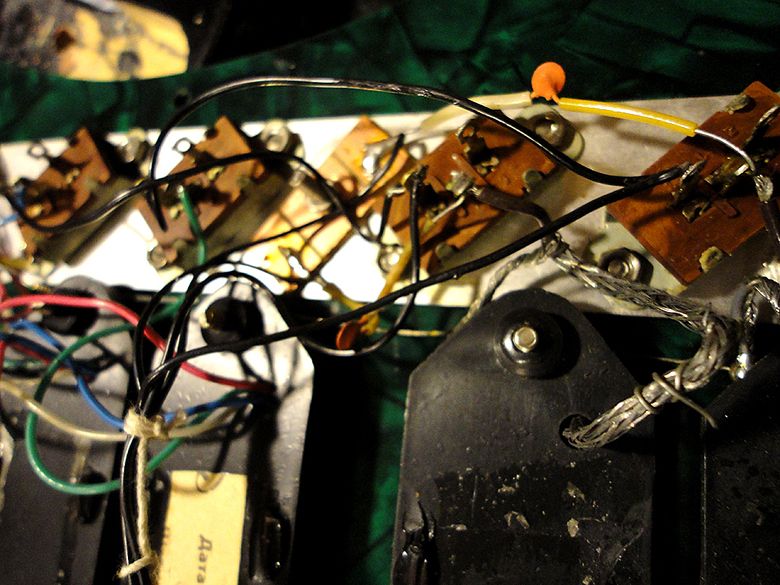
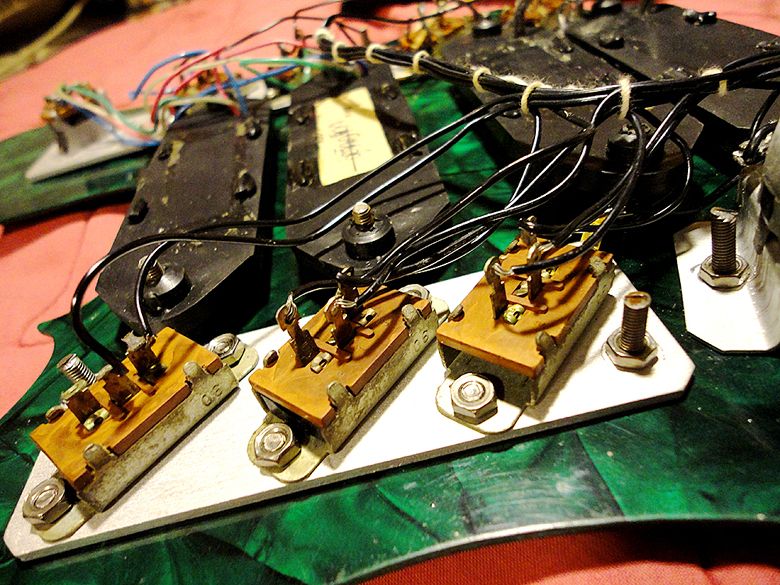
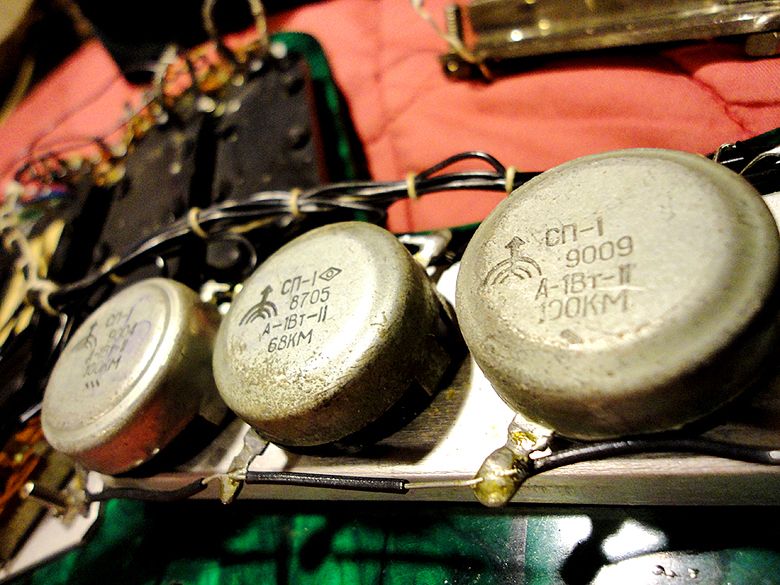
What's weirdest are the electronics - seems they took guts from old TVs or radios and accommodate them for guitar - looks like a jungle in there - mind you, they are done VERY neatly, check the photos - little knots that hold wires together etc. And of course, the goodies: stereo output, phase outs and all other mysterious switches and pots. 

Sound is actually very good if you manage to find right combination of switch positions and volume pots - which is, due to possible combinations, almost random - you flick first one up and third one down, open this and that volume and you get awesome tone, then you flick something else and it sounds like mosquito. And electronics are quiet, specially considering how much is going on. I got myself made a Y-cable with 5-din input on one end and two 1/4" input-jacks to which I plug the normal guitar cables - this way I get stereo output and can also hook up two amps.
 
Check this great video I found on youtube out, it explains much: https://www.youtube.com/watch?v=1SyALQncxY4

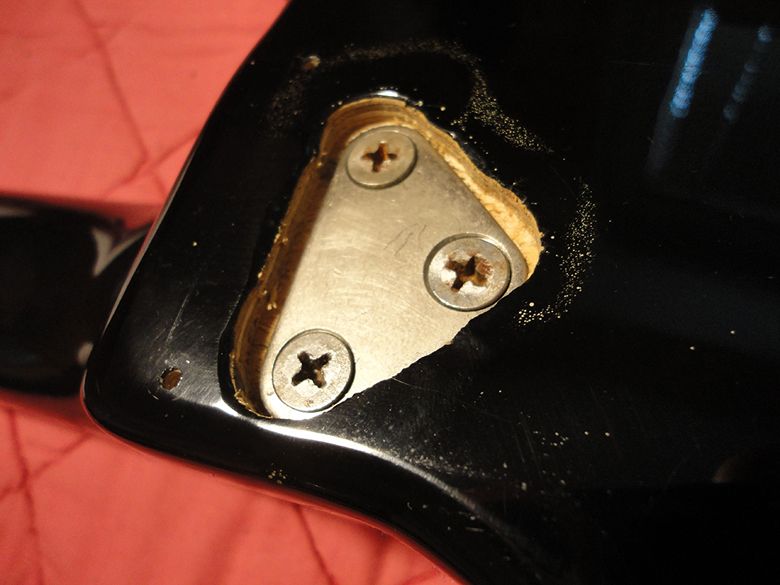
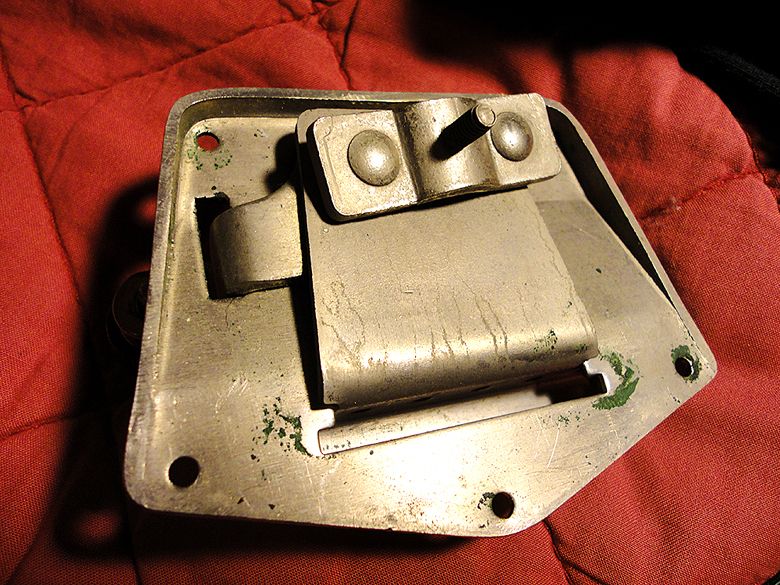
Vibrato bar is sadly missing, but seems it's there for the looks only - it does nothing. The metal thing just above the bridge is string dampener (foam is missing) which is lifted by pulling it up and it is retained there by springs underneath it. 
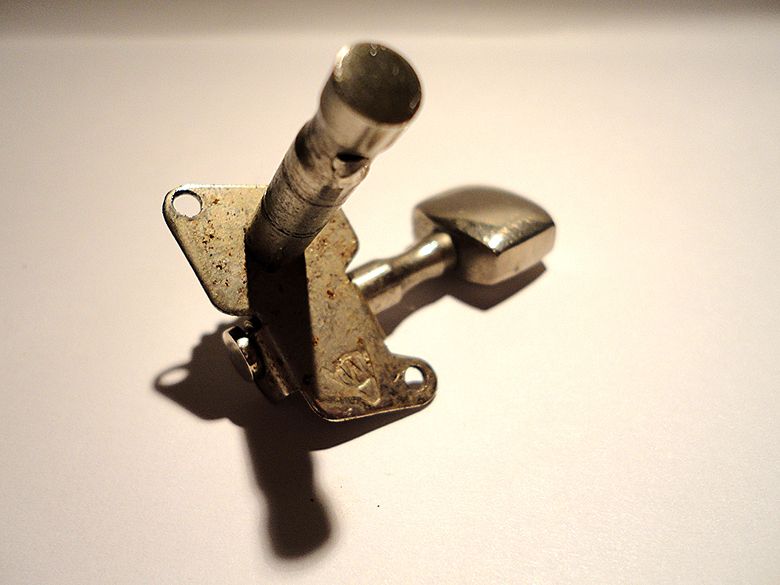
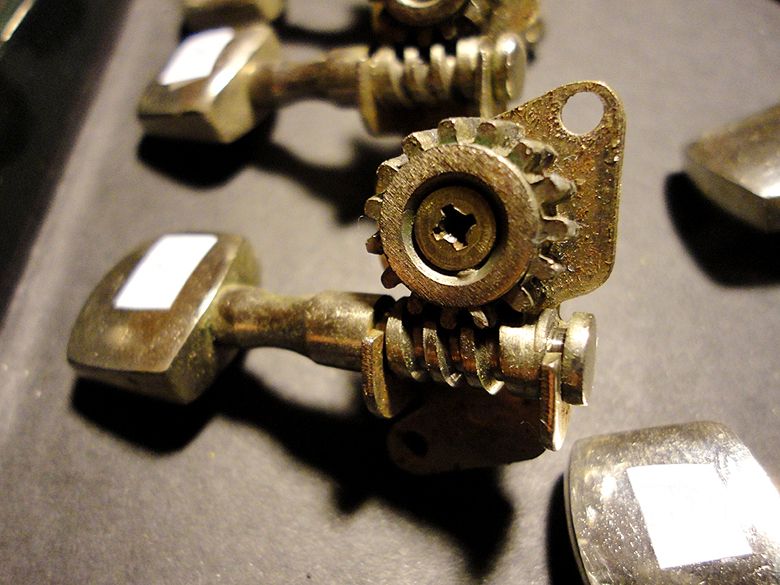
Tuners are horrible, you can wiggle them left and right, bridge is quite the same. But overall, the shape is one of most pleasant shapes I've ever hold, neck is chunky just enough, the emerald green pickguard is great.
 
Once I will deal with frets, tuners and bridge, and maybe shield electronics, it will be one spiffy guitar.

Thanks for reading, 
Barth


© 2014, Guitarz - The Original Guitar Blog - the blog that goes all the way to 11!
Please read our photo and content policy.
LinkWithin

Related Posts with Thumbnails

ShareThis