Showing posts with label effects. Show all posts

Tuesday, 1 April 2014

From Wampler pedals: the HAIR-stortion with built-in fan!

guitarz.blogspot.com:


From Brian at Wampler Pedals:
We've been secretly developing a new pedal for limited release..

I'm a huge fan of 80's rock tones, and I was raised during the "glam band" era where all of my favorite guitar players would stand in front of fans, prop a high-top shoe on top of a monitor while they stood in front of a fan to get that look that so many guitar players attempted to emulate back in the 80's.

Finally, we created it! I PROMISE you, you've never seen anything as unique as this...

Check it out here: http://youtu.be/rBDyv-EEZ9g

Thanks,
Brian
Wampler Pedals
© 2014, Guitarz - The Original Guitar Blog - the blog that goes all the way to 11!
Please read our photo and content policy.

Sunday, 2 June 2013

Effects Review [with video]: Magnetic Effects ELECTROCHOP pedal

guitarz.blogspot.com:
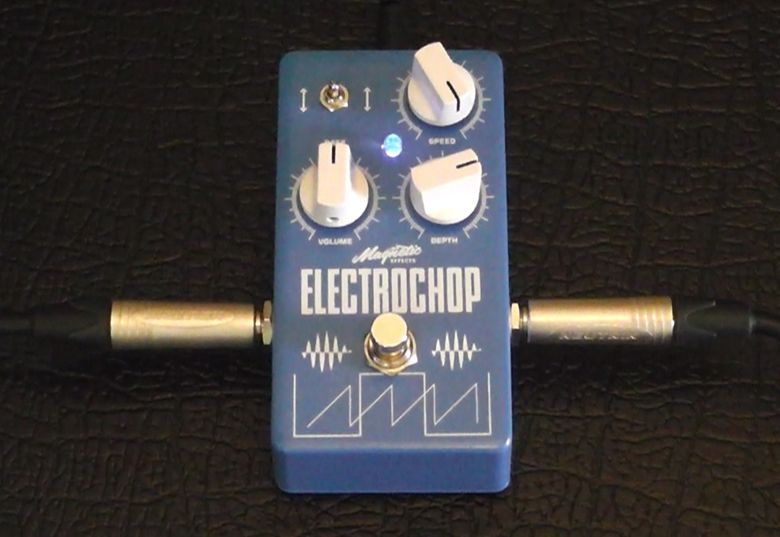
Magnetic Effects are a small company in the UK specialising in handmade boutique effects pedals. Their latest pedal, the Electrochop, has a really cool vintage-sounding vibe. To quote from their own press release:
The Magnetic Effects Electrochop is a super choppy tremolo that features the classic, unique LFO section from the Vox Repeat Percussion. A new audio circuit has been designed around the LFO, resulting in a tremolo that sounds like the Repeat Percussion but with a fuller, louder sound and more controls. All the classic throb but with more user friendly features!

The controls are: Volume, Depth and Speed plus a toggle switch that alters the overall speed range.

The speed range goes from very slow to crazy fast. At higher speeds the sound morphs into a ring modulator type effect.

Features:

  • High input impedance and low output impedance
  • True Bypass switching
  • 9V DC adapter or battery powered
  • Rate Toggle switch
  • Volume, Depth and Speed controls
Magnetic Effects very kindly let us borrow an Electrochop for review, and I can honestly say I've had great fun playing with it. I'm going to be sad to have to box this one up and send it back. Having had a taste of what it can do, if I wasn't so utterly broke right now I'd buy this immediately.

The Electrochop is housed in a sturdy metal casing, and the three control knobs are of excellent design allowing even those of us with rapidly failing eyesight to be able to ascertain the various settings at a glance. I also like the use of a blue LED for the power indicator (i.e. pedal ON) as opposed to the usual red we see on effects pedals. The blue nicely complements the colour scheme of the casing too.

Now, while I freely admit that I am not overly comfortable about getting myself out in front of a video camera, I decided that what we really needed here was a demo video, so please watch the below YouTube clip. Please note, that for review purposes I am using the Electrochop as the sole effect on the guitar's tone. Even though Magnetic Effects recommend using it in conjunction with a quality fuzz pedal, I wanted to demonstrate the sounds as produced by the Electrochop alone. As I say in the video, of course you can use it with other effects, you are only limited by your imagination.


By the way, in the video I mention the clarity and silent operation of the Electrochop. Please note that the hum you hear in the video is from my amp, NOT the effects pedal.

The Electrochop is priced at £89 and is available from the following retailers:
G L Wilson

© 2013, Guitarz - The Original Guitar Blog - the blog that goes all the way to 11!
Please read our photo and content policy.

Sunday, 19 May 2013

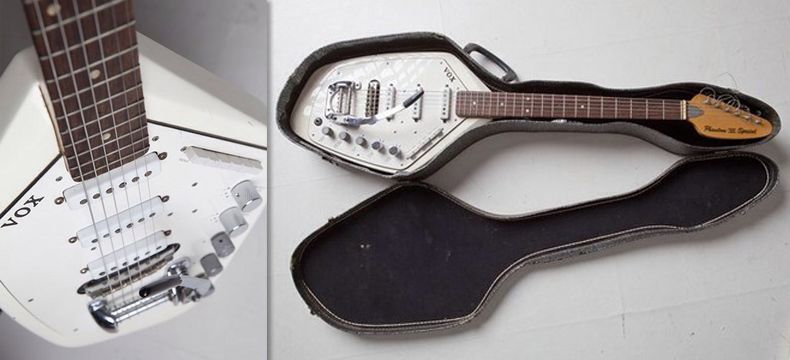
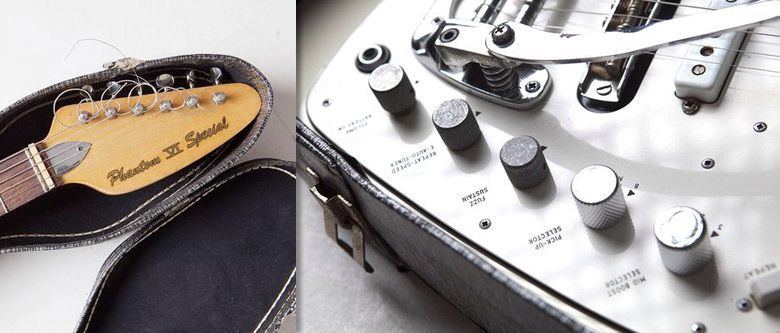
1960s Vox Phantom VI Special with built-in special effects

guitarz.blogspot.com:
Guitarz reader Andrew K writes:

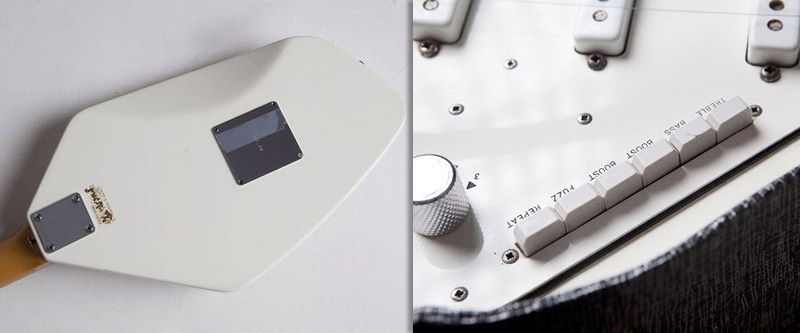
Okay, what we have here is the Vox Phantom VI Special with the onboard effects. This was the full, top-of-the-line, Vox Effects guitar. While the Starstream and other hollowbodies contained the smaller 3 effect unit the special contains ALL the effects. And I do mean all. Reliability notwithstanding these were truly special instruments, they were just about the only special FX guitar ever built that was fully analogue and actually functioned properly, and to top it off they were dead awesome and dead sexy. They are not as specialised as the guitarorgan or as standard as the Starsteam and other hollowbodies, they stand alone and thanks to the fact the company was circling the drain, there are relatively few of them in good nick. The fact they kept breaking may have counted against them in the long run.

And, Ian Curtis played one in Joy Division's "Love Will Tear Us Apart" video. Enough has been said, but still I will say more.

I am now enclosing an interview done with Bernard Sumner for the excellent book by Pat Graham called Instrument. The instrument being discussed was the self-same Vox Phantom VI Special.
Ian really liked this guitar. The Phantom had tons of effects built into it, as an added bonus. It had a pause unit, and a thing called the 'replat'. when we got the guitar, half the effects didn't work, and we were thinking "what the hell is the replat?" We got the guitar repaired, and it turned out that 'replat' was actually repeat - it was just a misprint. The guitar has a battery in it, and if you press the buttons in the wrong combination it will go into the self-oscillate mode and start to make this strange twittering sound that Ian liked very much. It is a pretty wacky guitar.

Ian didn't' really want to play guitar, but for some reason we wanted him to play it. I can't remember the reason now. It sounded like some of the thinner guitars on the Velvet Underground tracks, clean and jangly. I think Ian used to only play on 'Love Will Tear Us Apart'... no I'm wrong, there was another track too. Maybe, 'Heart and Soul'? I do remember Ian used to play only one chord, which was D. We showed him how to play D and we wrote a song. I wonder if that's why we wrote 'Love Will Tear Us Apart', you could drone a D through it. I think he played it live because I was playing keyboards. On the record, I played guitar, a twelve-string Eko (misspelt 'echo') an Italian guitar that sounded pretty good.

To pick it out, I think we just went to a record shop and said, that one looks cool, get that one and he said, yeah, I like that. I kept the guitar after he died, kept it under my bed in a case and then gave it back to his daughter when she came of age.

We did use it on a couple of New Order recordings. The one I remember is 'Everything's Gone Green'. On the rhythm guitar part on that song, you can hear this guitar. It just plays the D chord. That's a joke...

-Bernard Sumner.
If all of that is not reason enough for a feature, then I have absolutely no clue what is enough justification.

Do as you will.

Andrew K

P.S. if you read the description, It has a neck made by a furniture manufacturer. Quirky enough?

Currently being auctioned on eBay UK with bidding currently at £1,500 and three days left to run at the time of writing


© 2013, Guitarz - The Original Guitar Blog - the blog that goes all the way to 11!
Please read our photo and content policy.

Tuesday, 20 November 2012

Another look at the Electra X-610 MPC Outlaw Bass

guitarz.blogspot.com:
Brady writes:
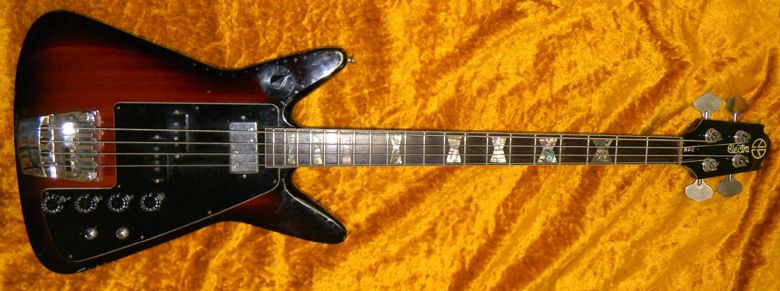
Hi, I think you should write about this [Electra X-610 MPC Outlaw Bass] on Guitarz.

I really like your blog. I have been educating myself on guitars, history and design for a while now but I know nothing about the Electra brand. I really like the odd shape of this bass. Also, what is the deal with the modules mentioned in the description?

Thanks,
Brady
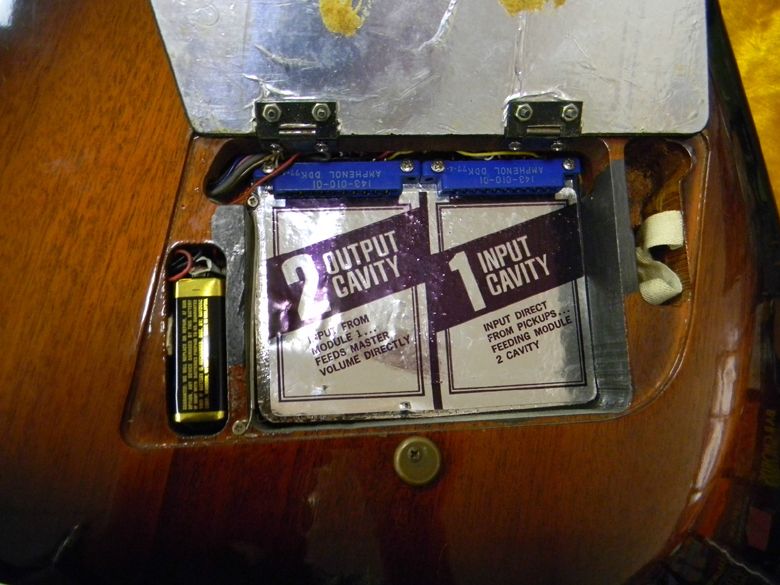
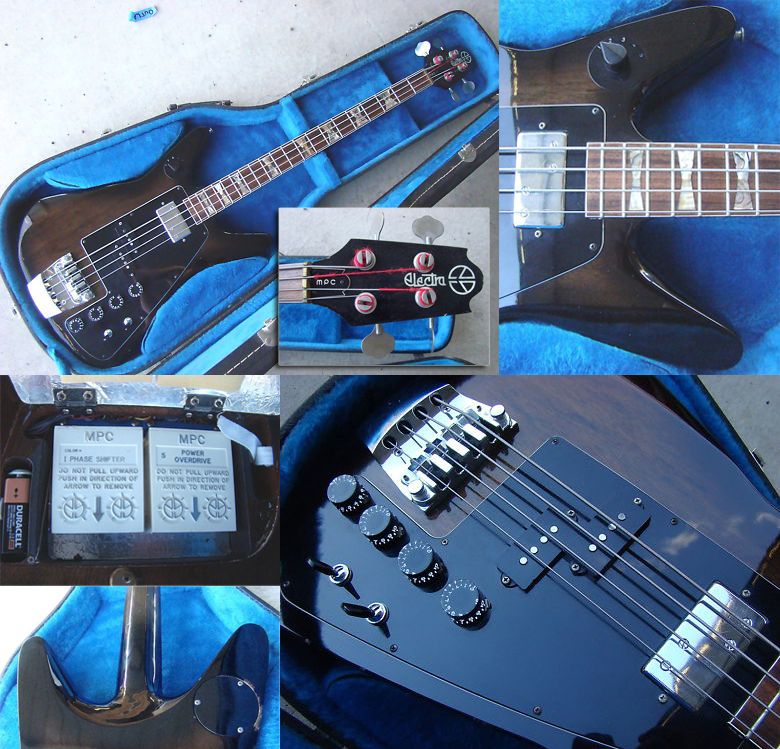
Hi Brady, we looked at a bass just like this one in July of last year, but you are correct in that it is a fascinating instrument and I think that this late 1970s Japanese-made marvel is well worth a second look. Basically, the "Modular Powered Circuits" (the MPC in the name) are interchangable on-board effects that can be clipped into place in the two effects cavities at the rear of the instrument. By way of example as to what kind of effects were offered, the Outlaw we looked at last year had a Power Overdrive and a Phase Shifter.

Notice how the effect cavities are labelled 1: Input cavity and 2: Output cavity which illustrate the "chain" of effects in use, as putting one effect before another can have a very different result to chaining the same effects the other way around.

This auction for this bass finishes in under two days time, with bidding at $255 at the time of writing. For comparison, the example we looked at last year was priced at $999 although it did come complete with two effects modules which I'd imagine would be hard to track down and find these days.

G L Wilson

© 2012, Guitarz - The Original Guitar Blog - 10 years and counting!

Sunday, 4 November 2012

1967 Vox Grand Prix V286


There's been an interesting conversation about vintage Vox 
guitars in relation to this scary picture in a 2009 post, but it
was before Blogger had all the blog comments wiped off!
We've always been ardent admirers of vintage Vox guitars here at Guitarz - their instruments combined the genius of both British and Italian lutherie! Can you imagine a more dazzling vision than this Vox Grand Prix V286? 

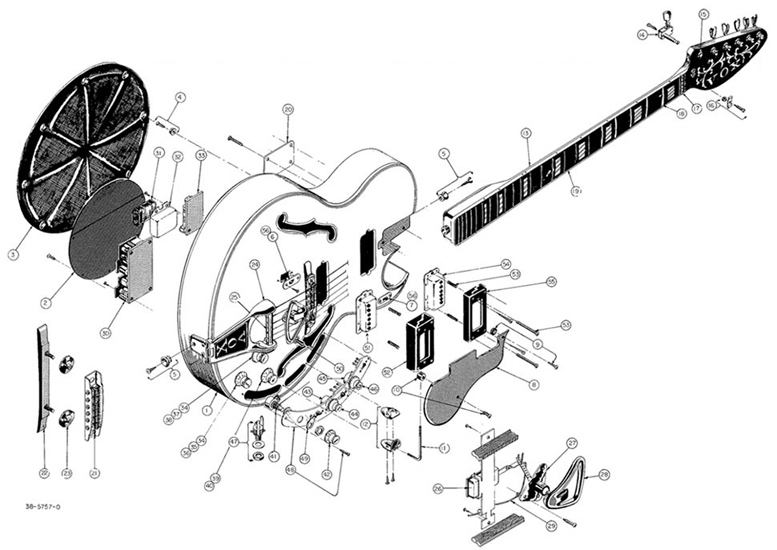
It has everything a guitar lover can expect in a guitar: first a design that combines classicism with killer details - the trademark Vox anti-Fender headstock, the fierce claw-like florentine cutaway, the curved control plate... Then it offers several technical innovations such as a E-tuner, a hand-activated wah, other onboard effects such as a fuzz (labeled distortion but based on the circuit of the Vox Tonebender fuzz), a treble/bass booster and a superb repeat percussion (one of my favorite effects lately).

Onboard effects are really out of fashion nowadays but I have a softspot for them - must have been cool back then to just plug your guitar in your amp and still have a wide array of sounds at hand... There was no reason to be a purist in more innovative times!

Anyway, to help you to really get the point of this guitar, I add a scheme and a demo video - thank you Internet for providing all kind of documentation! And have a look at what instruments the new Vox proposes since a few years, their guitars keep the innovation and the good looks of the origins up to date, and a model like the HDC-77 is high on my wish-list!


:  

© 2012, Guitarz - The Original Guitar Blog - 10 years and counting!

Thursday, 12 April 2012

Pedal time! 1967 Vox Tone Bender

Another great vintage fuzz pedal (yes, I'm quite into pedals lately, and mostly in fuzz boxes), the Vox Tone Bender.

Even more than in the field of  early electric guitars, the dawn of effect pedal is both full of myths and poorly documented - though everybody has an opinion about everything it seems. Who came first, what are the original components and circuits, what is the genuine sound?

And people who possess original pedals are of course reluctant to tear them apart to check what's inside - as you can see here (and you can read the whole Fuzz Central website while you're at it) early circuits were protected by a layer of paint...

And also makers had no reason to be consistent in their buildings, there were no standards, everybody was experimenting with new sounds (is it a legend or the Kinks really recorded 'You really got me' after slicing the speakers of their amps to get their infamous fuzzy sound?) 

Anyway, I've been reading many things about the Tone Bender - sometimes contradictory - so this is my version of the facts: the Vox Tone Bender was built in Italy - like Vox's guitars - by a company  called Jen, using the Tone Bender circuit provided by Sola Sound to several companies for their pedals, such as Marshall or Rotosound.

The original Vox Tone Bender was based on the MKI.V - the second version of the circuit - but there's been several later versions of both the circuit and the pedal, but since this one doesn't sport any indication, I assume it's an early model, said to have inspired the Fuzz Face.

Bertram D
 
© 2012, Guitarz - The Original Guitar Blog - now in its 10th year!

Sunday, 25 March 2012

Pedal time 2! Dallas-Arbiter Trem Face

guitarz.blogspot.com:

While we're on a pedal trip, I'd like to add my own Dallas Arbiter pedal into the mix. Mine is the Trem Face, which I bought at a car boot sale in the early 90's. For a long time, it was pretty obscure and became almost mythical until someone found a couple of boxes of about 40 NOS examples in a warehouse and put them on the market. It's estimated there were about 100-200 made altogether, so that still makes it fairly rare. I've seen these go for a thousand dollars a few years ago to less than three hundred a year or so back on Ebay but then there was someone asking $1795 (plus shipping) in 2010 on The Gear Page.

The sound is quite nice and has a wide range and like many old pedals, the quality of the sound depends to some extent on the freshness of the battery. As the battery runs down it does start to break up a bit. Having said that, the battery does last a pretty long time.

There are a few sites showing how to make your own and as, like the Fuzz Face, it's a simple circuit, it should be fairly simple - if you can find the right Germanium transistors...

One of those sites, Geofex, has diagrams and some interesting thoughts on the construction of improved versions.

On a side note, mine stopped working a while after I bought it so I took into the old Vox shop in Charing Cross Road (Macari's) and asked them to repair it. I had an old Colorsound pedal (which also didn't work) and I offered that in a straight exchange for fixing the Trem Face. When I pulled it out of my bag, the shop guy called the other guys over. They had never seen one before and as they were the ones who'd re-issued the Colorsound range, they ought to know something about them. Anyway, they agreed and I got it fixed. It has always been in the back of my mind just what that pedal was but I never saw it re-issued so it probably was just an experiment that never caught on and was dropped. The only thing I can remember about it now was that it was brown, more modern looking that the other pedals in the range and had an "IC circuit". Hmmm.

David in Barcelona - inexplicably absent for the past few months but, hopefully with more time now.

  © 2012, Guitarz - The Original Guitar Blog - now in its 10th year!

Pedal time! Dallas-Arbiter Fuzz Face


Everybody is much probably familiar enough with the Fuzz Face so I don't have to recall that it's one of the earliest effect pedals, released by Ivor Arbiter in 1966, that the round case was inspired by the base of a microphone stand, that it somehow looks like a smiling bearded face (imagine the effect on musicians on LSD back in the days), that it comprises no more than 11 electronic components - including germanium transistors (normally when they read germanium, old school guitarists get short-breathed) and contributed to the sound of Jimi Hendrix, Pete Townshend and David Gilmour... 

OK, one thing I might be able to tell that you don't know: if someone loves this pedal so much that he couldn't live any longer without a 1969 one, it would just cost US $1 795,00... (Personally, I use a 95 € Boss FZ5 modeled fuzz that in these times of vintage, analog and boutique pedals praise, nobody cares to display on their pearlboards, and I think that it sounds terrific, but who am I to say?)   


Bertram

© 2012, Guitarz - The Original Guitar Blog - now in its 10th year!

Sunday, 8 January 2012

Now for something completely different... Greenfly, horticulture, explosions and an EBow!

guitarz.blogspot.com:


OK, this isn't the usual sort of thing we show you here at Guitarz, but please bear with me. This is a short animated video that I made over the last couple of weeks. Yes, the animation style is very Monty Python/Terry Gilliam, although that wasn't a conscious decision, it's just the way it worked out.

"But what's it got to do with guitars?", some of you might well be asking.

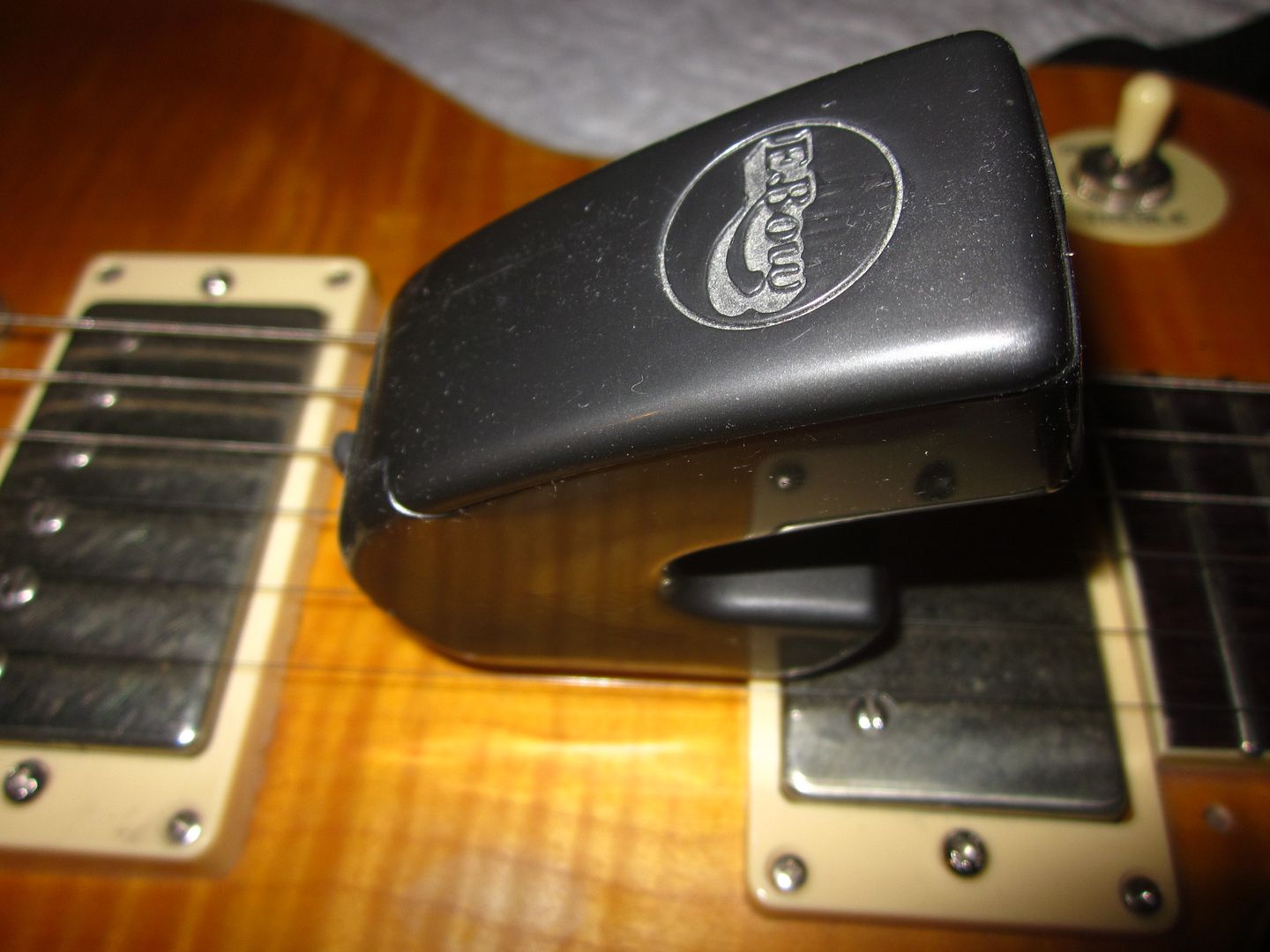
Well, I actually recorded the piece of music used as the soundtrack several years ago, and believe it serves quite nicely to demonstrate the sound of the legendary Energy Bow or - as it's more commonly known - EBow. For this piece, I actually used a Bass VI guitar (I think it was an earlier version of the EBow too, rather than the EBow Plus model as seen in the photo here), but if you're not already familiar with the EBow you still get the general idea of what it can sound like.

G L Wilson

© 2012, Guitarz - The Original Guitar Blog - now in its 10th year!

Tuesday, 19 July 2011

Electra MPC Outlaw X-610 bass with "Modular Powered Circuits" on-board effects

guitarz.blogspot.com:
We looked at a late 1970s Electra MPC Outlaw X-720 guitar last year. Now here's a bass version, the Electra MPC Outlaw X-610 bass currently being offered for sale on eBay with a Buy It Now price of $999. The body shapes are different, but the concept is the same with "Modular Powered Circuits" effects that can be snapped into place in the rear of the body. This bass has a Phase Shifter and Power Overdrive fitted in the photos; the seller doesn't mention if it comes with any other modules.

Via Greg Cadman on our Facebook page.

G L Wilson

© 2011, Guitarz - The Original Guitar Blog - now in its 10th year!
Thursday, 14 July 2011

1962 Epiphone Riviera with tremolo, reverb and tone expressor

guitarz.blogspot.com

It's strange, I have the feeling that I already saw this kind of guitar on the web but for now I cannot find any information about this 1962 Epiphone Riviera with its large Jolana-style pickguard and its strangely placed effects - tremolo, reverb and tone expressor as you can see on the close-up below... Is it a one-off mod, a forgotten limited edition or is it so stuffy in Berlin today that I'm not able to use Google anymore?  Anybody who can tell me more is welcome!


Edit: it' actually the 'Professional' model - a short lived series, some having also a trem bar like on this demo video, on which you can see that the knobs and switches are not so awkwardly placed has it would appear at first sight to a tight-ass 21st century guitar lover! Thanks to our sharp readers...

Bertram

© 2011, Guitarz - The Original Guitar Blog - now in its 10th year!
Jolana

Friday, 10 June 2011

Soviet-era USSR B&G Formanta fuzz guitar

guitarz.blogspot.com:
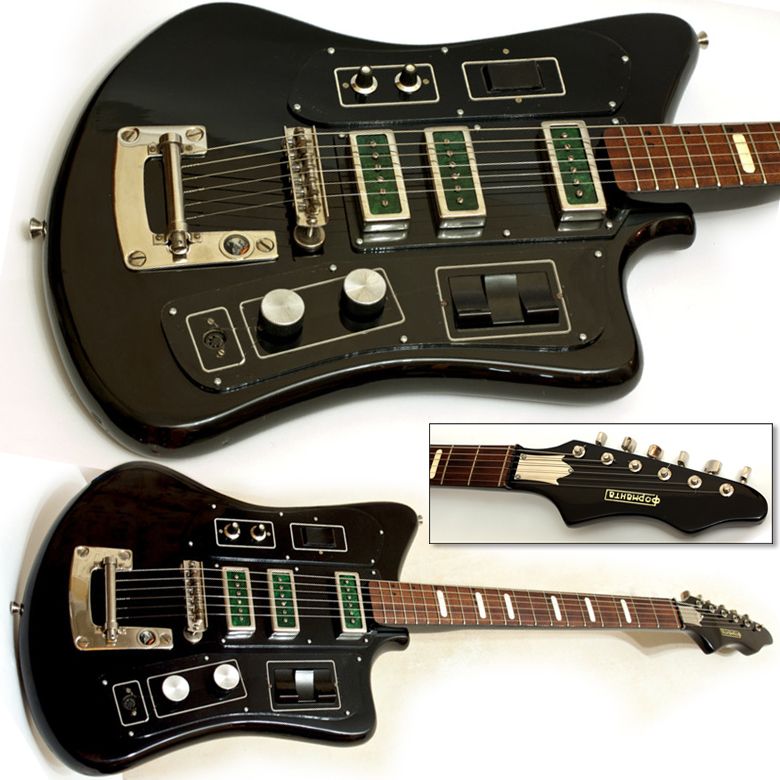
Just take one look at this B&G Formanta fuzz guitar and you know it's from Soviet-era Russia. Those switches and knobs all look as if they belong on some military hardware. However, the shape reminds me of the Vox Marauder.

This guitar is currently being offered for sale on eBay with a Buy It Now price of $400. The seller tells us that it was made in the 1980s in the USSR by Belarusian Musical Instruments Factory at Borisov city, and that it has a built-in fuzz effect powered by a 9 volt battery. Apparently the headstock shape is rare for this model and has a reversed signature.

G L Wilson

© 2011, Guitarz - The Original Guitar Blog - now in its 10th year!
Monday, 29 November 2010

1969 Marshall Supa Fuzz


Cannot find any exciting guitars around lately, and had a little tech geek phase these last days, so I decided to go for vintage pedals, and was happy to find this Marshall Supa Fuzz.

There are some people out there who have the same kind of love and dedication to effect pedals that you have for guitars (I suppose so if you read this blog!) People who know everything about every pedals, upgrade them with mod kits and can debate for ever about why the one that makes Grrrkkkkrssfzzzz is better than the one that makes Grzzzzrrfffffrzzz, etc... 

Anyway, the Supa Fuzz is one of the first effect pedals ever released (this one is not from 1967 as it is listed on eBay though, this design came up only in 1969) and I don't have much more anecdotes (I could tell that Pete Townsend used one in 1968 but quickly shifted to a Fuzz Face, then an Univox, but this just tells that the Supa Fuzz was probably not the best fuzzbox of the time!) 

Bertram


Guitarz - The Original Guitar Blog - now in its 9th year!

Saturday, 2 October 2010

What the?????? The Destroyer

guitarz.blogspot.com:


The Destroyer - Complete

While we are on an art theme, lets talk about art... and guitars. From the previous sorry attempt to something altogether much more interesting and I believe, more artistic on every level. If a guitar can be a work of art, I think this is one that deserves the tag.
This Guitar, The Destroyer, was built by luthier Mark Dalzell for the 2007 Jersey City Studio Artists Tour, which seems to be an "open studios" not a music tour.
Firstly, it looks amazing and secondly it looks like it was built by someone who knows what he's doing. He certainly does.
I'm going to list the features in Marks own words:
- Double neck 6-string guitar, 4-string mandolin
- Onboard digital effects Distortion, Chorus and Flanger
- Onboard analog "Theremaniacs" theremin
- Onboard chromatic tuner
- Scalloped brass nut on guitar and mandolin
- LED fret markers
- LED pickup indicators
- 1/4 scalloped neck on guitar
- 6-bolt neck
- Matching amplifier
- 60's styled chrome accent
s

It is well worth spending a little time checking out his Flickr stream to see some of his other creations, not to mention some spiffing shots of his Vermont 2009 golfing holiday. And don't miss the opportunity to check out his "Incredible Stupephone" on Youtube. It made my day and I hope it has the same effect on you.

David in Barcelona

Guitarz - The Original Guitar Blog - now in its 9th year!

Monday, 6 September 2010

This is a long one one one one ne ne ne e e e e e e

In a slight departure from my previous posts, I'd like to talk about a couple of things that interest me. Echo machines, an echo machine that's on eBay right now and eBay in general.

I've always been keen on echo machines and I've owned quite a few different makes over the years.

One of the great things about tape echo, apart from the sound quality, is being able to manipulate the tape for on-the-fly effects like grabbing hold of the tape guide, finger pressure to slow down the repeats or when it's recording (when you let go it speeds up). Great for dub effects and "experimental" music styles. The Echoplex goes one step further and incorporates a moving head which opens up a whole bag of possibilities. This video on Youtube shows it in action and you don't even need to plug a guitar in (that can't be right).

Anyone interested in the possibilities of the Echoplex only has to listen to John Martyn (Solid Air is a good place to start). It's hard to believe what he was doing in the 70s and it still sounds fresh today.

The down side of tapes is they wear out and start to get noisy pretty quick but even that can be a source of sound texture. The down side of those old machines themselves is the motors can be pretty noisy and earthing (grounding US) standards weren't so stringent in those days so it's not a bad idea to get an electrician to go over it as simply earthing it can cause a hum loop.

I was intrigued by this VERY-OLD-GUITAR-RECORDER on eBay as it was obviously not a recorder but a tape delay. Unfortunately the pictures were so bad and the description so scant that it seemed a dead end. Guitarz to the rescue. Gavin suggested it might be an Echoplex but it's not how I remembered my own one from years ago. Google to the rescue. A few minutes of Googling and the track was getting warmer. It was some kind of Echoplex but I couldn't find anything that looked similar. Photoshop to the rescue. A little enhancement with curves (Image > Adjustments > Curves) and a lot more detail was revealed. This has been modified and flight-cased (professionally?) to give a much longer loop and extra playback heads. Now I'm really intrigued but Google hasn't been able to throw any more light on it. Is this a standard mod (a kit?) because it seems pretty well done?

Can any of our readers shed some light?

As we are uncommonly fond of eBay and while we're on the subject, here are some of my eTips.

1. Put a few GOOD pictures of your offering. Especially important if you're not sure what that gizmo is yourself. There are a lot of generous eBayers out there who will offer information on your obscure or mis-titled treasure.

2. Describe it. Does it work? That's a good one, always works for me. If it's a guitar, the single most important and problematic to fix is the neck. Is it straight? and what's the action like? I am a lot less likely to trust something where they say "I'll let the pictures do the talking" and I'm especially suspicious of guitars which are "set up for slide".

3. Delivery. I know it's a fag taking stuff to the Post Office but if you live in Lower Uppington-in-the-Marshes, the chances of finding a buyer who can collect from you but only Wednesday mornings is greatly reduced. And, once you've dragged yourself all the way down to Post Office, there really isn't any difference sending it to another country. That will increase your selling chances greatly.

4. Do your homework and find out what's a reasonable price. One of the techniques that real auctioneers use to get a little competition going is starting off on an attractive price. If it's too high you reduce the chances of even getting started. There was Vox Organ Guitar sold recently after being listed three times. It went for a lot more than her BIN price in the first listing and there was a flurry of activity in the closing moments. The only thing she did was add a little more info and start off on a lower price. I know coz I was bidding for it and I gave her that extra info (see 1 above).

5. As much as you want to get the highest price for your treasure, what you paid for it has no relationship to what you can expect to get for it. There is a six month old guitar on eBay right now with a BIN price that's higher than the price (including delivery and guarantee) from both Thomann and Amazon.
Any more eBay tips?


guitarz.blogspot.com:Guitarz - The Original Guitar Blog - now in its 9th year!

Wednesday, 1 September 2010

Tempest Japanese Strat with built-in effects

guitarz.blogspot.com:
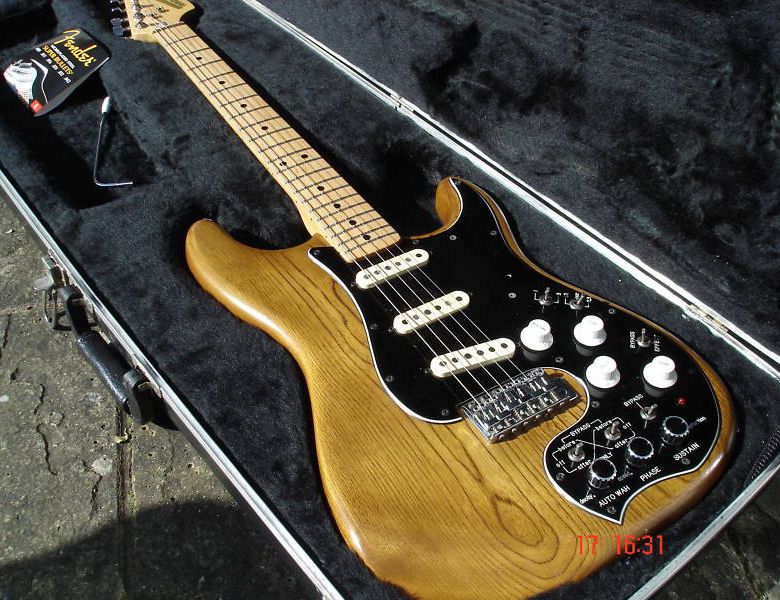
Remember the Fresher Straighter Japanese Strat-a-like with built-in drum machine? Well, here we have a similar guitar with built-in effects (sustain/drive, phase and auto-wah) this one bearing the Tempest brand. With a solid ash body and excellent build quality, this is one to look out for if you don't mind the bizarrely-shaped pickguard and all those extra controls.

G L Wilson

Guitarz - The Original Guitar Blog - now in its 9th year!

Saturday, 28 August 2010

Millennium #13 Prototype - aluminium body with on-board T-wah

guitarz.blogspot.com
Millennium

Bertram is currently travelling and does not have internet access, but he wanted me to show you guys this intriguing Millenium lightweight aluminium-bodied guitar which features built-in Boss T-wah effects circuitry. Effects are engaged with a patent pending wrist-actuated switch, supposedly providing for quicker and smoother control than a foot-actuated pedal.

The body is arcraft-grade indestructible aluminium and is married to a hand-made mahogany neck with African ebony fingerboard and equipped with LSR lightweight locking tuners. The guitar weighs 7 lbs.

All in all, it's a very fitting guitar to show you on this, our 8th birthday!

Millennium 2

G L Wilson (on behalf of Bertram)

Guitarz - The Original Guitar Blog - now in its 9th year!

Friday, 2 October 2009

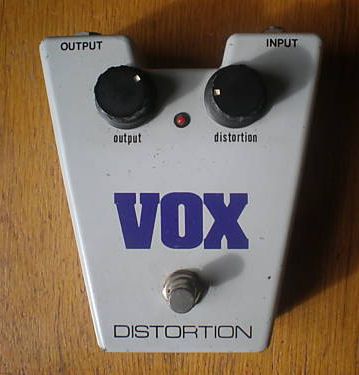
Vox Distortion pedal from the 1980s

guitarz.blogspot.com:
Blimey! I had one of these way back - it was my first ever FX pedal. Actually, I ought to still have it as I never remember getting rid of it. I think I'll raid my box of bits and pieces later and see if I can find it. I'm going to watch this auction. If it's really worth 99 quid, then mine will be going on eBay too.

I seem to remember it was a rather nasty distortion effect. Later on I used to use it in conjunction with a Boss Distortion/Feedbacker pedal to create my own hyper-distortion sound through a Vox AC30. That was a brutal sound!

G L Wilson

NB: There are a lot of blogs STEALING content and bandwidth. If you read this anywhere else but on guitarz.blogspot.com then you are reading a blog that STEALS content. Please support original bloggers!

Monday, 11 May 2009

Andy demonstrates his home-made rotary speaker


This is genius! Regular Guitarz reader, Andy Stone - he who built the "Les Pew" guitar, the Pew Bass, and this rather tasty 12-string electric amongst other guitars - has built this home-made rotary speaker as demonstrated in the above YouTube clip. Andy's a very resourceful chap, often building his various projects from whatever bits and pieces he has to hand. The rotary speaker includes parts made from Roses chocolate tins and an old school chair! That's some very inspired recycling going on there.

LinkWithin

Related Posts with Thumbnails

ShareThis