Showing posts with label American guitars. Show all posts

Monday, 22 April 2019

5 Weird Guitars from Craigslist!

guitarz.blogspot.com:

Hi there. My name is Billy and I’m a writer with Guitartricks.com, where we teach people how to play guitar online! I’m a huge fan of looking for weird, interesting guitars, and one of the best places to do it is on Craigslist.

Craigslist is home to a number of interesting guitars. Here are some that I came across that are entirely unique and unlike anything I’ve ever seen in person. Some of these guitars are custom-built, others aren’t guitars at all but instead, use leftover guitar bodies and parts. Check them out!

This telecaster was “Made like a Tele.” According to the sales post. I’m not sure how anyone is supposed to play this, or even hold it. The parts seem pretty sharp but if you really want if you’re playing in a steampunk rock band, then maybe this is a match made in heaven. 

Apparently, the seller has listed this as a “3-string, acoustic/electric, roasting-pan resonator guitar.” If you want to know what this instrument really sounds like, the seller even posted a video of him playing it! Check it out here: https://youtu.be/BNLiMz7Lucs

Who knew Budweiser made guitars? Looks like this seller has a handful of Gibson and PRS guitars with custom Budweiser paint on them. One of these is a “very rare” Les Paul Custom shop! I’m more of a Guinness kind of guy myself though.

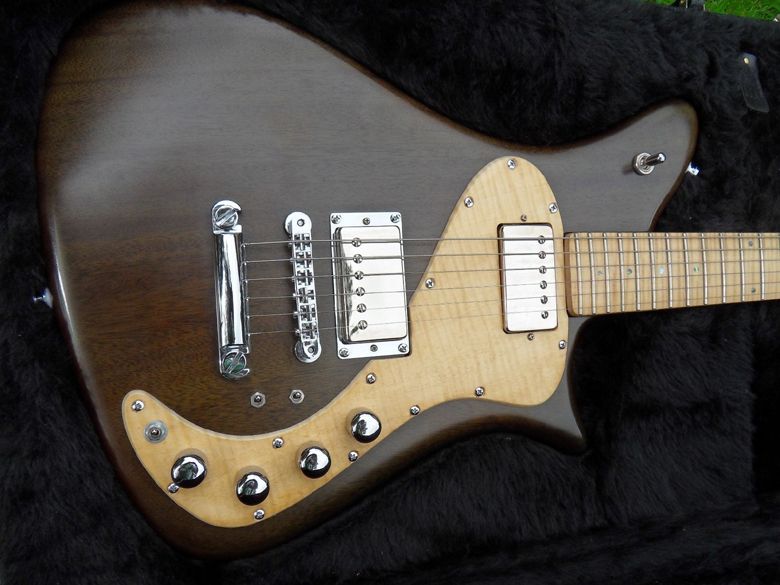
This guitar caught my eye simply because it looks very sharp! Just look at that thing. You can slice a cake with this guy. Otherwise, it looks like a pretty clean custom-built number with mahogany and maple. 

This seller has taken broken guitars and turned them into speakers. There are three different guitar/speakers for sale. I wonder if these sound any good!

This is the only bass on this list but it looked so darn interesting, I couldn’t help but put it on the list. It’s a custom made guitar and looks like it started life originally as a Maestro.

And that’s it! There are so many interesting guitars out there, don’t forget to check them all out. 

Billy has also written for Guitar World and if you want to read more from him, visit Guitar Tricks, the #1 online guitar lessons website!


© 2019, Guitarz - The Original Guitar Blog - the blog that goes all the way to 11!
Please read our photo and content policy.

Tuesday, 24 April 2018

Hamilton Custom Guitars: another example

guitarz.blogspot.com:

There has been a lot of interest in this 2013 post about this Hamilton Custom Guitar. Mark Natola contacted us to say that he is a Hamilton owner too, having recently bought a beaten-up example via Craig's List.

Mark has very kindly emailed the several photos of his Hamilton Custom Guitar that you see here. He tells us that:
...the head stock was broken when I bought it. In addition, the fret board was splitting away from the neck and the pick guard was broken in several places. Other than that, it was in fine shape, 😊.

I brought it to a luthier who removed the fret board, cleaned up the neck, glued the fret board back on and replaced the frets. He repaired the head stock based on the “Made for Raymond” photo posted on the blog. In the mean time, I had a new pick guard made based on the metal shielding found below the original pick guard. We decided to stick with the original pickup and pots as they could not be replaced. I took the bridge apart and soaked and scrubbed the chrome parts with naval jelly. They cleaned up very well. The tuning keys were also soaked and cleaned in the same manner. Finally, I made a conscious decision to keep the original laquer finish, which is checked from age. Consequently, when the head stock was repaired it was necessary to stain it using a stain similar to the body color. My guitar had a “Made for Corinne” signature, however part of the name was missing due to the damage to the headstock. We decided to remove that and leave the Hamilton Custom intact.

I have now seen several guitars and it looks like there are subtle variations in the plate below the bridge. I can send more images later if you are interested.


Mark goes on add:
...it would seem as there are at least five of these floating around including mine.
  • There is "Made for Raymond".
  • Mine, formerly "Made for Corrine"
  • A white one I saw posted on Pintrest a while back, without an inscription as far as I can tell
  • One mentioned on this blog that was bought in Boston, with case and mid 60's sheet music
  • One mentioned in recent post by guy from Long Island whose father chromed the hardware.
Am I missing any?
I wonder if the white one on Pinterest is the same one as owned by the father of Thomas who commented on our original blog post?

If anyone else has any more information or photos of Hamilton Custom guitars, please contact us!

G L Wilson

© 2018, Guitarz - The Original Guitar Blog - the blog that goes all the way to 11!
Please read our photo and content policy.

Wednesday, 6 July 2016

Gretsch 7506 Acoustic guitar from 1972 with an unusual bridge.

guitarz.blogspot.com:


This Gretsch 7506 initially caught my eye as it was not what I think of when I see the words "Gretsch" and "Acoustic" together. I'm used to the more ubiquitous triangular sound-hole that I thought was common to all of their flattop offerings. 

Again, I stand corrected.

Here we have a very traditional folk acoustic guitar. This made in the USA guitar has a couple of Gretsch hints, the headstock, the back access panel to the truss adjustment, and the 3 piece sadd..................le......what? Is? Going on?

Apparently I'd never seen the Tri-Saddle that they used on their acoustic guitars in the early 1970s. Is this extremly rare, or have i just missed it all these years?

Currently listed for $1000 Canadian dollars.

R.W. Haller

© 2016, Guitarz - The Original Guitar Blog - the blog that goes all the way to 11!
Please read our photo and content policy.

Monday, 6 June 2016

1979 MusicMan Sabre fretless bass guitar

guitarz.blogspot.com:

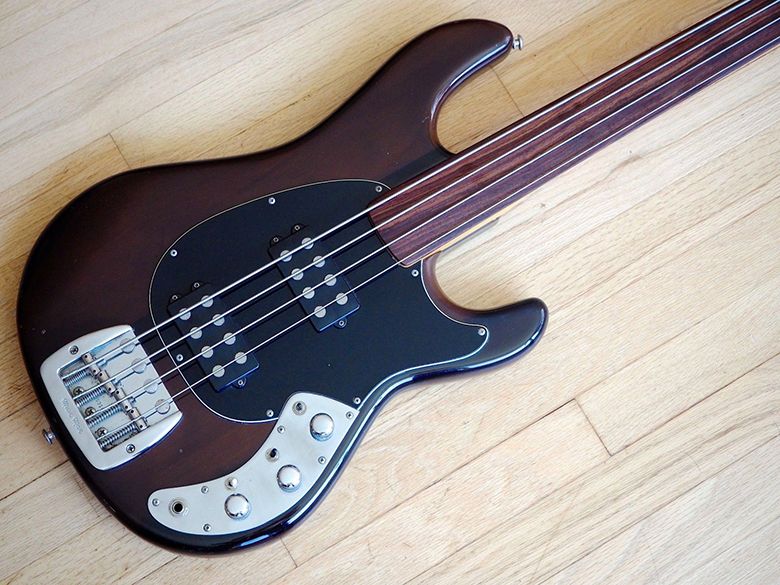
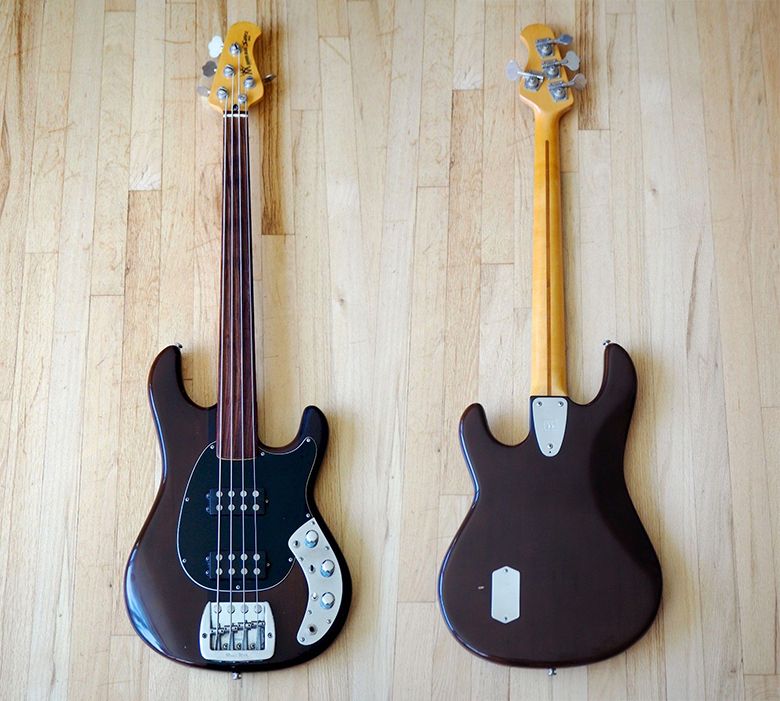
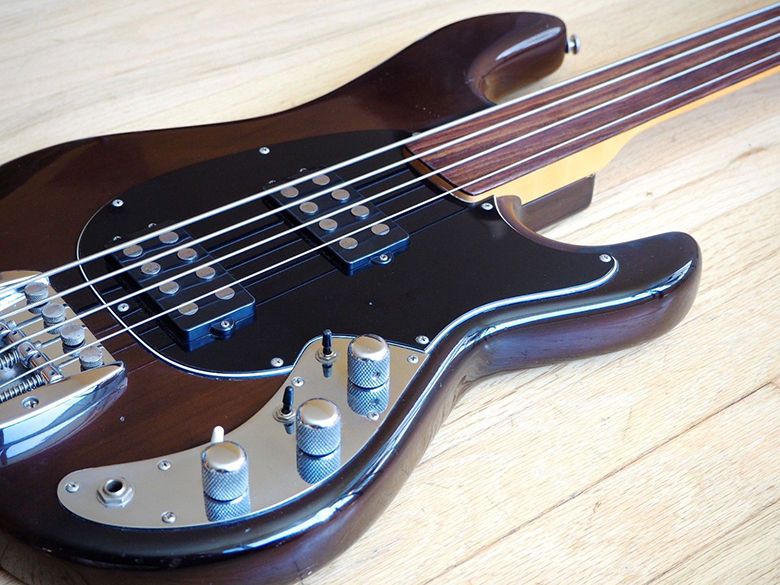
Here we see a beautiful example of the rarely seen, and some would say more aesthetically pleasing, sibling of the Stingray bass guitar, the MusicMan Sabre. This fretless example features two of MusicMan's own now legendary design pickups as opposed to the Stingray's single unit and also boasts its own unique preamp design, with Bass and Treble EQ knobs for both boost and cut, as well as a bright switch and a phase reversal switch, making for an incredibly versatile instrument. According to the seller's blurb, "the classic alder and maple tone wood combination [gives] this bass has a bell-like upper midrange and warm pleasing low end that translates well through the pickups, while the preamp allows you to dial in plenty of treble zing, or as much warm pillowy low end as you'd need, while also allowing you to dial back the bass for a tight, cutting, well defined sound."

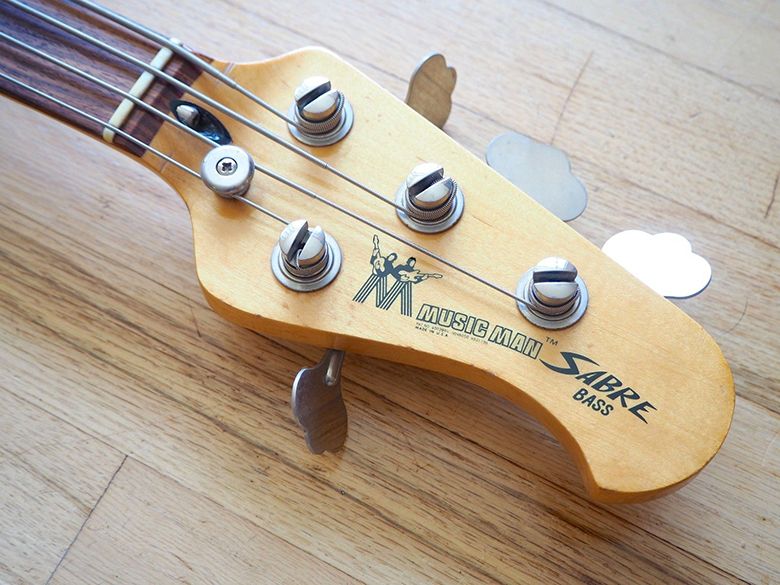
Dating from 1979 means that this bass probably pre-dates Ernie Ball's acquisition of the Music Man company which happened at around this time. Certainly the headstock does not have the Ernie Ball logo (see pics above). The Sabre would have been designed by Leo Fender and Forrest White, who also designed MusicMan's other early period instruments, and the Sabre bass itself was produced between 1978 and 1991, but apparently was not a big seller.

Currently listed on eBay with a Buy It Now price of US $2,299.99.

G L Wilson

© 2016, Guitarz - The Original Guitar Blog - the blog that goes all the way to 11!
Please read our photo and content policy.

Sunday, 10 January 2016

Lindert Loco-Motive T Guitar

guitarz.blogspot.com:

This Lindert Loco-Motive is a decidedly individual take on guitar design and that's the kind of approach we admire here at Guitarz.


According to Linderts guitars (unofficial) fan site, Linderts were built in Chelan, Washington in the 1990s and were the brainchild of Charles Lindert.  Along with their plastic-like, textured bodies and their grillcloth or tweed inserts, their biggest features were the unique "Thumb's Up" headstock as shown in the photo below and the "Escape Velocity" neck, which was a combination of a C-shape at the lower frets that morphed into a V-shape contour that directed your hands around the neck as you went to the higher frets.

They have posted all the different models and lots of info and also describe the differences between the USA models (which this is) and the later Korean ones. Worth checking out.


We've posted about Lindert guitars a couple of times before. A baritone guitar here and a six string bass there, so this is a nice addition to the family.
This is what the seller says about his guitar..."This auction is for my Lindert Loco-Motive 'T' Guitar in near mint condition. I believe this guitar is also known as the VT148 Victor. 
  1. It has a wider headstock than the Korean model.
  1. The logo on the headstock would be parallel to the strings if Korean.
  1. There are three screws below the bridge which would not be present on the Korean model. 
  1. There are also three screws on the back which typifies American build.
  1. The Korean models had a smooth finish.
I purchased this guitar new over 20 years ago and it has remained in it's bag since. I have probably taken it out of the bag four or five times to tune and play.

This model was made in Washington, USA and has the textured finish of brown and cream so loved by Charles Lindert. 

Other ways of telling it is USA made rather than the later Korean models are:
Other features of this guitar are the 22 fret neck, chicken feet control knobs and the semi-hollow body with, what looks like, Fender Tweed cloth inserts. Infact when I first bought this guitar I wondered if it had a built in amplifier and speaker but unfortunately not so!

This guitar plays extremely well and is becoming, like all Lindert guitars, desirable and collectable. 

The neck and string spacing are just wide enough to comfortably finger pick or play in a classical style.

Please note there is one small chip on the front top as shown in the eighth and last picture, other wise this guitar is in mint condition. 

I am not sure of the serial number however believe it is hand written on a label, together with the date of manufacture, on the heel of the neck.

The guitar comes with a soft case however will be supplied with a new hard case for shipping."

I haven't posted in long while but this whacky beauty deserves to be seen in all it's crazy glory. (The clue is, of course, in the name).

David in post-xmas-stupor Barcelona


© 2015, Guitarz - The Original Guitar Blog - the blog that goes all the way to 11!
Please read our photo and content policy.

Sunday, 30 August 2015

1967-68 Messenger hollow body fretless electric bass with aluminum neck

guitarz.blogspot.com:
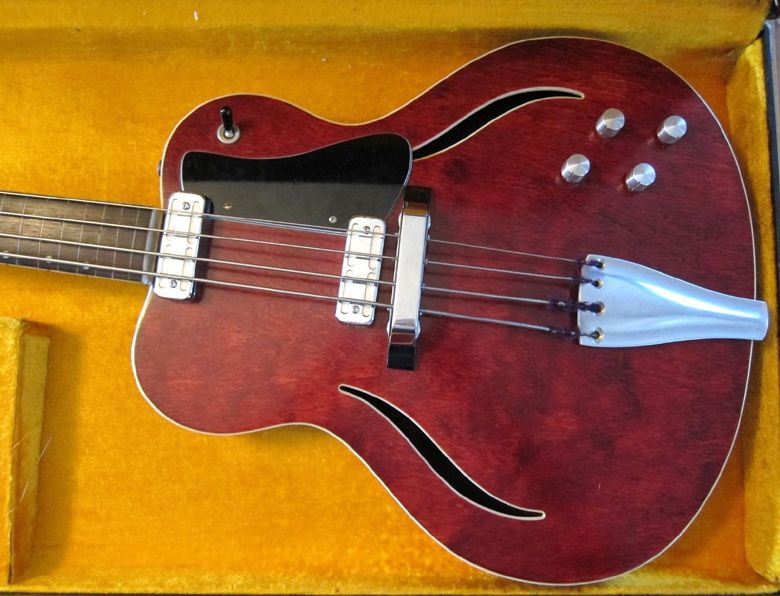
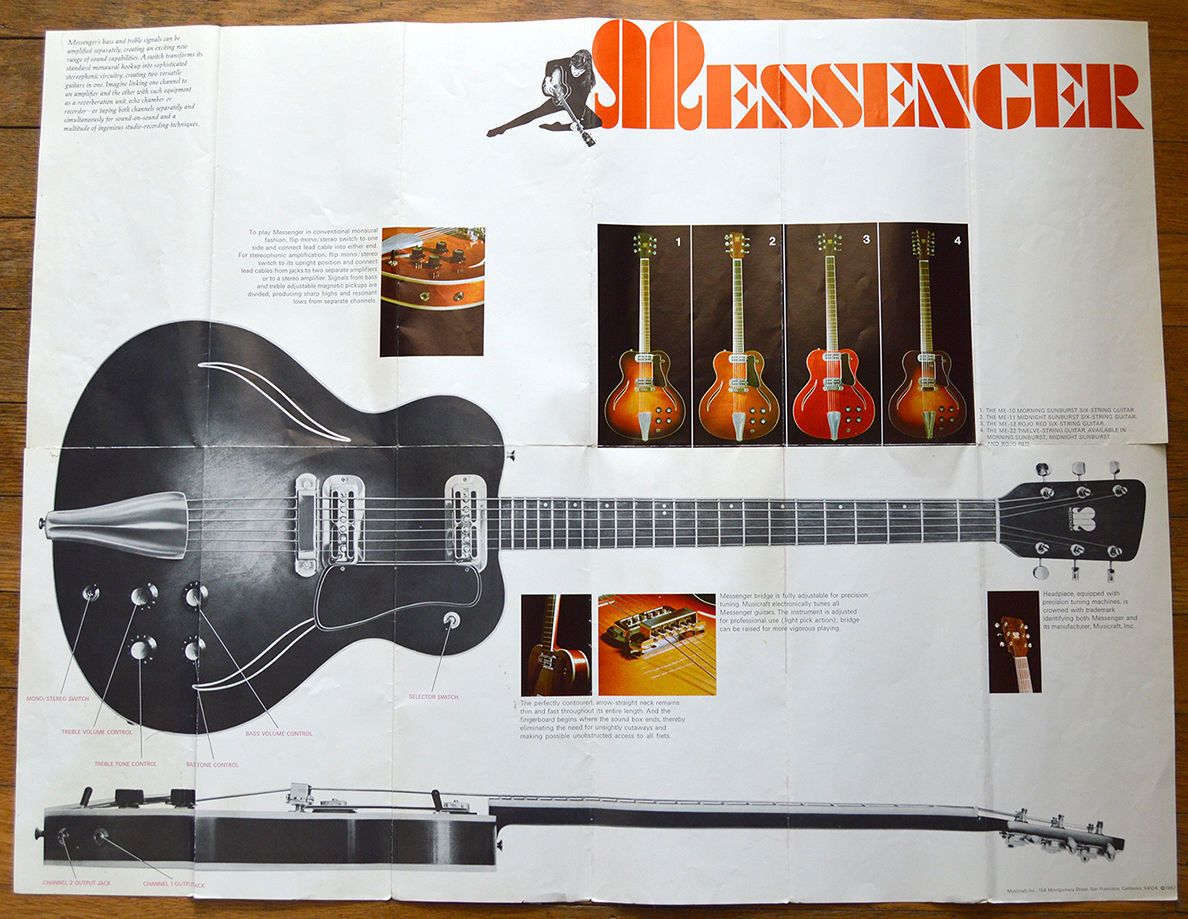
Previously on Guitarz we've taken an all-too brief look at a vintage 1960s Musicraft Inc. Messenger guitar (as famously played by Mark Farner of Grand Funk Railroad) and the more recent Eastwood reissue (which is itself a discontinued model... for the time being).

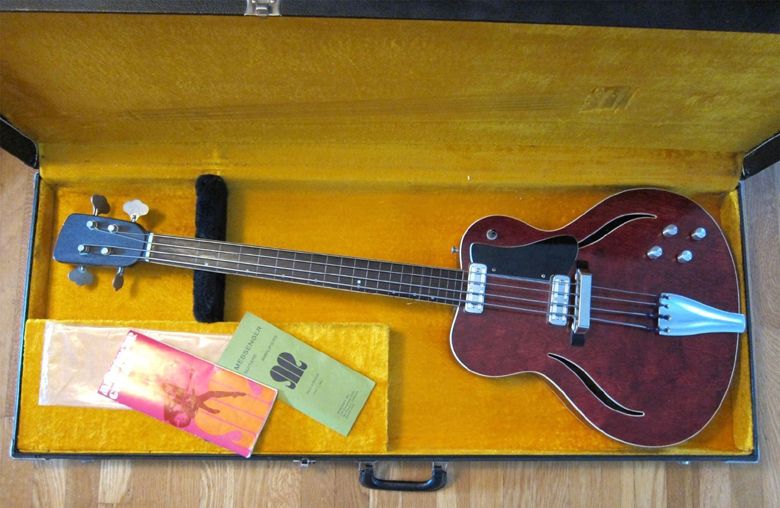
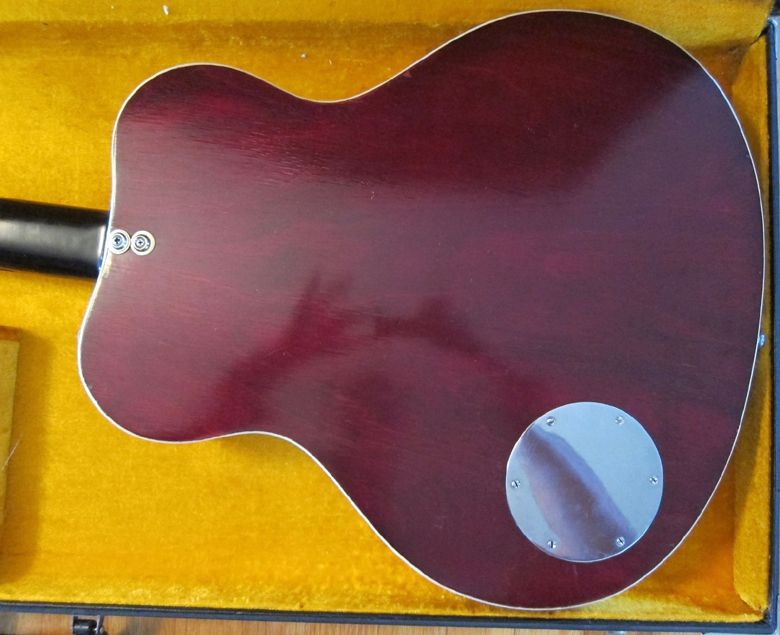
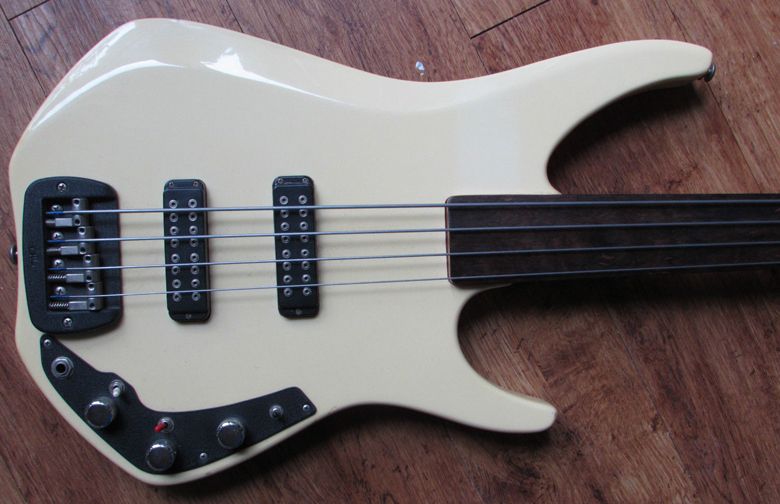
I've not previously seen a bass model of the Messenger, but this is what we have here now being offered for sale on eBay with a starting bid of US $1,500. The bass is a hollowbody and features an aluminium neck.

Intriguingly the neck is fretless (obviously with markers in this instance). The seller does not mention if its fretlessness is an original feature or whether this is a later conversion. In all other areas the bass does seem to be original - it even has the original hardcase.

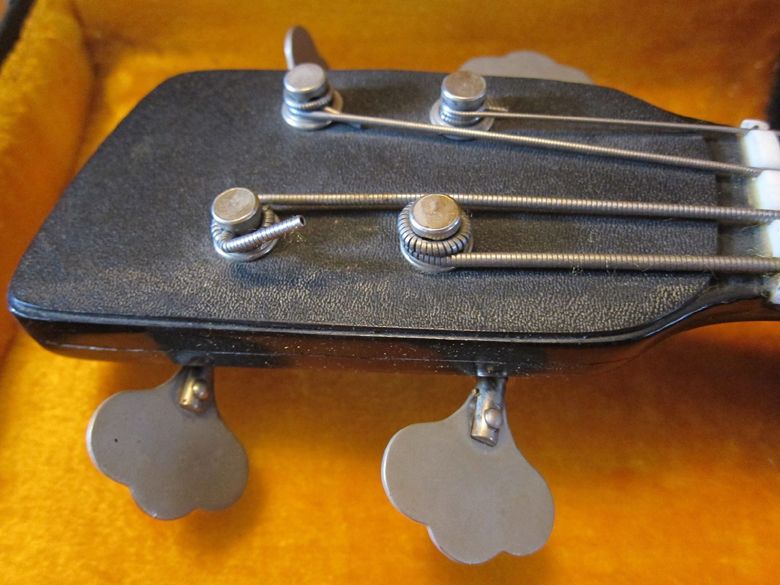
It would be interesting if, like the Ampeg AUB-1, this was another pre-Jaco Pastorius fretless bass. Jaco famously claimed to have invented the fretless bass, but then again when you are a genius I think you are allowed to make such claims. He certainly invented that whole style of playing. Just look at the flatwound strings on this Messenger in the headstock photo. NOT good for lyrical playing with vibrato, swoops and slides. The best this is going to do is to emulate an upright bass thump.

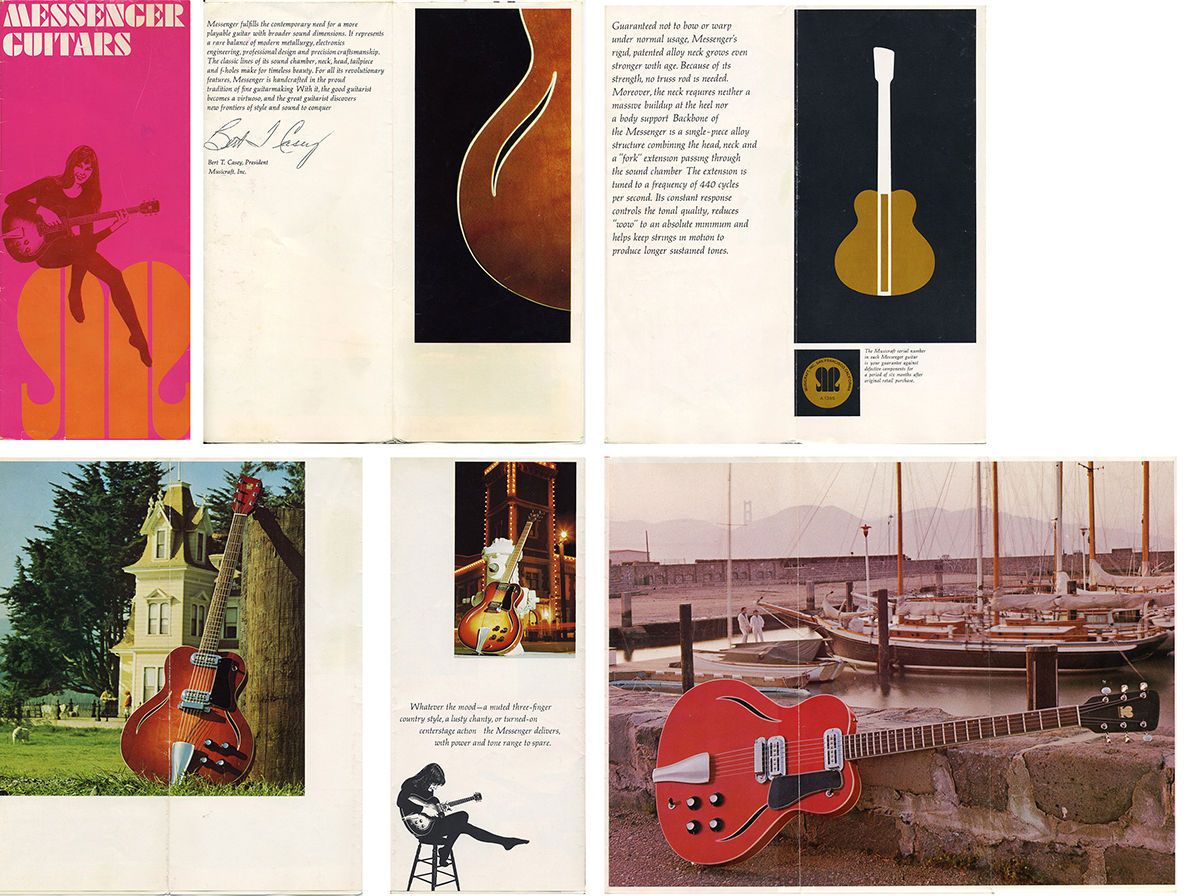
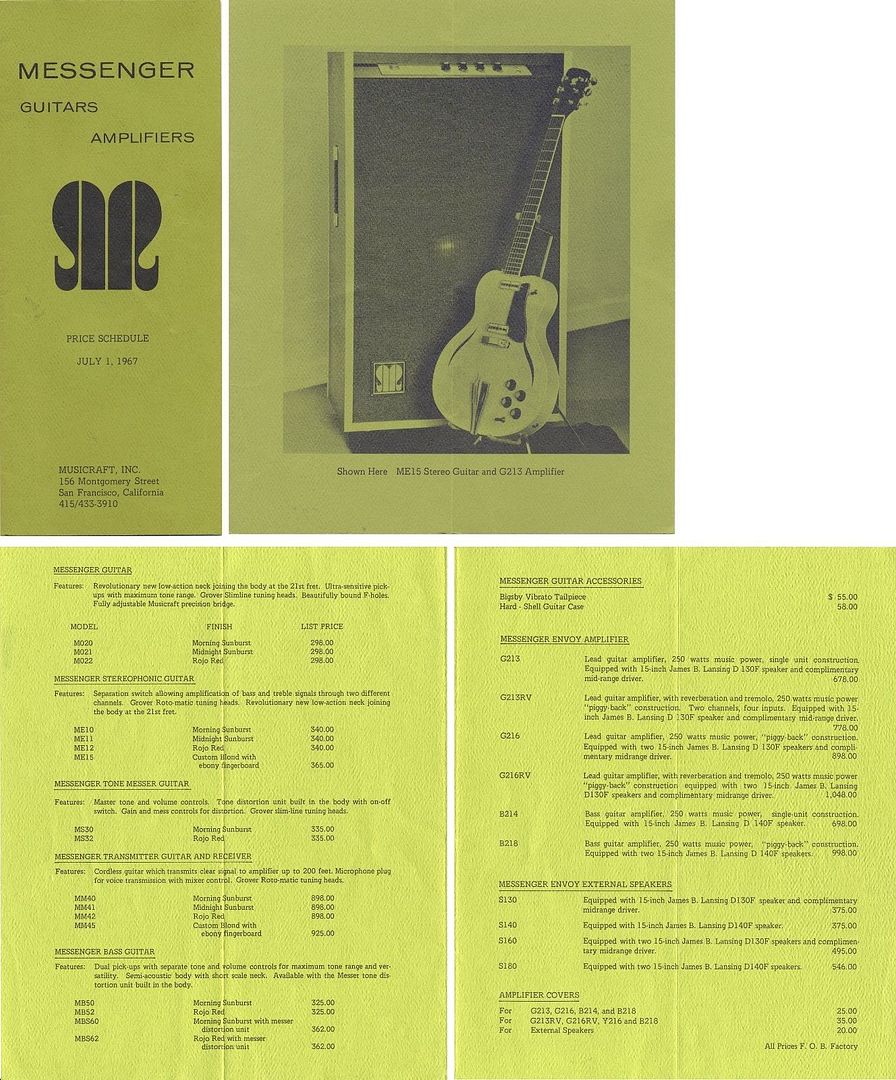
The eBay seller also provides a few scans of Messenger brochures and sales literature from back in the day, and which I reproduce here for posterity.

If you wondered about that body design:
The perfectly contoured, arrow-straight neck remains thin and fast throughout its entire length. And the fingerboard begins where the soundbox ends, thereby eliminating the need for unsightly cutaways and making possible unobstructed access to all frets.
Regarding that metal neck:
Guaranteed not to bow or warp under normal usage, Messenger's rigid, patented alloy neck grows even stronger with age. Because of its strength, no truss rod is needed. Moreover, the neck requires neither a massive buildup at the heel nor a body support. Backbone of the Messenger is a single-piece alloy structure combining the head, neck and a "fork" extension passing through the sound chamber. The extension is tuned to a frequency of 440 cycles per second. Its constant response controls the tonal quality, reduces "?????" [sorry, can't decipher this word] to an absolute minimum and helps keep strings in motion to produce longer sustained notes.


The price list lists Messenger bass models as follows:

MESSENGER BASS GUITAR

Features: Dual pick-ups with separate tone and volume controls for maximum tone range and versatility. Semi-acoustic body with short scale neck. Available with the Messer tone distortion unit built in the body.

MB50    Morning Sunburst    325.00
MB52    Rojo Red    325.00
MBS60   Morning Sunburst with messer distortion unit    362.00
MBS62   Rojo Red with messer distortion unit    362.00
Note that no mention is made of a fretless model.

G L Wilson

© 2015, Guitarz - The Original Guitar Blog - the blog that goes all the way to 11!
Please read our photo and content policy.

Wednesday, 26 August 2015

G&L Interceptor fretless bass from 1984

guitarz.blogspot.com:
These days I feel more at home playing bass than guitar, and thus find myself more drawn to basses when perusing the racks in guitar shops, browsing the web, etc. I'm especially drawn to fretless basses; my first ever bass was a fretless (a Westone Thunder I-A) and I've owned several others over the years, most recently I've been playing a Hohner B2A fretless conversion. But I'm always looking out for that special ONE, so regularly check the eBay listings.

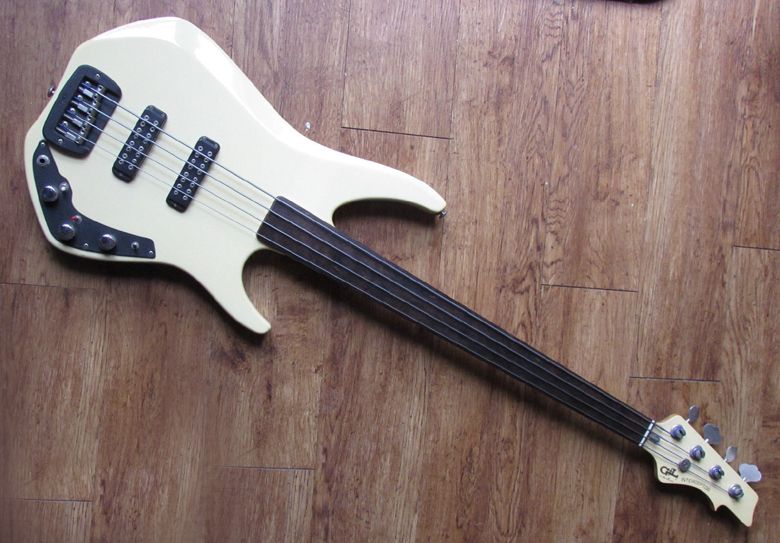
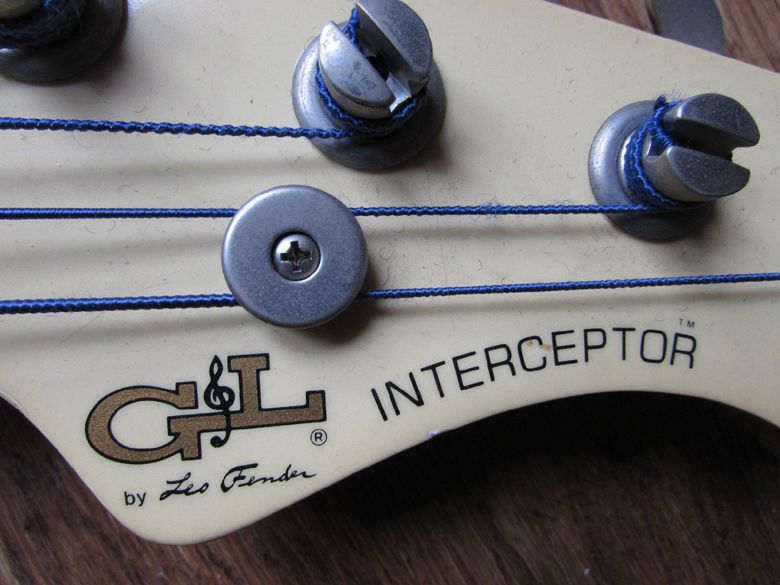
Recently this 30-year old G&L Interceptor fretless bass caught my eye. It's not a model that I've been aware of previously, and I'd imagine that most guitar and bass enthusiasts would have to agree that it is one of Leo Fender's more obscure bass designs. The body shape, I guess, belies its 1980s origins. It's rather blocky-looking with sharp, straight edges. A little bit like a Status bass maybe, but without the bevelled edges. I really like the headstock shape too, which is unusual for a G&L but still manages to incorporate their trademark "sting" (for want of a better word).

The bass is equipped with narrow field full range humbucking pickups and active electronics; the eBay seller insists that it has "an amazing bass boost which takes your breath away with its dub-level bottom end ... It would make a killer reggae or dub/indie PIL type bass, or any kind of contemporary rock or jazz, PERFECT for knocking the wind out of any audience." Sure sounds good to me, but then I do love dub reggae bass.

Currently listed on eBay UK with a Buy It Now price of GBP £895.

G L Wilson

© 2015, Guitarz - The Original Guitar Blog - the blog that goes all the way to 11!
Please read our photo and content policy.

Wednesday, 15 April 2015

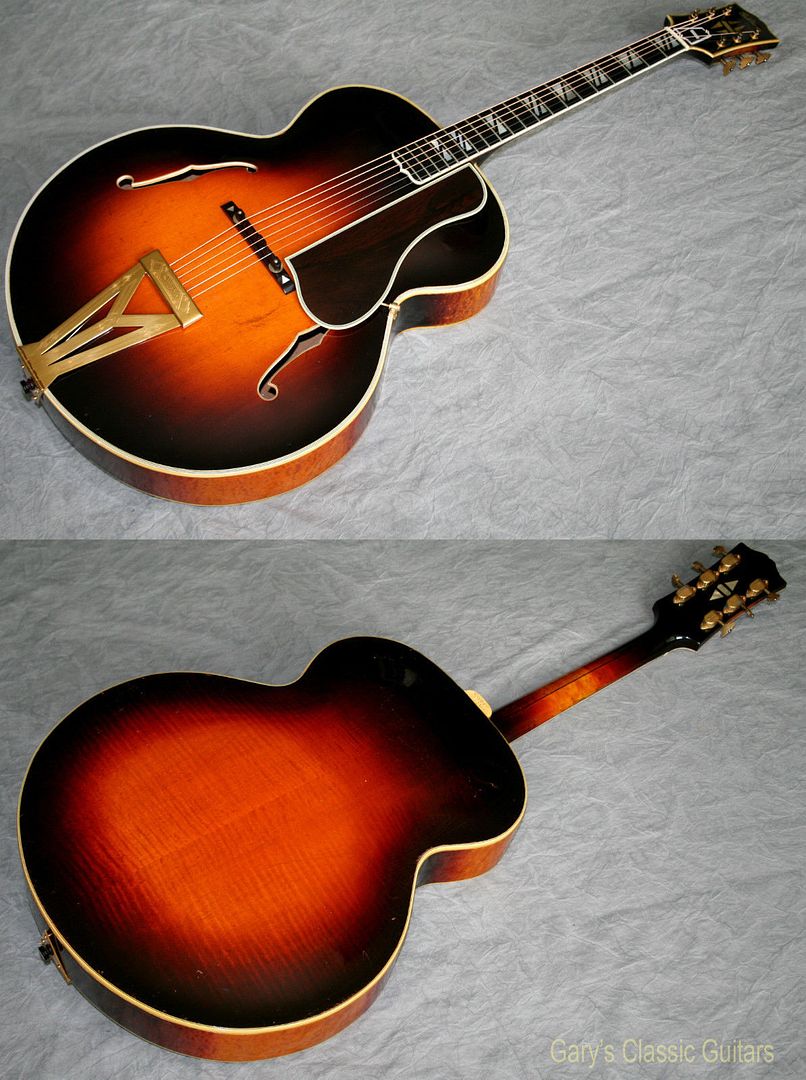
Gibson Super 400 from 1936

guitarz.blogspot.com:
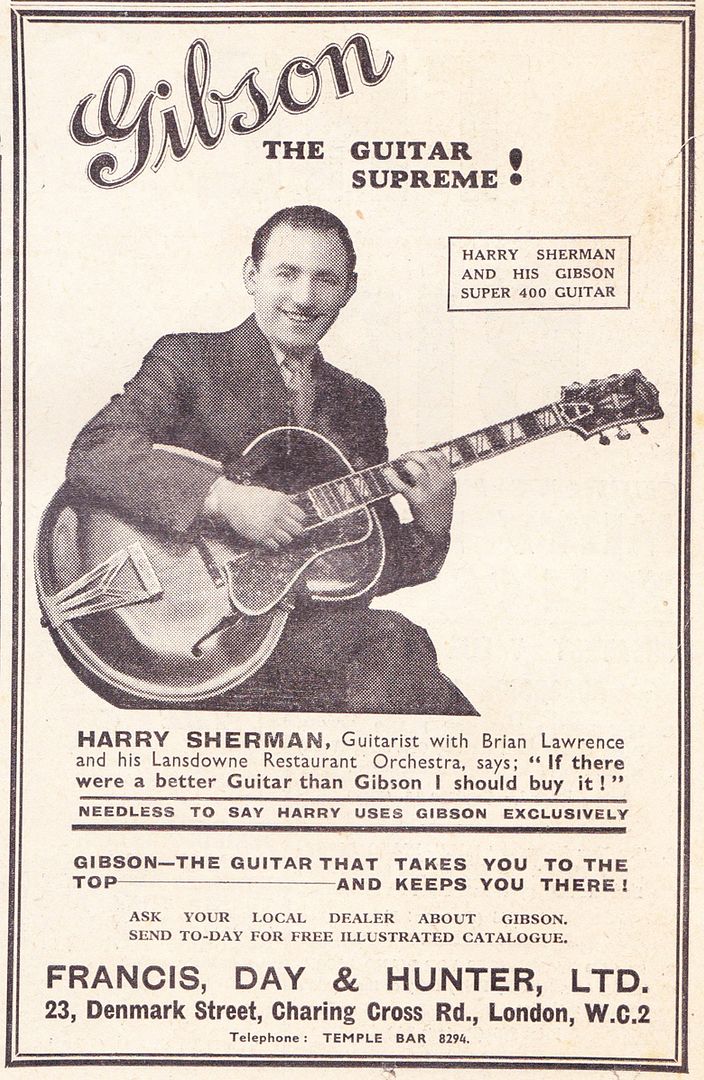
I was looking at a 1936 copy of Melody Maker where I saw this ad, and knew I just had to share it with you guys. The guitarist in the ad is Harry Sherman, guitarist with Brian Lawrence and his Lansdowne Restaurant Orchestra, and he is seen here playing a Gibson Super 400 guitar.

The Gibson Super 400 was introduced just two years earlier in 1934 and was named after its price, as it originally sold for $400.

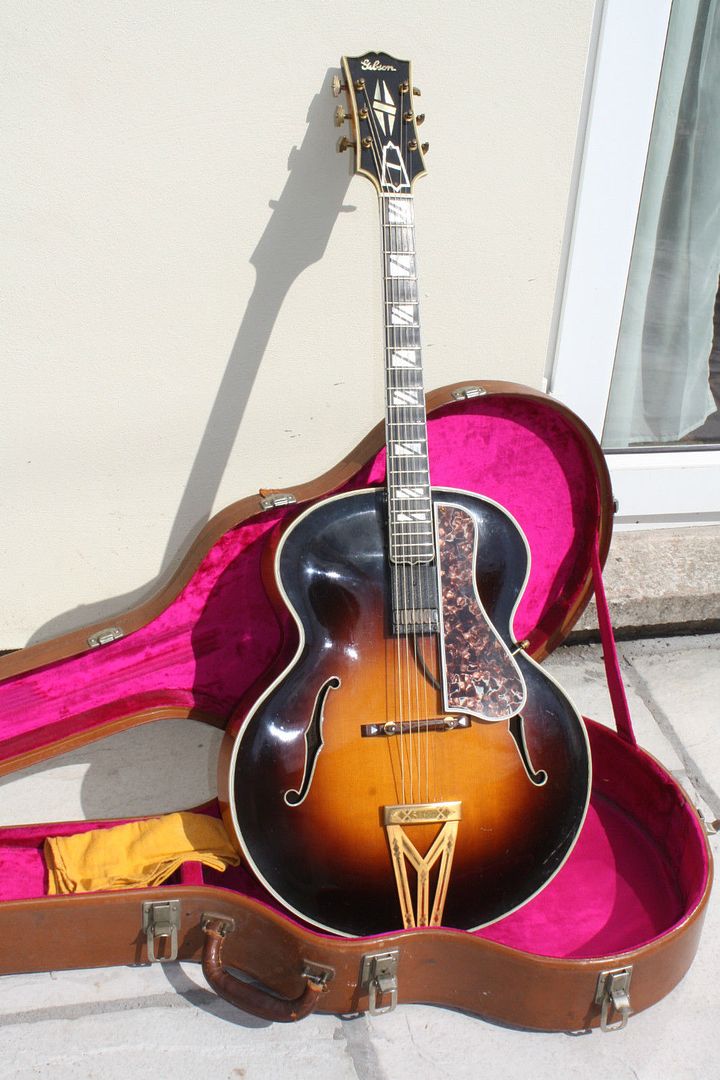
So of course, that set me wondering what a 1936 Gibson Super 400 might be worth today. Ebay UK offered up the following example from that year:
1936 Gibson Super 400
This particular Gibson Super 400 belonged to Maurice Goodearl, who as well as being known in his own right also played guitar for Glenn Miller. This guitar is being offered with a Buy It Now price of £18,000 (approx US $26,575 at the time of writing) although note that this does include other memorabilia, photos, documents, original case, plus the pickup installed on the guitar and Maurice Goodearl's monogrammed (but no longer functioning) Gibson amp.

1937 Gibson Super 400
Perhaps this other Gibson 400 on eBay (pictured above) will give us a better idea of the value of a Gibson Super 400 with a more modest history. This example is from 1937 and has a Buy It Now price of US $16,900 (approximately £11,542.53).

G L Wilson

© 2015, Guitarz - The Original Guitar Blog - the blog that goes all the way to 11!
Please read our photo and content policy.

Monday, 15 December 2014

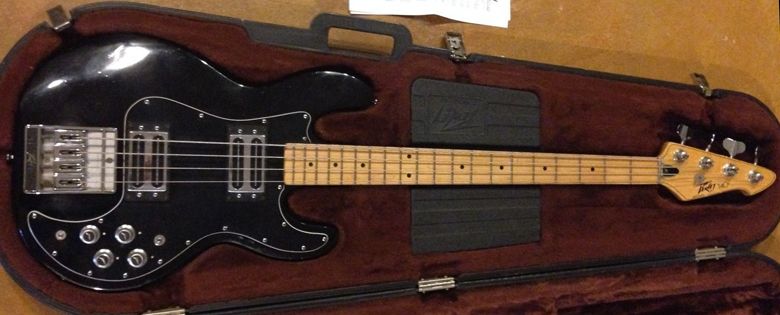
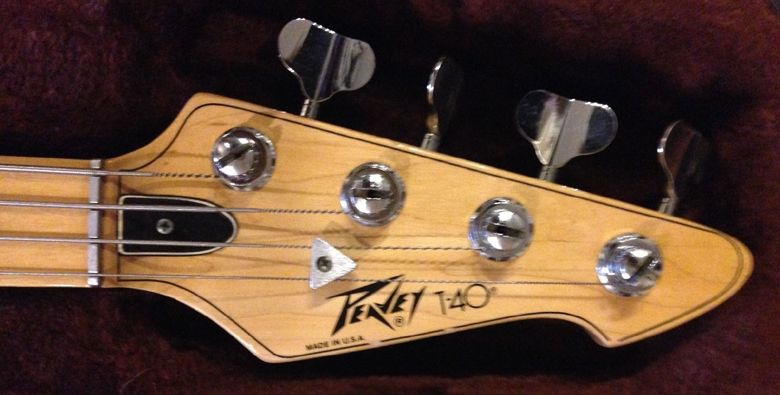
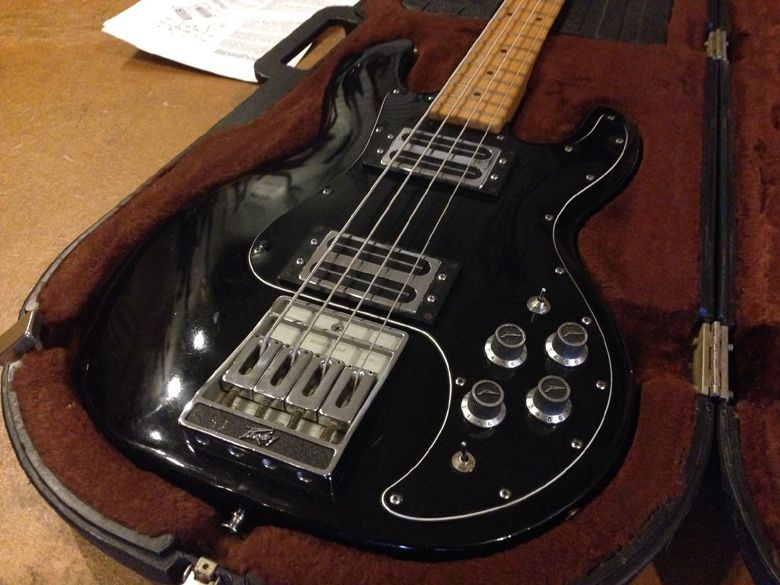
Peavey T-40 Bass - Vintage American-made Coolness

guitarz.blogspot.com:
In more recent times you could pick up one of these all American-made high quality 1970s Peavey guitars or basses for a mere song. I mean why buy a Squier if you can get something as well-made and playable as this, often for less cash, and with that coolness factor that it's a little bit different from what everyone else is playing, a little bit retro.

I mean, this Peavey T-40 is an absolute beaut... with a volume and tone for each of the two pickups, you're not going to get the same variety of sounds out of a bog-standard P or J Bass.

But I think maybe the tide has turned, and with a Buy It Now price of US $599.99 this bass is priced a little higher than most I've seen over the past few years, and to be honest it's a much more realistic price for an instrument of this quality. Grab them while you can and as cheaply as you can because I predict these will be fetching a lot more money in years to come.

G L Wilson

© 2014, Guitarz - The Original Guitar Blog - the blog that goes all the way to 11!
Please read our photo and content policy.

Monday, 20 October 2014

Gibson USA "BECK: Lucille" Modified (allegedly): see if you can make sense of the item description!

guitarz.blogspot.com:
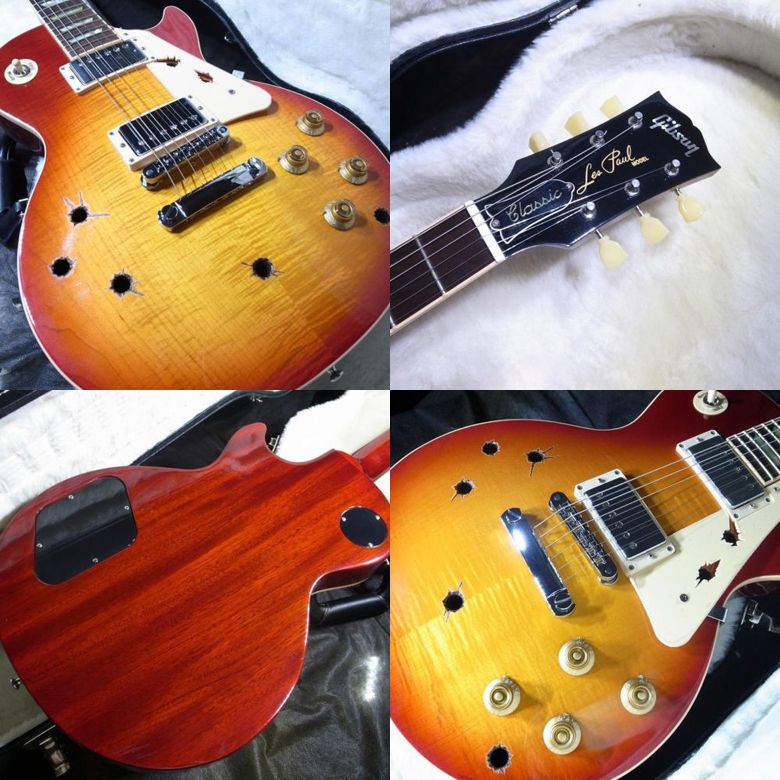
This Gibson Les Paul Classic with faux bullet holes in its top is currently listed on eBay with a Buy It Now price of US $2,427 and with free shipping from Japan where the guitar is currently located. I tried finding out some more information about this "customised" guitar, however, the description in the eBay listing left me even more confused:
Among the artists-modify our Les Paul here which is the work of a different color is: "BECK Lucille" modifier! ! I have made based on the Les Paul Gibson Co., Ltd. is a well-established long-established in about said that this unit Lucille, and people do not know is in the guitar brand.

It is one that can be highly recommended for those who are interested in Lucille, it is beginning the guitar now. You can be able to help playing pounding of course, to enjoy enough even if I decorate! !

Clothed in the body the gruesome anecdotes as if to symbolize the one side of the lock, the unit that appeared in the manga BECK is a vivid shine as one of the icons of modern rock guitar, yet the product of a virtual We alone! !

Reproduces closely vivid singe bullet holes and the Lucille and to failure of the escutcheon and pickguard further as if telling the shock, our shop has built up a single realistic.

It is a relic! Version was manufactured based on the Les Paul of good quality 2000s came out of tiger eye this time further

You do up here also only shop.

If you were looking for one to make eye wacky, please consider as soon as possible.

Visit us, we are waiting for your inquiry.
I think it's safe to say that something has been lost in the translation there.

G L Wilson

© 2014, Guitarz - The Original Guitar Blog - the blog that goes all the way to 11!
Please read our photo and content policy.

Monday, 13 October 2014

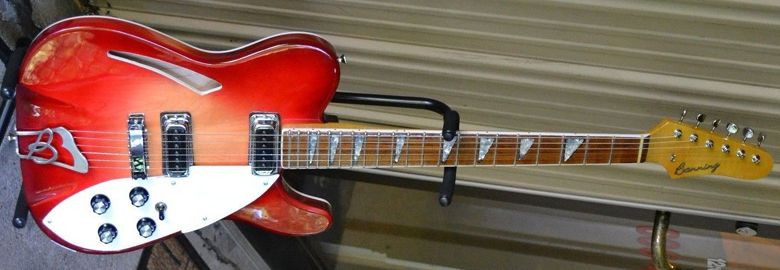
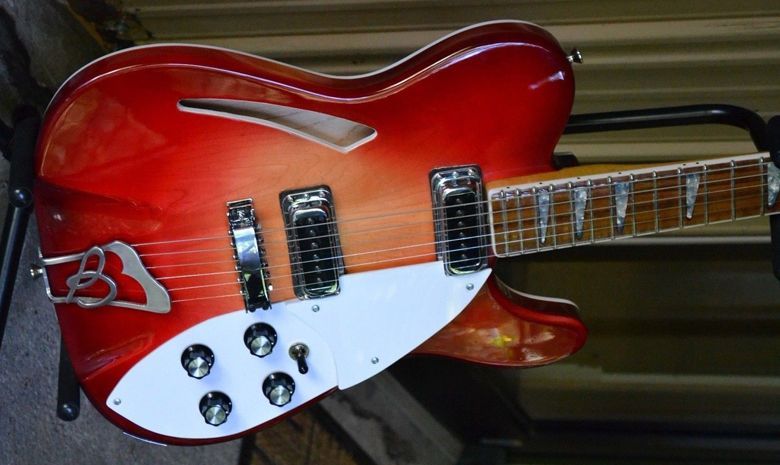
The Banning TeleBacker - If Rickenbacker built a Telecaster...

guitarz.blogspot.com:
...it would look like this, the TeleBacker, made in the USA by Banning Guitars custom shop.

The example in the photographs reproduced here is currently listed for sale on eBay with a Buy It Now price of US $1,899.99.

G L Wilson

© 2014, Guitarz - The Original Guitar Blog - the blog that goes all the way to 11!
Please read our photo and content policy.

Sunday, 5 October 2014

Becker Retro - a contemporary ergonomic guitar handmade in the USA

guitarz.blogspot.com:
This Becker Retro guitar reminded me of some of Bertram's original drawings for his guitar designs as seen on his Guitarren blog.

Here's what the eBay seller tells us about the guitar:
Becker Guitars began in 1995 as a repair shop in the basement of founder Dan Becker. After its first years of operation, Becker Guitars moved to a new shop in Stoughton, Massachusetts. While the company grew into a full service guitar repair and restoration center, Becker began venturing into guitar making.

In the spring of 2006 Dan Becker, brought on Maine guitar luthier Ryan Martin and began to focus on designing and producing custom instruments. Becker soon moved from its smaller shop in Stoughton, Massachusetts to a larger space in Attleboro, Massachusetts in order to accommodate a growing production line.

In 2007 Becker unveiled their first prototype, an Imperial model, to the public at the first annual Premier Guitar Festival. 2008 saw the release of Becker Guitars' flagship production line, The Retro Series. First introduced in 2008, The Retro Series is our flagship guitar line.

This model features a mahogany body which is contoured to maximise comfort and ease playability. The neck is also mahogany, with a Flamed Maple fretboard, 16 inch radius, 22 stainless steel fret. Gotoh machine heads.

An interesting feature is an additional “zero” fret (see photo) to allow closer control of string tension and also allows for much lower action. The action on this model is very low, making it an incredibly fast neck indeed. The neck is topped off with a bone nut.

The Pickups are incredible - Lindy Fralin Hot Humbuckers, each of which is coil tapped (separate switch controlling each), to make a huge range of tones available. Pickups are selected via a three-way toggle switch (Neck, Neck/Bridge combined and Bridge). There is also a “kill-switch”, so cancel all output when required.

All-in-all, this is a top specification guitar, hand-crafted using the best materials available, extremely flexible with great playability.

The body colour is Kiwi Green and it has a Satin Nitrocellulose Lacquer Finish. The wooden pickguard is made from the same flamed maple as the fingerboard, so there is no “plastic” feel to this instrument whatsoever.

(Text probably originally from Becker Guitars themselves).
Currently listed on eBay UK with a Buy It Now price of £1,450.

G L Wilson

© 2014, Guitarz - The Original Guitar Blog - the blog that goes all the way to 11!
Please read our photo and content policy.

Tuesday, 2 September 2014

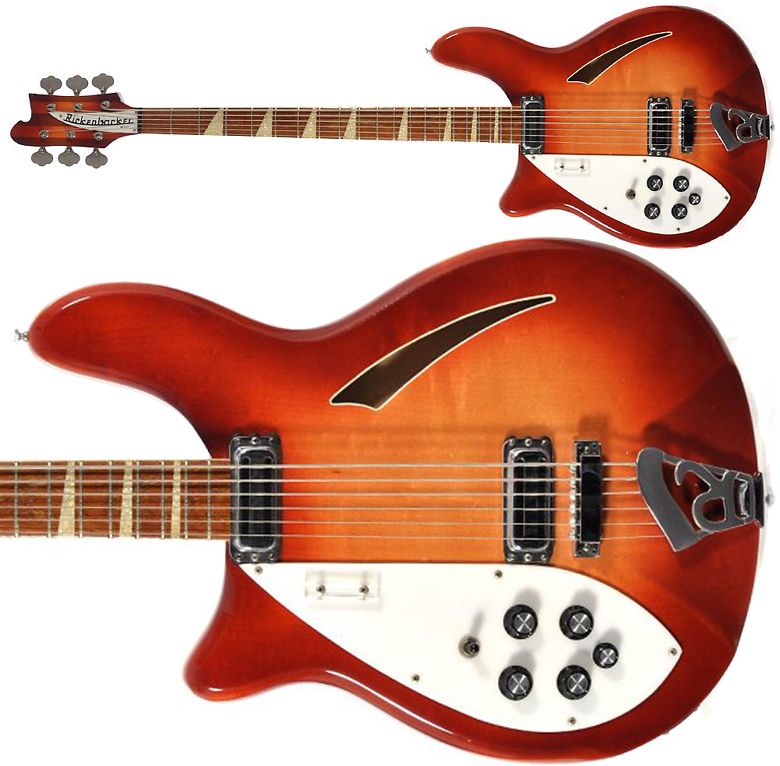
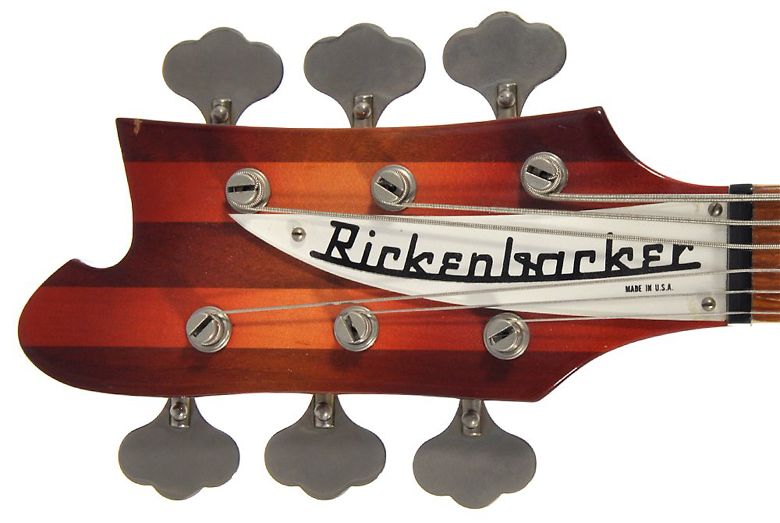
Possibly unique left-handed Rickenbacker 4005/6 semi-hollow Bass VI

guitarz.blogspot.com:
Andrew K writes:
What we have here is a Rickenbacker 4005. If that was not rare enough already, it is a lefty. Even rarer than that, it is also a Bass VI. Apparently the 4005 was introduced in 1965 and remained in production until 1984. This also applies to the 4005/6 model seen here, although perhaps the 4005 was never a production model as much as a custom model, so lord knows if any were made after the late 60s. It is a guitar very much of its time, appearing in the tiny gap of time between the rise of the humbucker and the fall of clean tones as well as the only time when bass VIs were 'relevant'. Unlike the Fender Bass VI which was a stand-alone design, or the short scale basses turned VIs made by Gibson, this appears to be the full 33 1/2 inch 4000 series bass scale, meaning chords are a distant memory here. The price here is steep, but seemingly justified. I can't say another of these will EVER see the light of day, especially not in Left handed spec.

Other weird 4005 basses to look out for are the 8 string version, the lightshow edition, and the 8 string lightshow edition.

Before I go I'd like to talk about the unfortunate tale of this bass for a second. Given the extortionate cost of the 360 model guitar in the late 60s, we can only imagine the cost of the 4005. This obviously hurt sales, and the lack of any real big names behind the model didn't help. The model is also unique in being an early example of an actual semi-hollow body bass, rather than the mis-named EB2 and violin body hollowbodies. But as 1970 approached, the disastrous pickup placement (on some bass models, the bridge pickup touches the bridge) and hollow body were seen as outdated and the thin sounding pickups were too weak for the in-crowd. By the early 80s they were so utterly worthless that the bassist for one of Steve Albini's groups, and the bassist for the Replacements, Tommy Stinson, were easily able to afford them. The closest shot at fame the bass had was with Mani from the Stone Roses (who later ditched it in favour of the underrated 3000 series bass), and only rare appearances since.

This sad history means what is a very unique design of bass basically languished in obscurity before becoming so valuable no-one can buy them. Ricks are called semi-hollow for want of a better description, but the body top is thicker and a solid piece of wood, routed out from the rear with the neck set under the pick-ups creating a union of centre block and neck rather than the slim tenon joint used on the laminate Gibsons. This basically means the body isn't going to thump like a violin bass or EB2 bass, and is likely to be far more piano like. The only basses with similar construction not custom made are the small-bodied G&L ASAT and the Gibson Midtown bass, both of which have their own tone as well. I honestly think Rick need to reissue this thing, it may have failed first time round, but times have changed, and this bass is primed to be a hit. The world has changed! We're mature enough to realise our stupidity now! We'll burn all the P-Basses if you just put this back in production!
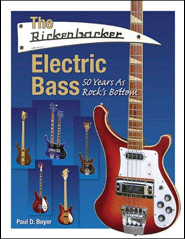
Thanks Andrew, I've been meaning to feature a Rickenbacker 4005 bass for a long time and you managed to find a lefty Bass VI version. Very cool. I've also been meaning for a very long time to mention a really fantastic book, The Rickenbacker Electric Bass - 50 Years As Rock's Bottom by Paul D. Boyer and published by Hal Leonard. Although you might think that as the book covers a very specific niche subject that it would only appeal to the real fanatics, it is so well written and beautifully illustrated with colour photographs throughout that I think it would keep ANY guitar enthusiast enraptured for hours, and not just the bass players and/or Rickenbacker enthusiasts.

Here, by the way, is what Paul D. Boyer has to say about the Rickenbacker 4005/6 (page 42):
The 4005 served as a baseboard for some interesting variations. The first of these was the six-string 4005/6. Similar in purpose to Fender's "Fender VI," the instrument  was strung EADGBE, but an octave lower than a standard guitar. Both rounded-top and WB [i.e. non-rounded top "with binding"] versions of the 4005/6 exist, and at least one leftiy4005/6 was made. While the six-string bass was offered on price lists from 1967 to '78, very few were made.

The book also shows a photo of a 4005/6 (very possibly the very same example that we have been looking at here) being examined by David Jones of True Tone Music.

The lefty Rickenbacker 4005/6 shown above is currently being offered for sale by Chicago Music Exchange via Reverb.com and has a Buy It Now price of $18,950.

G L Wilson

© 2014, Guitarz - The Original Guitar Blog - the blog that goes all the way to 11!
Please read our photo and content policy.


Sunday, 17 August 2014

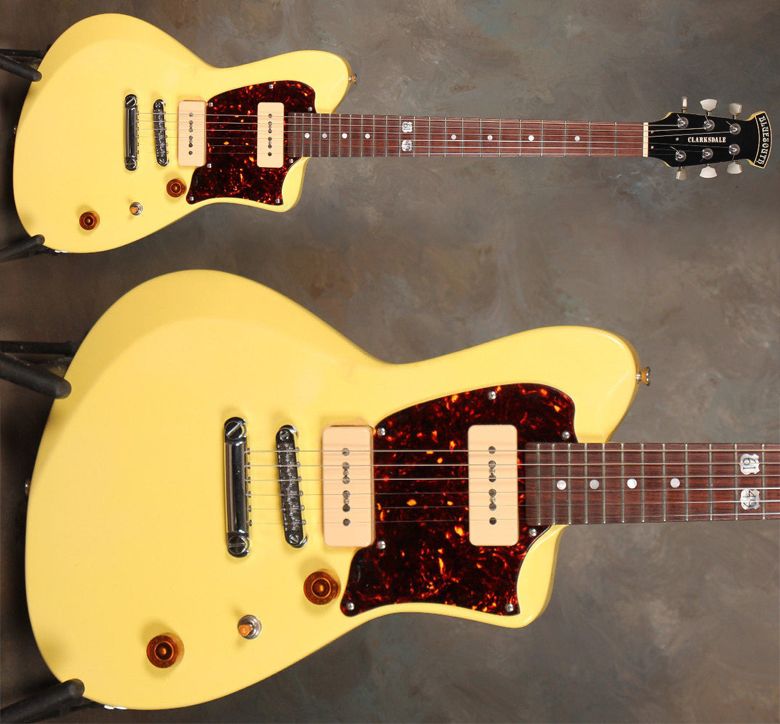
Bluesouth Clarksdale guitar in TV yellow: the sound of the American South

guitarz.blogspot.com:
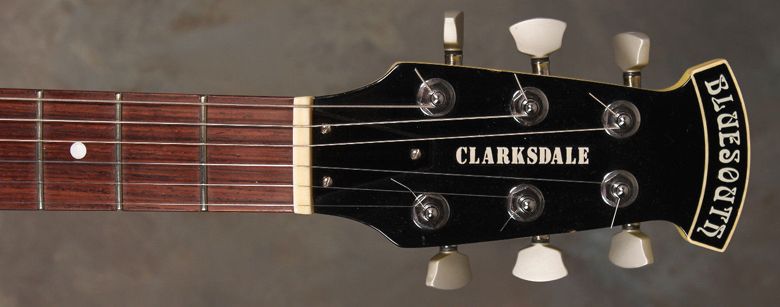
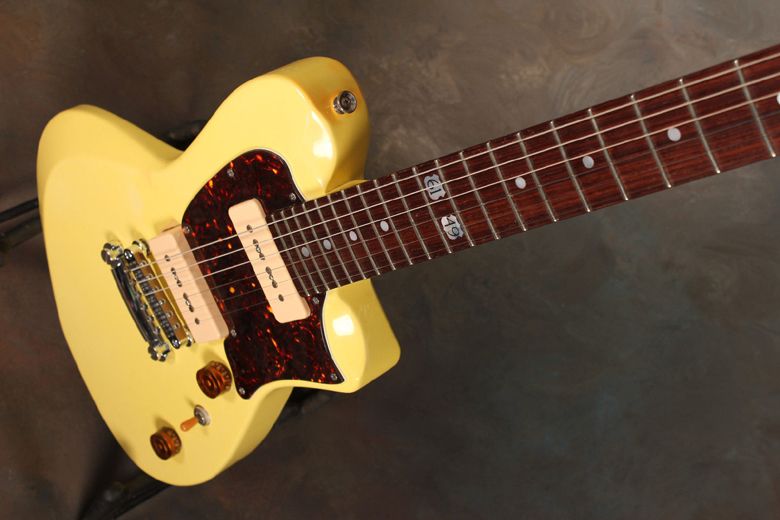
I love the timeless vintage but all original good looks of this Bluesouth Clarksdale guitar. It's built like a Gibson with a glued-in neck joint, but the off-centred waist is surely a nod to the Fender camp.

To borrow from the eBay listing:
Ronnie Knight began Bluesouth Guitars in 1991 with the idea of building stringed musical instruments which celebrate the musical heritage of the American South. Blues, jazz, country, rock, and spiritual music were all created in the southern American states. This small area from Texas to the Carolinas, from Kentucky to Florida, has been the hotbed of the worlds musical culture in the twentieth century. Several small towns within the southeast have had a huge impact on today's popular music: Muscle Shoals, Alabama; Macon, Georgia; and Clarksdale, Mississippi.

The results of this project have been unique, light-bodied guitars with large, comfortable necks. Bluesouth contends that "fierce individualism" is the key ingredient in their guitar making operation. Starting in a small shop over a record store in early 1992, Bluesouth moved to a much larger industrial facility in the spring of 1995. The company offered seven models, including two electric basses. Bluesouth also built its own cases and pickups in house (company history courtesy Ronnie Knight, April 17, 1996).
Currently listed on eBay with a starting bid of US $800 (over half of the original list price).

G L Wilson

© 2014, Guitarz - The Original Guitar Blog - the blog that goes all the way to 11!
Please read our photo and content policy.

Monday, 14 July 2014

Gibson 2013 EB Bass

guitarz.blogspot.com:
These days I mainly play bass gigs. If I do pick up a 6-string more often than not it's my Fender Bass VI. But I'm quite happy in the bass department with the four basses I have in my collection. However, had I been seen this beauty when on the lookout for a bass, I think I would have been very tempted.

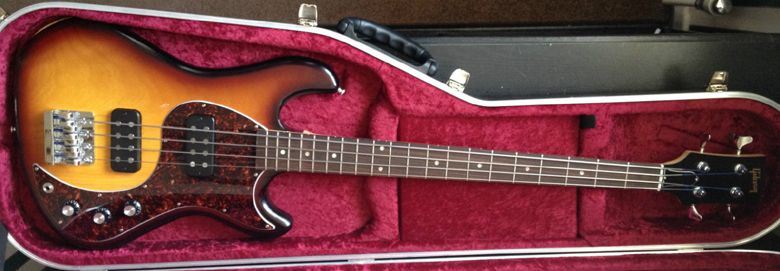
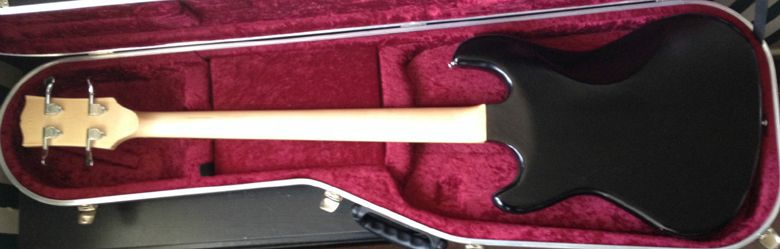
It's a Gibson EB bass from 2013, a model that I admit I was hitherto totally unaware of. It bears little relation to the various vintage Gibson basses in the EB series, in fact stylistically it seems to owe more to Fender and Music Man.


However, in tried and trusted Gibson style it does feature a set neck. Note the heel-less neck join, which is made all the more apparent for having a maple neck set into the black finish of the body. For more info, full specs, etc, see Gibson's own EB page.

This particular example was recently listed on eBay UK and sold for under £550. I'm thinking someone got themselves a bargain there.

G L Wilson

© 2014, Guitarz - The Original Guitar Blog - the blog that goes all the way to 11!
Please read our photo and content policy.

LinkWithin

Related Posts with Thumbnails

ShareThis